
Kundli Kaka

Chapter 2 of 18 · 72 verses

The Wisdom of the Self साङ्ख्ययोग

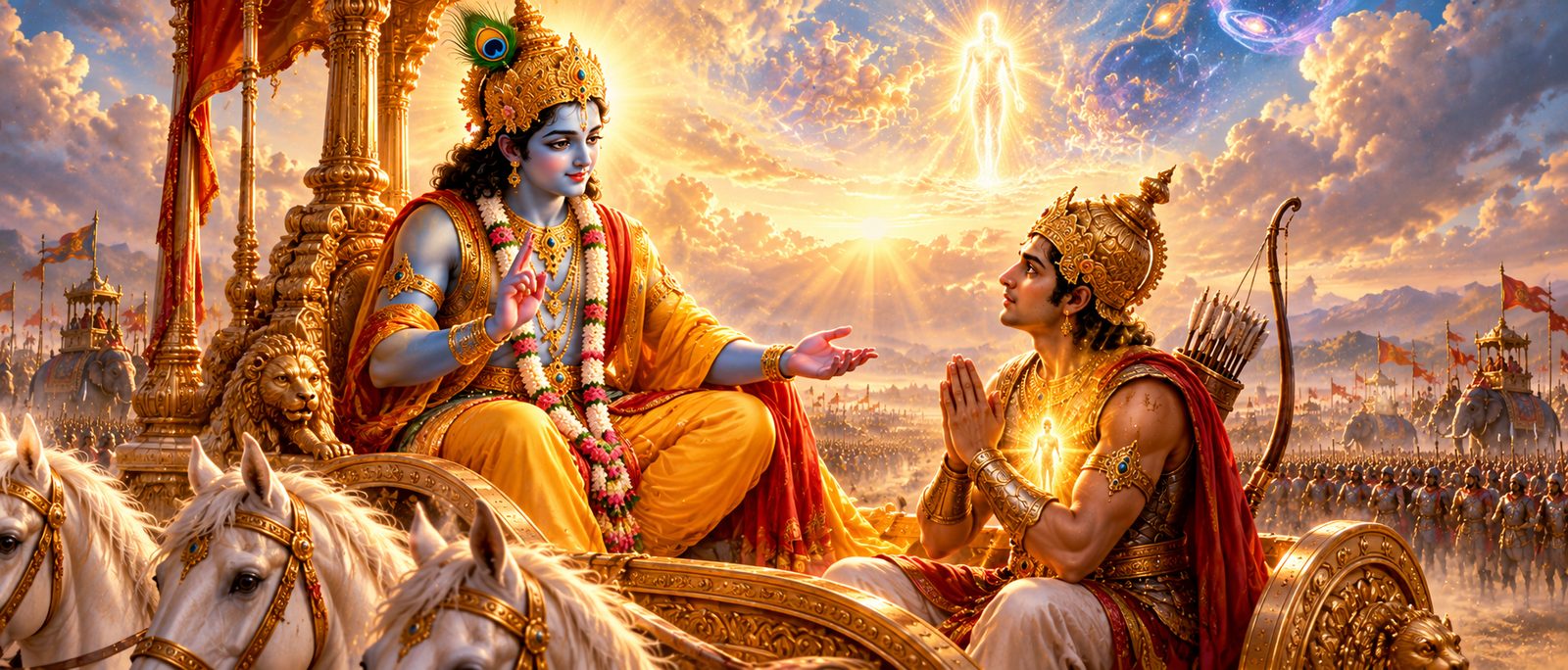
Krishna begins to speak. He tells Arjuna that the Self inside us is never born and never dies, so grief about endings is based on a mistake. Then he teaches the heart of the Gita: do your duty fully, but do not hold on to the result. He also describes a person with a steady mind.

कृष्ण बोलना शुरू करते हैं। वे बताते हैं कि हमारे भीतर की आत्मा न जन्म लेती है न मरती है, इसलिए अन्त का शोक एक भूल पर टिका है। फिर वे गीता का सार देते हैं: अपना कर्तव्य पूरे मन से करो, पर फल को पकड़कर मत रखो। वे स्थिर बुद्धि वाले मनुष्य का भी वर्णन करते हैं।

Show meaning in
2.1

तं तथा कृपयाऽविष्टमश्रुपूर्णाकुलेक्षणम्। विषीदन्तमिदं वाक्यमुवाच मधुसूदनः

sañjaya uvācha
taṁ tathā kṛipayāviṣhṭamaśhru pūrṇākulekṣhaṇam
viṣhīdantamidaṁ vākyam uvācha madhusūdanaḥ

Sanjaya says: To Arjuna, full of pity, eyes filled with tears and heart heavy with sorrow, Krishna spoke these words.

संजय कहते हैं: करुणा से भरे, आँसुओं से डबडबाई आँखों वाले और दुःखी अर्जुन से श्रीकृष्ण ने यह कहा।

What Krishna meant

Sanjaya tells the king that Arjuna was full of pity, his eyes wet with tears and his heart heavy, and Krishna began to speak to him. Krishna does not scold him first. When a friend is crying, listening kindly first often matters more than quick advice.

संजय राजा को बताते हैं कि अर्जुन करुणा से भरे थे, आँखों में आँसू थे और दिल भारी था, तब कृष्ण ने उनसे बात शुरू की। कृष्ण पहले डाँटते नहीं। जब कोई दोस्त रो रहा हो, तो जल्दी सलाह देने से ज़्यादा ज़रूरी अक्सर प्यार से सुनना होता है।
2.2

कुतस्त्वा कश्मलमिदं विषमे समुपस्थितम्। अनार्यजुष्टमस्वर्ग्यमकीर्तिकरमर्जुन

śhrī bhagavān uvācha
kutastvā kaśhmalamidaṁ viṣhame samupasthitam
anārya-juṣhṭamaswargyam akīrti-karam arjuna

The Blessed Lord says: Arjuna, in this hard hour, where has this weakness come from? It is not fit for a noble person, it does not lead upward and it brings no good name.

भगवान कहते हैं: हे अर्जुन, इस कठिन समय में तुम्हें यह कमज़ोरी कहाँ से आ गई? यह श्रेष्ठ पुरुषों को शोभा नहीं देती, इससे न उन्नति होती है और न यश मिलता है।

What Krishna meant

Krishna asks Arjuna where this weakness came from at such a hard moment, and says it does not suit him and brings no good name. Krishna means: do not let a passing wave of fear define you. When you want to quit out of fear, remember what you are able to do.

कृष्ण अर्जुन से पूछते हैं कि इस कठिन घड़ी में यह कमज़ोरी कहाँ से आई, और कहते हैं कि यह तुम्हें शोभा नहीं देती और इससे अच्छा नाम नहीं मिलता। कृष्ण का मतलब है कि डर की एक लहर को अपनी पहचान मत बनने दो। डर के मारे छोड़ देने का मन हो, तो याद करो कि तुम क्या कर सकते हो।

2.3

क्लैब्यं मा स्म गमः पार्थ नैतत्त्वय्युपपद्यते। क्षुद्रं हृदयदौर्बल्यं त्यक्त्वोत्तिष्ठ परन्तप

klaibyaṁ mā sma gamaḥ pārtha naitat tvayyupapadyate
kṣhudraṁ hṛidaya-daurbalyaṁ tyaktvottiṣhṭha parantapa

Do not give in to weakness, Arjuna. It does not suit you. Give up this petty weakness of heart and stand up, scorcher of enemies.

हे अर्जुन, कायरता को मत अपनाओ, यह तुम्हें शोभा नहीं देती। हृदय की इस तुच्छ दुर्बलता को छोड़कर उठ खड़े हो, हे परंतप।

What Krishna meant

Krishna says: do not give in to weakness, it does not suit you; drop this small weakness of the heart and stand up. He encourages Arjuna like a good coach. When you feel like giving up a hard job, take a breath and take one small step instead.

कृष्ण कहते हैं कि कमज़ोरी के आगे मत झुको, यह तुम्हें शोभा नहीं देती; दिल की इस छोटी कमज़ोरी को छोड़ो और उठ खड़े हो। वे एक अच्छे कोच की तरह अर्जुन का हौसला बढ़ाते हैं। कोई कठिन काम छोड़ने का मन हो, तो एक साँस लें और बस एक छोटा कदम उठाएँ।

2.4

कथं भीष्ममहं संख्ये द्रोणं च मधुसूदन। इषुभिः प्रतियोत्स्यामि पूजार्हावरिसूदन

arjuna uvācha
kathaṁ bhīṣhmam ahaṁ sankhye droṇaṁ cha madhusūdana
iṣhubhiḥ pratiyotsyāmi pūjārhāvari-sūdana

Arjuna says: How can I fight with arrows against Bhishma and Drona, who deserve my respect, Krishna?

अर्जुन कहते हैं: हे मधुसूदन, मैं युद्ध में पूजनीय भीष्म और द्रोण पर बाणों से कैसे प्रहार करूँगा?

What Krishna meant

Arjuna says to Krishna: how can I shoot arrows at Bhishma and Drona, who deserve my respect? He is confused because the people he must fight are the ones he honours most. When duty and respect pull in different directions, it is normal to feel torn.

अर्जुन कृष्ण से कहते हैं कि मैं भीष्म और द्रोण पर बाण कैसे चलाऊँ, वे तो मेरे आदर के योग्य हैं। वे उलझन में हैं क्योंकि जिनसे लड़ना है, वही उनके सबसे सम्माननीय लोग हैं। जब कर्तव्य और आदर अलग-अलग खींचें, तो बीच में फँसा महसूस करना सामान्य है।

2.5

गुरूनहत्वा हि महानुभावान् श्रेयो भोक्तुं भैक्ष्यमपीह लोके। हत्वार्थकामांस्तु गुरूनिहैव भुञ्जीय भोगान् रुधिरप्रदिग्धान्

gurūnahatvā hi mahānubhāvān
śhreyo bhoktuṁ bhaikṣhyamapīha loke
hatvārtha-kāmāṁstu gurūnihaiva
bhuñjīya bhogān rudhira-pradigdhān

It is better to live by begging in this world than to kill my noble teachers. If I kill them, I would enjoy wealth and pleasures stained with their blood.

इन महान गुरुजनों को मारे बिना इस लोक में भिक्षा माँगकर खाना भी श्रेष्ठ है। इन्हें मारकर तो मैं यहीं रक्त से सने धन और भोग ही भोगूँगा।

What Krishna meant

Arjuna says he would rather live by begging than kill his noble teachers, because any wealth won that way would be stained with their blood. He puts relationships before success. Think of choosing family peace over a bigger salary that costs you your values.

अर्जुन कहते हैं कि अपने महान गुरुओं को मारने से अच्छा है कि मैं भीख माँगकर जी लूँ, क्योंकि ऐसे पाया धन उनके खून से सना होगा। वे सफलता से ऊपर रिश्तों को रखते हैं। सोचिए, ऐसी बड़ी तनख्वाह जो आपके मूल्य छीन ले, उसकी जगह परिवार की शांति चुनना।

2.6

न चैतद्विद्मः कतरन्नो गरीयो यद्वा जयेम यदि वा नो जयेयुः। यानेव हत्वा न जिजीविषाम स्तेऽवस्थिताः प्रमुखे धार्तराष्ट्राः

na chaitadvidmaḥ kataranno garīyo
yadvā jayema yadi vā no jayeyuḥ
yāneva hatvā na jijīviṣhāmas
te ’vasthitāḥ pramukhe dhārtarāṣhṭrāḥ

I do not know which is better for us, to win or to be defeated. The very people we would not wish to live after killing stand before us.

मैं नहीं जानता कि हमारे लिए क्या अच्छा है, जीतना या हारना। जिन्हें मारकर हम जीना भी नहीं चाहेंगे, वही धृतराष्ट्र के पुत्र हमारे सामने खड़े हैं।

What Krishna meant

Arjuna says he does not know whether winning or losing is better, since the very people they would not wish to live without stand before them. Sometimes you cannot tell which choice is right. It is fine to say, I am not sure, and ask for guidance.

अर्जुन कहते हैं कि मुझे नहीं पता कि जीतना ठीक है या हारना, क्योंकि जिनके बिना हम जीना नहीं चाहेंगे वही सामने खड़े हैं। कभी समझ नहीं आता कि कौन-सा रास्ता सही है। कह देना ठीक है कि मुझे पक्का नहीं पता, और मार्गदर्शन माँगना भी।

2.7

कार्पण्यदोषोपहतस्वभावः पृच्छामि त्वां धर्मसंमूढचेताः। यच्छ्रेयः स्यान्निश्िचतं ब्रूहि तन्मे शिष्यस्तेऽहं शाधि मां त्वां प्रपन्नम्

kārpaṇya-doṣhopahata-svabhāvaḥ
pṛichchhāmi tvāṁ dharma-sammūḍha-chetāḥ
yach-chhreyaḥ syānniśhchitaṁ brūhi tanme
śhiṣhyaste ’haṁ śhādhi māṁ tvāṁ prapannam

My heart is weighed down by weakness and I am confused about duty. I ask you: tell me clearly what is best for me. I am your student, I take refuge in you, please teach me.

मेरा स्वभाव करुणा की कमज़ोरी से दब गया है और मैं कर्तव्य के विषय में उलझ गया हूँ। मैं आपसे पूछता हूँ, जो निश्चित रूप से मेरे लिए श्रेष्ठ हो, वह कहिए। मैं आपका शिष्य हूँ, आपकी शरण में हूँ, मुझे सिखाइए।

What Krishna meant

Arjuna says his heart is weighed down and he is confused about duty, so he asks Krishna to tell him clearly what is best, and calls himself Krishna's student. This is the turning point: he stops arguing and asks to be taught. When you are stuck, humbly asking a good teacher is a strength.

अर्जुन कहते हैं कि मेरा मन भारी है और मैं कर्तव्य को लेकर उलझा हूँ, इसलिए मुझे साफ बताइए कि मेरे लिए क्या अच्छा है, मैं आपका शिष्य हूँ। यही मोड़ है: वे बहस छोड़कर सीखने को कहते हैं। जब आप अटके हों, तो विनम्रता से किसी अच्छे गुरु से पूछना ताकत है।

2.8

न हि प्रपश्यामि ममापनुद्या द्यच्छोकमुच्छोषणमिन्द्रियाणाम्। अवाप्य भूमावसपत्नमृद्धम् राज्यं सुराणामपि चाधिपत्यम्

na hi prapaśhyāmi mamāpanudyād
yach-chhokam uchchhoṣhaṇam-indriyāṇām
avāpya bhūmāv-asapatnamṛiddhaṁ
rājyaṁ surāṇāmapi chādhipatyam

I see nothing that could remove this sorrow that dries up my senses, even if I won a rich kingdom on earth without rivals, or even rule over the gods.

मुझे ऐसा कुछ नहीं दिखता जो मेरी इन्द्रियों को सुखा देने वाले इस शोक को दूर कर सके, चाहे पृथ्वी का निष्कंटक राज्य मिल जाए या देवताओं का स्वामित्व भी।

What Krishna meant

Arjuna says he sees nothing that can remove the sorrow drying up his senses, not even a huge kingdom or ruling the gods. Success cannot fix an inner problem. If you feel empty even after getting what you wanted, look inward, not only at more goals.

अर्जुन कहते हैं कि मुझे कुछ ऐसा नहीं दिखता जो मेरे इस शोक को दूर करे जो इंद्रियों को सुखा रहा है, चाहे विशाल राज्य मिले या देवताओं का राज। सफलता भीतरी समस्या ठीक नहीं करती। मनचाही चीज़ मिलने पर भी खालीपन लगे, तो और लक्ष्य गिनने के बजाय भीतर देखिए।

2.9

एवमुक्त्वा हृषीकेशं गुडाकेशः परन्तप। न योत्स्य इति गोविन्दमुक्त्वा तूष्णीं बभूव ह

sañjaya uvācha
evam-uktvā hṛiṣhīkeśhaṁ guḍākeśhaḥ parantapa
na yotsya iti govindam uktvā tūṣhṇīṁ babhūva ha

Sanjaya says: Having said this to Krishna, Arjuna said, I will not fight, and fell silent.

संजय कहते हैं: श्रीकृष्ण से यह कहकर, कि मैं युद्ध नहीं करूँगा, अर्जुन चुप हो गए।

What Krishna meant

Sanjaya tells the king that after saying this, Arjuna told Krishna, I will not fight, and fell silent. He has decided out of sorrow, not clear thinking. When we are very upset, it is wiser to wait before deciding, because silence can hold a whole storm.

संजय राजा को बताते हैं कि यह कहकर अर्जुन ने कृष्ण से कहा कि मैं नहीं लड़ूँगा, और चुप हो गए। उन्होंने यह फैसला दुख में लिया है, साफ सोच से नहीं। बहुत परेशान हों तो फैसला लेने से पहले रुकना बेहतर है, क्योंकि चुप्पी में भी पूरा तूफान हो सकता है।

2.10

तमुवाच हृषीकेशः प्रहसन्निव भारत। सेनयोरुभयोर्मध्ये विषीदन्तमिदं वचः

tam-uvācha hṛiṣhīkeśhaḥ prahasanniva bhārata
senayorubhayor-madhye viṣhīdantam-idaṁ vachaḥ

Then, as if smiling, Krishna spoke these words to the sorrowing Arjuna between the two armies.

तब दोनों सेनाओं के बीच शोक करते अर्जुन से श्रीकृष्ण ने मानो मुस्कुराते हुए ये वचन कहे।

What Krishna meant

Sanjaya says Krishna, as if smiling, spoke to the grieving Arjuna between the two armies. Krishna's smile is gentle, not mocking; it shows the calm of someone who can help. When a friend is panicking, staying calm and kind yourself helps them settle.

संजय कहते हैं कि दोनों सेनाओं के बीच कृष्ण ने मानो मुस्कुराते हुए शोक में डूबे अर्जुन से बात की। कृष्ण की मुस्कान कोमल है, मज़ाक उड़ाने वाली नहीं; यह उस इंसान की शांति है जो मदद कर सकता है। जब कोई दोस्त घबराया हो, तो आपका खुद शांत और स्नेही रहना उसे सँभलने में मदद करता है।

2.11

अशोच्यानन्वशोचस्त्वं प्रज्ञावादांश्च भाषसे। गतासूनगतासूंश्च नानुशोचन्ति पण्डिताः

śhrī bhagavān uvācha
aśhochyān-anvaśhochas-tvaṁ prajñā-vādānśh cha bhāṣhase
gatāsūn-agatāsūnśh-cha nānuśhochanti paṇḍitāḥ

The Blessed Lord says: You grieve for those who should not be grieved for, yet you speak words of wisdom. The wise grieve neither for the living nor for the dead.

भगवान कहते हैं: तुम उनके लिए शोक करते हो जिनके लिए शोक नहीं करना चाहिए, फिर भी ज्ञान की बातें करते हो। पण्डित लोग न जीवितों के लिए शोक करते हैं, न मृतकों के लिए।

What Krishna meant

Krishna says Arjuna grieves for people who need not be grieved for, even while speaking wise-sounding words. Krishna means the wise do not mourn in this way, for the living or the dead. If you are worrying about things beyond your control, ask whether the worry is really helping.

कृष्ण कहते हैं कि अर्जुन उनके लिए शोक कर रहे हैं जिनके लिए शोक नहीं करना चाहिए, जबकि बातें समझदारी की कर रहे हैं। कृष्ण का मतलब है कि ज्ञानी इस तरह जीवित या मृत किसी का शोक नहीं करते। जिन बातों पर आपका बस नहीं, उनकी चिंता करते हुए खुद से पूछिए कि क्या यह चिंता सच में काम आ रही है।

2.12

न त्वेवाहं जातु नासं न त्वं नेमे जनाधिपाः। न चैव न भविष्यामः सर्वे वयमतः परम्

na tvevāhaṁ jātu nāsaṁ na tvaṁ neme janādhipāḥ
na chaiva na bhaviṣhyāmaḥ sarve vayamataḥ param

There was never a time when I did not exist, nor you, nor these kings. And none of us will ever cease to exist after this.

ऐसा कभी नहीं था कि मैं न था, या तुम न थे, या ये राजा न थे। और ऐसा भी नहीं कि इसके बाद हम सब नहीं रहेंगे।

What Krishna meant

Krishna says there was never a time when he, Arjuna or these kings did not exist, and none of them will cease to be after this. He points to something in us that lasts beyond one life. When you lose someone dear, this thought can give comfort that love and memory go on.

कृष्ण कहते हैं कि ऐसा कभी नहीं था जब मैं, तुम या ये राजा नहीं थे, और इसके बाद भी हम सब नहीं रहेंगे ऐसा नहीं है। वे हमारे भीतर किसी ऐसी चीज़ की ओर इशारा करते हैं जो एक जीवन से आगे चलती है। किसी प्रिय को खोने पर यह विचार सहारा दे सकता है कि प्रेम और यादें आगे भी रहती हैं।

2.13

देहिनोऽस्मिन्यथा देहे कौमारं यौवनं जरा। तथा देहान्तरप्राप्तिर्धीरस्तत्र न मुह्यति

dehino ’smin yathā dehe kaumāraṁ yauvanaṁ jarā
tathā dehāntara-prāptir dhīras tatra na muhyati

As the soul in this body passes through childhood, youth and old age, so it passes into another body. A steady person is not confused by this.

जैसे इस शरीर में आत्मा बचपन, जवानी और बुढ़ापे से गुज़रती है, वैसे ही वह दूसरे शरीर को पाती है। धीर पुरुष इससे मोहित नहीं होता।

What Krishna meant

Krishna says that just as the Self passes through childhood, youth and old age in this body, so it moves on to another body, and a steady person is not confused by this. You do not mourn your childhood, because change is natural. When a job or home changes, try seeing it as a new stage.

कृष्ण कहते हैं कि जैसे इस शरीर में आत्मा बचपन, जवानी और बुढ़ापे से गुज़रती है, वैसे ही दूसरे शरीर में भी जाती है, और स्थिर इंसान इससे घबराता नहीं। आप अपने बचपन के जाने का शोक नहीं करते, क्योंकि बदलाव स्वाभाविक है। नौकरी या घर बदले, तो उसे जीवन का नया पड़ाव मानकर देखिए।

2.14

मात्रास्पर्शास्तु कौन्तेय शीतोष्णसुखदुःखदाः। आगमापायिनोऽनित्यास्तांस्तितिक्षस्व भारत

mātrā-sparśhās tu kaunteya śhītoṣhṇa-sukha-duḥkha-dāḥ
āgamāpāyino ’nityās tans-titikṣhasva bhārata

Contact of the senses with their objects brings cold and heat, pleasure and pain. They come and go and do not last. Bear them patiently, Arjuna.

इन्द्रियों के विषयों से संपर्क सर्दी-गर्मी और सुख-दुःख देता है। ये आते-जाते हैं और टिकते नहीं। हे अर्जुन, इन्हें सहन करो।

What Krishna meant

Krishna says feelings of cold and heat, pleasure and pain come when the senses meet things, and they come and go. He asks Arjuna to bear them patiently. When you are angry or hurt today, remind yourself that this feeling will pass, like weather.

कृष्ण कहते हैं कि सर्दी-गर्मी और सुख-दुख की अनुभूतियाँ इंद्रियों के चीज़ों से मिलने पर आती हैं, और वे आती-जाती रहती हैं। वे अर्जुन से इन्हें धैर्य से सहने को कहते हैं। आज गुस्सा या दुख हो, तो खुद को याद दिलाइए कि यह भाव मौसम की तरह गुज़र जाएगा।

2.15

यं हि न व्यथयन्त्येते पुरुषं पुरुषर्षभ। समदुःखसुखं धीरं सोऽमृतत्वाय कल्पते

yaṁ hi na vyathayantyete puruṣhaṁ puruṣharṣhabha
sama-duḥkha-sukhaṁ dhīraṁ so ’mṛitatvāya kalpate

The person who is not disturbed by these, who stays steady in pleasure and pain, is fit for freedom, Arjuna.

हे पुरुषश्रेष्ठ, जिसे ये दुःख-सुख विचलित नहीं करते और जो दोनों में समान रहता है, वह धीर पुरुष अमरता के योग्य होता है।

What Krishna meant

Krishna says the person who is not shaken by these ups and downs, staying steady in pleasure and pain, becomes fit for freedom. Being steady does not mean not feeling; it means not being thrown around. In a tense meeting you can feel annoyed yet not let it rule you.

कृष्ण कहते हैं कि जो इन उतार-चढ़ावों से नहीं डगमगाता, सुख-दुख में स्थिर रहता है, वही मुक्ति के योग्य बनता है। स्थिर होने का मतलब भावनाएँ न होना नहीं, बल्कि उनसे इधर-उधर न उछलना है। तनाव भरी मीटिंग में खीझ हो सकती है, पर उसे खुद पर हावी न होने दें।

2.16

नासतो विद्यते भावो नाभावो विद्यते सतः। उभयोरपि दृष्टोऽन्तस्त्वनयोस्तत्त्वदर्शिभिः

nāsato vidyate bhāvo nābhāvo vidyate sataḥ
ubhayorapi dṛiṣhṭo ’nta stvanayos tattva-darśhibhiḥ

The unreal has no lasting existence, and the real never ceases to be. Those who see the truth have understood this about both.

जो असत् है उसका अस्तित्व नहीं टिकता, और जो सत् है उसका कभी अभाव नहीं होता। तत्त्वदर्शियों ने इन दोनों का यही निष्कर्ष देखा है।

What Krishna meant

Krishna says what is unreal does not last, and what is real never stops being, and those who see the truth have understood both. He means look for what is lasting. Status and gadgets fade, while kindness and character stay, so give more time to those.

कृष्ण कहते हैं कि जो असत् है वह टिकता नहीं और जो सत् है वह कभी मिटता नहीं, और सत्य को देखने वालों ने दोनों को समझ लिया है। उनका मतलब है कि टिकने वाली चीज़ को खोजो। रुतबा और चीज़ें फीकी पड़ती हैं, जबकि दया और चरित्र बने रहते हैं, इसलिए उन्हें ज़्यादा समय दो।

2.17

अविनाशि तु तद्विद्धि येन सर्वमिदं ततम्। विनाशमव्ययस्यास्य न कश्चित् कर्तुमर्हति

avināśhi tu tadviddhi yena sarvam idaṁ tatam
vināśham avyayasyāsya na kaśhchit kartum arhati

Know that by which all this is pervaded to be indestructible. No one can destroy this imperishable one.

जिससे यह सब कुछ व्याप्त है, उसे अविनाशी जानो। इस अविनाशी का नाश कोई नहीं कर सकता।

What Krishna meant

Krishna says to know that which spreads through all of this is indestructible, and no one can destroy this unchanging Self. He speaks of the Self within every being. After a failure when you feel small or broken, remember that your true worth is something no failure can touch.

कृष्ण कहते हैं कि जो इस सबमें व्याप्त है उसे अविनाशी जानो, इस अविनाशी को कोई नष्ट नहीं कर सकता। वे हर प्राणी के भीतर के आत्मा की बात कर रहे हैं। असफलता के बाद जब आप छोटा या टूटा महसूस करें, तो याद रखें कि आपकी असली कीमत को कोई असफलता छू नहीं सकती।

2.18

अन्तवन्त इमे देहा नित्यस्योक्ताः शरीरिणः। अनाशिनोऽप्रमेयस्य तस्माद्युध्यस्व भारत

antavanta ime dehā nityasyoktāḥ śharīriṇaḥ
anāśhino ’prameyasya tasmād yudhyasva bhārata

These bodies of the eternal, indestructible and boundless soul are said to come to an end. So fight, Arjuna.

अविनाशी, अप्रमेय और नित्य आत्मा के ये शरीर नाशवान कहे गए हैं। इसलिए हे अर्जुन, युद्ध करो।

What Krishna meant

Krishna says the bodies of the eternal, indestructible Self are said to come to an end, so Arjuna should fight. He means the body is temporary but what is within is not, and asks Arjuna to do his duty rather than collapse in fear. Fearing loss at work, still do your task with care.

कृष्ण कहते हैं कि अविनाशी, नित्य आत्मा के शरीर नाशवान कहे गए हैं, इसलिए अर्जुन, युद्ध करो। उनका मतलब है कि शरीर अस्थायी है पर भीतर का नहीं, और वे अर्जुन से डर में बिखरने के बजाय अपना कर्तव्य निभाने को कहते हैं। काम में नुकसान का डर हो, तब भी अपना काम पूरी लगन से करें।

2.19

य एनं वेत्ति हन्तारं यश्चैनं मन्यते हतम्। उभौ तौ न विजानीतो नायं हन्ति न हन्यते

ya enaṁ vetti hantāraṁ yaśh chainaṁ manyate hatam
ubhau tau na vijānīto nāyaṁ hanti na hanyate

One who thinks the soul kills, and one who thinks it is killed, both do not know. It neither kills nor is killed.

जो इसे मारने वाला समझता है और जो इसे मरा हुआ मानता है, वे दोनों नहीं जानते। यह न मारता है, न मारा जाता है।

What Krishna meant

Krishna says anyone who thinks the Self kills, or that it is killed, does not understand; it neither kills nor is killed. He is easing Arjuna's heavy guilt. If you blame yourself for things beyond your control, such as someone else's choices, put the burden down and learn from it kindly.

कृष्ण कहते हैं कि जो आत्मा को मारने वाला या मारा जाने वाला समझता है, वह नहीं जानता; यह न मारती है, न मारी जाती है। वे अर्जुन का भारी अपराध-बोध हल्का कर रहे हैं। जो बातें आपके बस में नहीं थीं, जैसे दूसरे का चुना हुआ रास्ता, उनके लिए खुद को दोष देना छोड़ें और प्यार से उनसे सीख लें।

2.20

न जायते म्रियते वा कदाचि न्नायं भूत्वा भविता वा न भूयः। अजो नित्यः शाश्वतोऽयं पुराणो न हन्यते हन्यमाने शरीरे

na jāyate mriyate vā kadāchin
nāyaṁ bhūtvā bhavitā vā na bhūyaḥ
ajo nityaḥ śhāśhvato ’yaṁ purāṇo
na hanyate hanyamāne śharīre

The soul is never born and never dies. It did not come into being and will not cease to be. It is unborn, eternal, ancient, and is not killed when the body is killed.

आत्मा न कभी जन्मती है, न मरती है। यह न हुई थी, न होगी, ऐसा भी नहीं। यह अजन्मा, नित्य, शाश्वत और पुरातन है, शरीर के मारे जाने पर भी नहीं मरती।

What Krishna meant

Krishna says the Self is never born and never dies; it was not created and will not stop, it is ancient and is not killed when the body is. Something in you stays steady through every change. When fear of loss presses on you, remember that steady place within.

कृष्ण कहते हैं कि आत्मा न कभी जन्मती है, न मरती है; यह बनी नहीं और मिटेगी नहीं, यह पुरानी है और शरीर के मरने पर नहीं मरती। आपके भीतर कुछ ऐसा है जो हर बदलाव में स्थिर रहता है। जब खोने का डर दबाए, तो भीतर की उस स्थिर जगह को याद करें।

2.21

वेदाविनाशिनं नित्यं य एनमजमव्ययम्। कथं स पुरुषः पार्थ कं घातयति हन्ति कम्

vedāvināśhinaṁ nityaṁ ya enam ajam avyayam
kathaṁ sa puruṣhaḥ pārtha kaṁ ghātayati hanti kam

One who knows this soul as indestructible, eternal, unborn and unchanging, how can that person kill anyone or cause anyone to kill?

जो इस आत्मा को अविनाशी, नित्य, अजन्मा और अव्यय जानता है, वह किसे मारेगा और किसे मरवाएगा?

What Krishna meant

Krishna asks: one who knows the Self as indestructible, eternal, unborn and unchanging, how can that person kill or cause killing? Krishna means a person who acts from understanding, not hatred, acts differently. At work you can do a tough task without anger or grudge.

कृष्ण पूछते हैं कि जो आत्मा को अविनाशी, नित्य, अजन्मा और अपरिवर्तनशील जानता है, वह किसी को मार कैसे सकता है या मरवा कैसे सकता है। कृष्ण का मतलब है कि समझ से काम करने वाला इंसान नफरत से काम करने वाले से अलग होता है। काम में कोई कठिन कदम बिना गुस्से और बैर के भी उठाया जा सकता है।

2.22

वासांसि जीर्णानि यथा विहाय नवानि गृह्णाति नरोऽपराणि। तथा शरीराणि विहाय जीर्णा न्यन्यानि संयाति नवानि देही

vāsānsi jīrṇāni yathā vihāya
navāni gṛihṇāti naro ’parāṇi
tathā śharīrāṇi vihāya jīrṇānya
nyāni sanyāti navāni dehī

As a person casts off worn-out clothes and puts on new ones, so the soul casts off worn-out bodies and takes new ones.

जैसे मनुष्य पुराने कपड़े छोड़कर नए पहन लेता है, वैसे ही आत्मा पुराने शरीरों को छोड़कर नए शरीर धारण करती है।

What Krishna meant

Krishna says that just as a person throws away worn-out clothes and puts on new ones, the Self leaves worn-out bodies and takes new ones. He means change need not be feared. Many endings are only a change of form. When a phase of life ends, see it as making room for the next.

कृष्ण कहते हैं कि जैसे इंसान पुराने फटे कपड़े छोड़कर नए पहनता है, वैसे ही आत्मा पुराने शरीर छोड़कर नए लेती है। उनका मतलब है कि बदलाव से डरना ज़रूरी नहीं। कई अंत सिर्फ रूप का बदलना होते हैं। जीवन का कोई दौर खत्म हो, तो उसे अगले दौर के लिए जगह बनना समझिए।

2.23

नैनं छिन्दन्ति शस्त्राणि नैनं दहति पावकः। न चैनं क्लेदयन्त्यापो न शोषयति मारुतः

nainaṁ chhindanti śhastrāṇi nainaṁ dahati pāvakaḥ
na chainaṁ kledayantyāpo na śhoṣhayati mārutaḥ

Weapons cannot cut the soul, fire cannot burn it, water cannot wet it and wind cannot dry it.

इस आत्मा को शस्त्र काट नहीं सकते, आग जला नहीं सकती, पानी भिगो नहीं सकता और हवा सुखा नहीं सकती।

What Krishna meant

Krishna says weapons cannot cut the Self, fire cannot burn it, water cannot wet it and wind cannot dry it. He means the deepest part of you cannot be harmed by outer events. When criticism or loss hurts, remember it touches your situation, not your inner worth.

कृष्ण कहते हैं कि आत्मा को शस्त्र काट नहीं सकते, आग जला नहीं सकती, पानी भिगो नहीं सकता और हवा सुखा नहीं सकती। उनका मतलब है कि आपके सबसे गहरे हिस्से को बाहर की घटनाएँ चोट नहीं पहुँचा सकतीं। आलोचना या नुकसान चुभे, तो याद रखें कि वह आपके हालात को छूता है, आपकी भीतरी कीमत को नहीं।

2.24

अच्छेद्योऽयमदाह्योऽयमक्लेद्योऽशोष्य एव च। नित्यः सर्वगतः स्थाणुरचलोऽयं सनातनः

achchhedyo ’yam adāhyo ’yam akledyo ’śhoṣhya eva cha
nityaḥ sarva-gataḥ sthāṇur achalo ’yaṁ sanātanaḥ

It cannot be cut, burnt, wetted or dried. It is eternal, all-pervading, steady, unmoving and ancient.

यह कटने, जलने, भीगने और सूखने वाली नहीं है। यह नित्य, सर्वव्यापी, स्थिर, अचल और सनातन है।

What Krishna meant

Krishna says the Self cannot be cut, burnt, wetted or dried; it is eternal, present everywhere, steady, unmoving and ancient. He repeats this so it can sink in. Repeating a good thought, such as I am more than this problem, can steady you in a stressful week.

कृष्ण कहते हैं कि आत्मा को काटा, जलाया, भिगोया या सुखाया नहीं जा सकता; यह नित्य, सर्वव्यापी, स्थिर, अचल और पुरातन है। वे यह इसलिए दोहराते हैं कि बात भीतर उतर जाए। कोई अच्छा विचार दोहराना, जैसे मैं इस समस्या से बड़ा हूँ, तनाव भरे हफ्ते में आपको स्थिर रख सकता है।

2.25

अव्यक्तोऽयमचिन्त्योऽयमविकार्योऽयमुच्यते। तस्मादेवं विदित्वैनं नानुशोचितुमर्हसि

avyakto ’yam achintyo ’yam avikāryo ’yam uchyate
tasmādevaṁ viditvainaṁ nānuśhochitum arhasi

It is unseen, beyond thought and unchanging. Knowing it so, you should not grieve.

यह अव्यक्त, अचिन्त्य और अविकारी कही जाती है। इसे ऐसा जानकर तुम्हें शोक नहीं करना चाहिए।

What Krishna meant

Krishna says the Self is unseen, beyond thought and unchanging, and knowing this, Arjuna should not grieve. We cannot see it like an object, but we can sense it in quiet moments. Spend a few quiet minutes each day without phone or noise, and notice the calm already within.

कृष्ण कहते हैं कि आत्मा अदृश्य है, विचार से परे है और बदलती नहीं, यह जानकर अर्जुन को शोक नहीं करना चाहिए। हम इसे किसी वस्तु की तरह देख नहीं सकते, पर शांत पलों में महसूस कर सकते हैं। रोज़ कुछ मिनट बिना फोन और शोर के शांत बैठिए और देखिए कि भीतर पहले से कितनी शांति है।

2.26

अथ चैनं नित्यजातं नित्यं वा मन्यसे मृतम्। तथापि त्वं महाबाहो नैवं शोचितुमर्हसि

atha chainaṁ nitya-jātaṁ nityaṁ vā manyase mṛitam
tathāpi tvaṁ mahā-bāho naivaṁ śhochitum arhasi

Even if you think the soul is constantly born and constantly dies, you still should not grieve, mighty-armed Arjuna.

और यदि तुम इसे बार-बार जन्मने और मरने वाली मानते हो, तब भी हे महाबाहो, तुम्हें इस तरह शोक नहीं करना चाहिए।

What Krishna meant

Krishna says even if Arjuna thinks the Self is born and dies again and again, he still should not grieve. Krishna means: whichever view you hold, grief will not change what happened. If you keep replaying a mistake, accept it is done, and decide what to do next.

कृष्ण कहते हैं कि अगर अर्जुन आत्मा को बार-बार जन्मने और मरने वाली मानें, तब भी उन्हें शोक नहीं करना चाहिए। कृष्ण का मतलब है कि आप जो भी मानें, शोक से जो हो चुका है वह नहीं बदलेगा। कोई गलती बार-बार याद आती हो, तो मान लें कि वह हो चुकी है, और तय करें कि अब क्या करना है।

2.27

जातस्य हि ध्रुवो मृत्युर्ध्रुवं जन्म मृतस्य च। तस्मादपरिहार्येऽर्थे न त्वं शोचितुमर्हसि

jātasya hi dhruvo mṛityur dhruvaṁ janma mṛitasya cha
tasmād aparihārye ’rthe na tvaṁ śhochitum arhasi

Death is certain for one who is born, and birth is certain for one who dies. So you should not grieve over what cannot be avoided.

जो जन्मा है उसकी मृत्यु निश्चित है और जो मरा है उसका जन्म निश्चित है। इसलिए जो टाला नहीं जा सकता उसके लिए तुम्हें शोक नहीं करना चाहिए।

What Krishna meant

Krishna says death is certain for whoever is born, and birth is certain for whoever dies, so Arjuna should not grieve over what cannot be avoided. Krishna means accepting what is unavoidable. Like the change of seasons, we can prepare for it, but crying against it only adds pain.

कृष्ण कहते हैं कि जो जन्मा है उसकी मृत्यु निश्चित है और जो मरा है उसका जन्म निश्चित है, इसलिए जो टल नहीं सकता उसका शोक नहीं करना चाहिए। कृष्ण का मतलब है कि जो अटल है उसे स्वीकार करो। मौसम बदलने की तरह हम तैयारी कर सकते हैं, पर उसके विरुद्ध रोने से सिर्फ दुख बढ़ता है।

2.28

अव्यक्तादीनि भूतानि व्यक्तमध्यानि भारत। अव्यक्तनिधनान्येव तत्र का परिदेवना

avyaktādīni bhūtāni vyakta-madhyāni bhārata
avyakta-nidhanānyeva tatra kā paridevanā

Beings are unseen before birth, seen in the middle, and unseen again after death. What is there to cry about?

हे भारत, सब प्राणी जन्म से पहले अदृश्य थे, बीच में दिखते हैं और मरने के बाद फिर अदृश्य हो जाते हैं। फिर इसमें विलाप कैसा?

What Krishna meant

Krishna says beings are unseen before birth, seen in the middle and unseen again at the end, so what is there to cry about? He asks Arjuna to see life as a short visible stretch. Because time is short, spend it with those you love instead of arguing over small things.

कृष्ण कहते हैं कि प्राणी जन्म से पहले अदृश्य थे, बीच में दिखते हैं और अंत में फिर अदृश्य हो जाते हैं, तो इसमें रोना कैसा। वे अर्जुन से जीवन को एक छोटा दिखाई देने वाला हिस्सा समझने को कहते हैं। समय कम है, इसलिए छोटी बातों पर झगड़ने के बजाय अपनों के साथ बिताइए।

2.29

आश्चर्यवत्पश्यति कश्चिदेन माश्चर्यवद्वदति तथैव चान्यः। आश्चर्यवच्चैनमन्यः श्रृणोति श्रुत्वाप्येनं वेद न चैव कश्चित्

āśhcharya-vat paśhyati kaśhchid enan
āśhcharya-vad vadati tathaiva chānyaḥ
āśhcharya-vach chainam anyaḥ śhṛiṇoti
śhrutvāpyenaṁ veda na chaiva kaśhchit

Some see the soul as a wonder, some speak of it as a wonder, some hear of it as a wonder, and yet even after hearing, no one truly knows it.

कोई इस आत्मा को आश्चर्य की तरह देखता है, कोई आश्चर्य की तरह बताता है, कोई आश्चर्य की तरह सुनता है, और सुनकर भी कोई इसे पूरी तरह नहीं जानता।

What Krishna meant

Krishna says some see the Self as a wonder, some speak of it as a wonder, some hear of it as a wonder, yet even after hearing, hardly anyone truly knows it. Krishna means it is deep and takes time. Be patient with yourself when learning anything deep, like a new skill.

कृष्ण कहते हैं कि कोई आत्मा को आश्चर्य की तरह देखता है, कोई आश्चर्य की तरह बताता है, कोई आश्चर्य की तरह सुनता है, फिर भी सुनकर भी शायद ही कोई इसे सचमुच जानता है। कृष्ण का मतलब है कि यह गहरी बात है और समय लेती है। कोई गहरी चीज़ सीखते समय, जैसे नया हुनर, खुद के साथ धैर्य रखें।

2.30

देही नित्यमवध्योऽयं देहे सर्वस्य भारत। तस्मात्सर्वाणि भूतानि न त्वं शोचितुमर्हसि

dehī nityam avadhyo ’yaṁ dehe sarvasya bhārata
tasmāt sarvāṇi bhūtāni na tvaṁ śhochitum arhasi

The soul that lives in every body can never be killed. So you should not grieve for any being.

हे भारत, सबके शरीर में रहने वाली यह आत्मा सदा अवध्य है। इसलिए तुम्हें किसी भी प्राणी के लिए शोक नहीं करना चाहिए।

What Krishna meant

Krishna says the Self that lives in every body can never be killed, so Arjuna should not grieve for anyone. He ends this first teaching with comfort. When you lose someone dear, let the grief come, but remember that love and what you learned from them stay with you.

कृष्ण कहते हैं कि हर शरीर में रहने वाली आत्मा को कभी मारा नहीं जा सकता, इसलिए अर्जुन को किसी के लिए शोक नहीं करना चाहिए। वे इस पहली शिक्षा को सांत्वना के साथ पूरा करते हैं। किसी प्रिय को खोने पर दुख आने दें, पर याद रखें कि प्रेम और उनसे मिली सीख आपके साथ रहती है।

2.31

स्वधर्ममपि चावेक्ष्य न विकम्पितुमर्हसि। धर्म्याद्धि युद्धाछ्रेयोऽन्यत्क्षत्रियस्य न विद्यते

swa-dharmam api chāvekṣhya na vikampitum arhasi
dharmyāddhi yuddhāch chhreyo ’nyat kṣhatriyasya na vidyate

Looking at your own duty, you should not waver. For a warrior there is nothing better than a righteous fight.

अपने धर्म को देखकर भी तुम्हें डगमगाना नहीं चाहिए, क्योंकि क्षत्रिय के लिए धर्मयुक्त युद्ध से बढ़कर कुछ श्रेयस्कर नहीं।

What Krishna meant

Krishna now turns to Arjuna's duty and says he should not waver, because for a warrior nothing is better than a righteous fight. Krishna means your role matters. Whatever your role is, as a parent, student or worker, doing it honestly is a good use of your day.

कृष्ण अब अर्जुन के कर्तव्य की ओर आते हैं और कहते हैं कि तुम्हें डगमगाना नहीं चाहिए, क्योंकि योद्धा के लिए धर्म की लड़ाई से बढ़कर कुछ नहीं। कृष्ण का मतलब है कि तुम्हारी भूमिका मायने रखती है। आपकी भूमिका जो भी हो, माता-पिता, विद्यार्थी या कामगार, उसे ईमानदारी से निभाना दिन का अच्छा उपयोग है।

2.32

यदृच्छया चोपपन्नं स्वर्गद्वारमपावृतम्। सुखिनः क्षत्रियाः पार्थ लभन्ते युद्धमीदृशम्

yadṛichchhayā chopapannaṁ swarga-dvāram apāvṛitam
sukhinaḥ kṣhatriyāḥ pārtha labhante yuddham īdṛiśham

Fortunate are the warriors who get such a fight, which comes unasked like an open door to heaven.

हे पार्थ, जो युद्ध अपने आप आ गया है, स्वर्ग का खुला द्वार है, ऐसा युद्ध भाग्यशाली क्षत्रियों को ही मिलता है।

What Krishna meant

Krishna says warriors are fortunate when such a righteous fight comes unasked, like an open door. He means when a chance to do right appears, take it. An unexpected chance to help a colleague or stand up for fairness is such a door; do not let fear shut it.

कृष्ण कहते हैं कि वे योद्धा भाग्यशाली हैं जिन्हें ऐसा धर्मयुद्ध बिना माँगे मिल जाए, जैसे खुला दरवाज़ा। उनका मतलब है कि सही करने का मौका आए तो उसे लो। किसी साथी की मदद करने या न्याय के लिए खड़े होने का अचानक मिला मौका ऐसा ही दरवाज़ा है; डर को उसे बंद न करने दें।

2.33

अथ चैत्त्वमिमं धर्म्यं संग्रामं न करिष्यसि। ततः स्वधर्मं कीर्तिं च हित्वा पापमवाप्स्यसि

atha chet tvam imaṁ dharmyaṁ saṅgrāmaṁ na kariṣhyasi
tataḥ sva-dharmaṁ kīrtiṁ cha hitvā pāpam avāpsyasi

But if you do not fight this righteous battle, you will give up your duty and your good name and incur sin.

लेकिन यदि तुम यह धर्मयुक्त युद्ध नहीं करोगे, तो अपने धर्म और कीर्ति को खोकर पाप के भागी बनोगे।

What Krishna meant

Krishna says if Arjuna refuses this righteous battle, he will abandon his duty and his good name and bring wrong upon himself. Krishna means avoiding a duty out of fear has a cost too. If you keep putting off an important task, the worry usually grows, so start small.

कृष्ण कहते हैं कि अगर अर्जुन इस धर्मयुद्ध से मुँह मोड़ेंगे, तो अपना कर्तव्य और अपना अच्छा नाम छोड़ देंगे और अपने ऊपर दोष लेंगे। कृष्ण का मतलब है कि डर से कर्तव्य टालने की भी कीमत होती है। कोई ज़रूरी काम टालते रहें तो चिंता अक्सर बढ़ती है, इसलिए छोटी शुरुआत करें।

2.34

अकीर्तिं चापि भूतानि कथयिष्यन्ति तेऽव्ययाम्। संभावितस्य चाकीर्तिर्मरणादतिरिच्यते

akīrtiṁ chāpi bhūtāni
kathayiṣhyanti te ’vyayām
sambhāvitasya chākīrtir
maraṇād atirichyate

People will speak of your disgrace forever, and for an honoured person, dishonour is worse than death.

लोग सदा तुम्हारी अपकीर्ति की बातें करेंगे, और सम्मानित व्यक्ति के लिए अपकीर्ति मृत्यु से भी बढ़कर है।

What Krishna meant

Krishna says people will speak of Arjuna's disgrace for a long time, and for an honoured person, dishonour is worse than death. He appeals to Arjuna's self-respect. Take pride in your word; keeping a promise made at work or home builds self-respect no one can take away.

कृष्ण कहते हैं कि लोग बहुत समय तक अर्जुन की बदनामी की बातें करेंगे, और सम्मानित व्यक्ति के लिए अपमान मौत से भी बुरा है। वे अर्जुन के स्वाभिमान को जगाते हैं। अपने वचन पर गर्व रखें; घर या काम पर निभाया हुआ वादा ऐसा स्वाभिमान बनाता है जो कोई छीन नहीं सकता।

2.35

भयाद्रणादुपरतं मंस्यन्ते त्वां महारथाः। येषां च त्वं बहुमतो भूत्वा यास्यसि लाघवम्

bhayād raṇād uparataṁ mansyante tvāṁ mahā-rathāḥ
yeṣhāṁ cha tvaṁ bahu-mato bhūtvā yāsyasi lāghavam

The great warriors will think you left the battle out of fear, and those who held you in high regard will think little of you.

महारथी लोग समझेंगे कि तुम भय से युद्ध छोड़कर भागे, और जिनकी दृष्टि में तुम सम्मानित थे, उनके लिए तुम छोटे हो जाओगे।

What Krishna meant

Krishna says the great warriors will think Arjuna left the battle out of fear, and those who respected him will think less of him. Krishna means others may misread your reasons. Do what you believe is right and explain kindly, but do not live only to please opinions.

कृष्ण कहते हैं कि बड़े योद्धा सोचेंगे कि अर्जुन डर के मारे लड़ाई छोड़ गए, और जो उनका आदर करते थे वे उन्हें छोटा समझेंगे। कृष्ण का मतलब है कि लोग आपके कारण गलत समझ सकते हैं। जो आपको सही लगे वह करें और प्यार से समझा दें, पर सिर्फ दूसरों की राय खुश करने के लिए न जिएँ।

2.36

अवाच्यवादांश्च बहून् वदिष्यन्ति तवाहिताः। निन्दन्तस्तव सामर्थ्यं ततो दुःखतरं नु किम्

avāchya-vādānśh cha bahūn vadiṣhyanti tavāhitāḥ
nindantastava sāmarthyaṁ tato duḥkhataraṁ nu kim

Your enemies will say many unworthy things and mock your ability. What could be more painful than that?

तुम्हारे शत्रु तुम्हारी सामर्थ्य की निन्दा करते हुए बहुत-सी न कहने योग्य बातें कहेंगे। इससे अधिक दुःख की बात और क्या होगी?

What Krishna meant

Krishna says enemies will say unkind things about Arjuna and mock his ability, and asks what could be more painful. He means fear of mockery can be strong. Learn to take criticism calmly: keep what is useful, like feedback from a boss, and let go of the rest.

कृष्ण कहते हैं कि दुश्मन अर्जुन के बारे में बुरी बातें कहेंगे और उनकी काबिलियत का मज़ाक उड़ाएँगे, इससे ज़्यादा दर्दनाक क्या होगा। उनका मतलब है कि मज़ाक का डर बहुत तेज़ हो सकता है। आलोचना को शांति से लेना सीखें: जो काम का है, जैसे बॉस की सलाह, रख लें और बाकी छोड़ दें।

2.37

हतो वा प्राप्स्यसि स्वर्गं जित्वा वा भोक्ष्यसे महीम्। तस्मादुत्तिष्ठ कौन्तेय युद्धाय कृतनिश्चयः

hato vā prāpsyasi swargaṁ jitvā vā bhokṣhyase mahīm
tasmād uttiṣhṭha kaunteya yuddhāya kṛita-niśhchayaḥ

If you are killed you will reach heaven, if you win you will enjoy the earth. So stand up, Arjuna, determined to fight.

यदि मारे गए तो स्वर्ग पाओगे, जीते तो पृथ्वी का सुख भोगोगे। इसलिए हे कुन्तीपुत्र, युद्ध का निश्चय करके उठो।

What Krishna meant

Krishna says if Arjuna is killed he will reach heaven, and if he wins he will enjoy the earth, so he should stand up determined. Krishna means that acting rightly leaves you with a gain either way. When you give an honest effort, like at an interview, you learn something whatever the result.

कृष्ण कहते हैं कि मारे गए तो स्वर्ग मिलेगा और जीते तो धरती का सुख, इसलिए अर्जुन, दृढ़ निश्चय से उठो। कृष्ण का मतलब है कि सही काम करने पर हर हाल में कुछ मिलता है। जब आप ईमानदार कोशिश करते हैं, जैसे इंटरव्यू में, तो नतीजा जो भी हो, कुछ सीखते ज़रूर हैं।

2.38

सुखदुःखे समे कृत्वा लाभालाभौ जयाजयौ। ततो युद्धाय युज्यस्व नैवं पापमवाप्स्यसि

sukha-duḥkhe same kṛitvā lābhālābhau jayājayau
tato yuddhāya yujyasva naivaṁ pāpam avāpsyasi

Treat pleasure and pain, gain and loss, victory and defeat alike, and then get ready to fight. In this way you will not incur sin.

सुख-दुःख, लाभ-हानि और जय-पराजय को समान समझकर फिर युद्ध के लिए तैयार हो जाओ। ऐसा करने से तुम्हें पाप नहीं लगेगा।

What Krishna meant

Krishna says treat pleasure and pain, gain and loss, victory and defeat alike, and then get ready to act; this way no wrong touches you. He means stay balanced. Before a match or a deal, aim to do your best calmly, so a win does not make you proud and a loss does not crush you.

कृष्ण कहते हैं कि सुख-दुख, लाभ-हानि और जीत-हार को एक-सा समझकर फिर काम में लगो; ऐसे तुम पर कोई दोष नहीं लगेगा। उनका मतलब है कि संतुलित रहो। मैच या सौदे से पहले शांति से अपना सर्वश्रेष्ठ करने की सोचें, ताकि जीत घमंड न दे और हार तोड़ न दे।

2.39

एषा तेऽभिहिता सांख्ये बुद्धिर्योगे त्विमां श्रृणु। बुद्ध्यायुक्तो यया पार्थ कर्मबन्धं प्रहास्यसि

eṣhā te ’bhihitā sānkhye
buddhir yoge tvimāṁ śhṛiṇu
buddhyā yukto yayā pārtha
karma-bandhaṁ prahāsyasi

This was the wisdom of knowledge. Now hear the wisdom of action. With it, Arjuna, you will break free from the bondage of karma.

यह बुद्धि तुम्हें ज्ञान के रूप में कही गई। अब कर्मयोग के विषय में सुनो, जिस बुद्धि से युक्त होकर तुम कर्मों के बन्धन से छूट जाओगे।

What Krishna meant

Krishna says so far he has taught the wisdom of knowledge, and now he will teach the wisdom of action, which can free Arjuna from the bondage of karma. He means moving from understanding to practice. Reading about calm is useful, but real change comes from trying it in daily work.

कृष्ण कहते हैं कि अब तक मैंने ज्ञान की समझ बताई, अब कर्म की समझ बताता हूँ, जिससे अर्जुन कर्म के बंधन से छूट सकते हैं। वे समझ से अभ्यास की ओर बढ़ रहे हैं। शांति के बारे में पढ़ना अच्छा है, पर असली बदलाव रोज़ के काम में उसे आज़माने से आता है।

2.40

नेहाभिक्रमनाशोऽस्ति प्रत्यवायो न विद्यते। स्वल्पमप्यस्य धर्मस्य त्रायते महतो भयात्

nehābhikrama-nāśho ’sti pratyavāyo na vidyate
svalpam apyasya dharmasya trāyate mahato bhayāt

On this path no effort is wasted and there is no harm. Even a little of this practice protects from great fear.

इस मार्ग में किया गया प्रयास कभी व्यर्थ नहीं जाता और इसमें कोई हानि नहीं होती। इस धर्म का थोड़ा-सा पालन भी बड़े भय से बचाता है।

What Krishna meant

Krishna says on this path no effort is wasted and there is no harm, and even a little practice protects from great fear. He means small steps count. If you sit quietly for five minutes or stay calm once in a day, it is not wasted, so keep going gently.

कृष्ण कहते हैं कि इस मार्ग में कोई प्रयास व्यर्थ नहीं जाता और कोई हानि नहीं होती, और थोड़ा-सा अभ्यास भी बड़े भय से बचाता है। उनका मतलब है कि छोटे कदम भी गिने जाते हैं। पाँच मिनट शांत बैठें या दिन में एक बार शांत रहें, तो वह बेकार नहीं जाता, इसलिए धीरे-धीरे चलते रहें।

2.41

व्यवसायात्मिका बुद्धिरेकेह कुरुनन्दन। बहुशाखा ह्यनन्ताश्च बुद्धयोऽव्यवसायिनाम्

vyavasāyātmikā buddhir ekeha kuru-nandana
bahu-śhākhā hyanantāśh cha buddhayo ’vyavasāyinām

On this path the resolute mind is single and clear. The minds of the undecided are many-branched and endless.

इस मार्ग में निश्चयपूर्ण बुद्धि एक ही होती है। जो निश्चय नहीं कर पाते, उनकी बुद्धियाँ अनेक शाखाओं वाली और अनन्त होती हैं।

What Krishna meant

Krishna says on this path a resolute mind is single and clear, while the minds of the undecided branch out in endless directions. He means clear purpose brings focus. When you have too many goals, pick the most important one for this month and give it steady attention.

कृष्ण कहते हैं कि इस मार्ग में दृढ़ निश्चय वाला मन एक और साफ होता है, जबकि अनिश्चित लोगों के मन अनगिनत दिशाओं में बँट जाते हैं। उनका मतलब है कि साफ लक्ष्य से ध्यान मिलता है। बहुत सारे लक्ष्य हों, तो इस महीने का सबसे ज़रूरी एक चुनें और उस पर टिककर ध्यान दें।

2.42

यामिमां पुष्पितां वाचं प्रवदन्त्यविपश्चितः। वेदवादरताः पार्थ नान्यदस्तीति वादिनः

yāmimāṁ puṣhpitāṁ vāchaṁ pravadanty-avipaśhchitaḥ
veda-vāda-ratāḥ pārtha nānyad astīti vādinaḥ
kāmātmānaḥ swarga-parā janma-karma-phala-pradām
kriyā-viśheṣha-bahulāṁ bhogaiśhwarya-gatiṁ prati

Those who lack wisdom speak flowery words, delight in the letter of the scriptures and say there is nothing else.

अज्ञानी लोग वेदों के शब्दों में रमे हुए, 'इससे बढ़कर कुछ नहीं' कहने वाले, ऐसी लुभावनी बातें बोलते हैं,

What Krishna meant

Krishna says people lacking wisdom speak flowery words, love the surface of the scriptures and say there is nothing else. He means do not mistake fancy talk for real understanding. A person who speaks beautifully about kindness but acts rudely has missed the point; look at actions.

कृष्ण कहते हैं कि समझ की कमी वाले लोग सजी-धजी बातें करते हैं, शास्त्रों के ऊपरी शब्दों में रमे रहते हैं और कहते हैं कि इसके सिवा कुछ नहीं। उनका मतलब है कि बड़ी बातों को असली समझ मत मान लो। जो दया पर सुंदर बोलता है पर रूखा व्यवहार करता है, उसने बात खो दी; कर्म को देखिए।

2.43

कामात्मानः स्वर्गपरा जन्मकर्मफलप्रदाम्। क्रियाविशेषबहुलां भोगैश्वर्यगतिं प्रति

kāmātmānaḥ svarga-parā
janma-karma-phala-pradām
kriyā-viśeṣa-bahulāṁ
bhogaiśvarya-gatiṁ prati

Full of desires and seeking heaven, they speak of rituals that give birth and rewards, aimed at pleasure and power.

जो कामनाओं से भरे और स्वर्ग को ही लक्ष्य मानने वाले हैं, वे जन्म और कर्म का फल देने वाली, भोग और ऐश्वर्य पाने की विशेष क्रियाओं का वर्णन करते हैं।

What Krishna meant

Krishna says such people are full of desires, seek heaven and speak of fancy rituals that give rewards, aimed at pleasure and power. He means doing good only for a payoff misses the heart. Helping others only to gain credit is different from helping because it is right.

कृष्ण कहते हैं कि ऐसे लोग इच्छाओं से भरे होते हैं, स्वर्ग चाहते हैं और सुख व सत्ता देने वाले तरह-तरह के कर्मकांड गिनाते हैं। उनका मतलब है कि सिर्फ फायदे के लिए अच्छा करना असली बात चूक जाना है। श्रेय पाने के लिए मदद करना और इसलिए मदद करना कि वह सही है, दोनों अलग हैं।

2.44

भोगैश्वर्यप्रसक्तानां तयापहृतचेतसाम्। व्यवसायात्मिका बुद्धिः समाधौ न विधीयते

bhogaiśwvarya-prasaktānāṁ tayāpahṛita-chetasām
vyavasāyātmikā buddhiḥ samādhau na vidhīyate

For those attached to pleasure and power, whose minds are carried away by such talk, a steady, resolved mind is not formed.

जो भोग और ऐश्वर्य में आसक्त हैं और ऐसी बातों से जिनका मन हर लिया गया है, उनमें निश्चयपूर्ण बुद्धि स्थिर नहीं होती।

What Krishna meant

Krishna says those attached to pleasure and power, carried away by such talk, cannot form a steady, resolved mind. He means chasing comfort and status keeps the mind restless. If scrolling or shopping leaves you uneasy, try a steadier habit like a walk or a talk with family.

कृष्ण कहते हैं कि सुख और सत्ता से जुड़े लोग, जो ऐसी बातों में बह जाते हैं, उनमें स्थिर और दृढ़ मन नहीं बन पाता। उनका मतलब है कि आराम और रुतबे के पीछे भागने से मन बेचैन रहता है। स्क्रॉल करने या खरीदारी के बाद बेचैनी रहे, तो टहलने या परिवार से बात जैसी स्थिर आदत आज़माइए।

2.45

त्रैगुण्यविषया वेदा निस्त्रैगुण्यो भवार्जुन। निर्द्वन्द्वो नित्यसत्त्वस्थो निर्योगक्षेम आत्मवान्

trai-guṇya-viṣhayā vedā nistrai-guṇyo bhavārjuna
nirdvandvo nitya-sattva-stho niryoga-kṣhema ātmavān

The Vedas deal with the three qualities of nature. Rise above them, Arjuna, free from opposites, always steady in goodness, free from the worry of gaining and keeping, and settled in the self.

वेद तीनों गुणों के विषय में हैं। हे अर्जुन, तुम इन गुणों से ऊपर उठो, द्वन्द्वों से मुक्त, सदा सत्त्व में स्थित, पाने-बचाने की चिन्ता से रहित और आत्मा में स्थित हो जाओ।

What Krishna meant

Krishna tells Arjuna to rise above the three qualities of nature and the pull of opposites, to be steady in goodness, free from worry about gaining and keeping, and settled in the Self. He means do not live by every gain and loss. Simple living and a calm centre bring freedom from constant worry.

कृष्ण अर्जुन से कहते हैं कि प्रकृति के तीन गुणों और द्वंद्वों के खिंचाव से ऊपर उठो, भलाई में स्थिर रहो, पाने और सँभालने की चिंता से मुक्त रहो और आत्मा में टिको। उनका मतलब है कि हर लाभ-हानि के हिसाब से मत जियो। सादा जीवन और शांत केंद्र लगातार चिंता से आज़ादी देते हैं।

2.46

यावानर्थ उदपाने सर्वतः संप्लुतोदके। तावान्सर्वेषु वेदेषु ब्राह्मणस्य विजानतः

yāvān artha udapāne sarvataḥ samplutodake
tāvānsarveṣhu vedeṣhu brāhmaṇasya vijānataḥ

As a small pond is of little use where there is a flood everywhere, so are all the scriptures to the person who truly knows.

जैसे चारों ओर बाढ़ आ जाने पर छोटे जलाशय का उतना ही काम रह जाता है, वैसे ही ज्ञानी के लिए सब वेदों का उतना ही प्रयोजन रह जाता है।

What Krishna meant

Krishna says that as a small pond is of little use where there is a flood everywhere, so are all the scriptures to one who truly knows. He means once you have real understanding, you need less outer talk. Once you really know how to ride a bicycle, you do not need the manual.

कृष्ण कहते हैं कि जैसे चारों ओर बाढ़ हो तो छोटे तालाब का कोई खास काम नहीं रहता, वैसे ही सच्चे ज्ञानी के लिए सारे शास्त्र हैं। उनका मतलब है कि असली समझ आ जाए तो बाहरी बातों की कम ज़रूरत रहती है। साइकिल चलाना सच में आ जाए, तो मैन्युअल की ज़रूरत नहीं पड़ती।

2.47

कर्मण्येवाधिकारस्ते मा फलेषु कदाचन। मा कर्मफलहेतुर्भूर्मा ते सङ्गोऽस्त्वकर्मणि

karmaṇy-evādhikāras te mā phaleṣhu kadāchana
mā karma-phala-hetur bhūr mā te saṅgo ’stvakarmaṇi

You have the right to work, but never to the fruits of work. Do not let the fruit be your motive, and do not cling to inaction.

तुम्हारा अधिकार केवल कर्म करने में है, उसके फलों में कभी नहीं। कर्म के फल को अपना उद्देश्य मत बनाओ और न ही कर्म न करने में तुम्हारी आसक्ति हो।

What Krishna meant

Krishna says you have a right to your work, but not to its results. Do not let the result be your reason for acting, and do not cling to doing nothing. Study seriously for an exam, give your full effort, and accept the result calmly, then move on.

कृष्ण कहते हैं कि तुम्हारा अधिकार काम पर है, उसके फल पर नहीं। फल को अपने काम करने का कारण मत बनाओ, और काम न करने से भी मत चिपको। परीक्षा के लिए गंभीरता से पढ़ें, पूरी मेहनत करें, और नतीजे को शांति से स्वीकार करके आगे बढ़ें।

2.48

योगस्थः कुरु कर्माणि सङ्गं त्यक्त्वा धनञ्जय। सिद्ध्यसिद्ध्योः समो भूत्वा समत्वं योग उच्यते

yoga-sthaḥ kuru karmāṇi saṅgaṁ tyaktvā dhanañjaya
siddhy-asiddhyoḥ samo bhūtvā samatvaṁ yoga uchyate

Be steady in yoga, do your work, give up attachment, and stay the same in success and failure. This evenness of mind is called yoga.

हे धनञ्जय, आसक्ति छोड़कर, सफलता और असफलता में समान रहकर, योग में स्थित होकर कर्म करो। इसी समता को योग कहते हैं।

What Krishna meant

Krishna says stay steady, do your work, let go of attachment, and remain the same in success and failure; this evenness of mind is called yoga. He means calm balance is the real skill. Whether a project succeeds or fails, thank the team, learn, and keep your mind steady.

कृष्ण कहते हैं कि स्थिर रहकर काम करो, आसक्ति छोड़ो और सफलता-असफलता में एक-से रहो; मन की इसी समता को योग कहते हैं। उनका मतलब है कि शांत संतुलन ही असली हुनर है। प्रोजेक्ट सफल हो या असफल, टीम को धन्यवाद दें, सीखें और मन को स्थिर रखें।

2.49

दूरेण ह्यवरं कर्म बुद्धियोगाद्धनञ्जय। बुद्धौ शरणमन्विच्छ कृपणाः फलहेतवः

dūreṇa hy-avaraṁ karma buddhi-yogād dhanañjaya
buddhau śharaṇam anvichchha kṛipaṇāḥ phala-hetavaḥ

Action done for results is far lower than action done with a steady mind. Seek refuge in wisdom. Those who work for results are miserly.

फल की इच्छा से किया गया कर्म बुद्धियोग से बहुत नीचा है। इसलिए समबुद्धि की शरण लो, फल चाहने वाले लोग दीन होते हैं।

What Krishna meant

Krishna says work done only for results is far lower than work done with a steady mind, so take refuge in wisdom, because those who work only for results are small-minded. He means do good work for its own sake. A cook who loves making food well, not only for praise, enjoys the work more.

कृष्ण कहते हैं कि सिर्फ फल के लिए किया काम स्थिर बुद्धि से किए काम से बहुत नीचा है, इसलिए समझ की शरण लो, क्योंकि केवल फल के लिए काम करने वाले दीन होते हैं। उनका मतलब है कि अच्छा काम उसके अपने लिए करो। जो रसोइया सिर्फ तारीफ के लिए नहीं, अच्छा खाना बनाने के प्रेम से बनाता है, वह काम का ज़्यादा आनंद लेता है।

2.50

बुद्धियुक्तो जहातीह उभे सुकृतदुष्कृते। तस्माद्योगाय युज्यस्व योगः कर्मसु कौशलम्

buddhi-yukto jahātīha ubhe sukṛita-duṣhkṛite
tasmād yogāya yujyasva yogaḥ karmasu kauśhalam

One with a steady mind lets go of both good and bad deeds here. So devote yourself to yoga. Yoga is skill in action.

समबुद्धि वाला यहीं पुण्य और पाप दोनों से मुक्त हो जाता है। इसलिए योग में लग जाओ। कर्मों में कुशलता ही योग है।

What Krishna meant

Krishna says one with a steady mind lets go of both good and bad outcomes here, so devote yourself to yoga, which is skill in action. He means skill is working fully without being tied to praise or blame. Do your job with your whole attention and let go of worrying how it will be seen.

कृष्ण कहते हैं कि स्थिर बुद्धि वाला यहीं अच्छे और बुरे दोनों फलों को छोड़ देता है, इसलिए योग में लगो, जो कर्म में कुशलता है। उनका मतलब है कि कुशलता यह है कि पूरे मन से काम करो और प्रशंसा या निंदा से बँधो नहीं। अपने काम में पूरा ध्यान दें और यह चिंता छोड़ दें कि लोग उसे कैसे देखेंगे।

2.51

कर्मजं बुद्धियुक्ता हि फलं त्यक्त्वा मनीषिणः। जन्मबन्धविनिर्मुक्ताः पदं गच्छन्त्यनामयम्

karma-jaṁ buddhi-yuktā hi phalaṁ tyaktvā manīṣhiṇaḥ
janma-bandha-vinirmuktāḥ padaṁ gachchhanty-anāmayam

Wise people with steady minds give up the fruits of their actions, are freed from the bondage of birth and reach a state free from suffering.

समबुद्धि वाले ज्ञानी कर्म से उत्पन्न फल को छोड़कर जन्म के बन्धन से मुक्त हो जाते हैं और दुःखरहित पद को प्राप्त करते हैं।

What Krishna meant

Krishna says wise people with steady minds give up attachment to the fruits of their actions, are freed from the cycle of birth and reach a state without suffering. He means a lighter mind comes from letting go of results. Try doing one task today without thinking of reward, and notice how light it feels.

कृष्ण कहते हैं कि स्थिर बुद्धि वाले ज्ञानी कर्मों के फल की आसक्ति छोड़ देते हैं, जन्म के बंधन से छूटते हैं और दुखरहित अवस्था पाते हैं। उनका मतलब है कि फल छोड़ने से मन हल्का होता है। आज कोई एक काम बिना इनाम की सोच के करके देखिए, कितना हल्का लगता है।

2.52

यदा ते मोहकलिलं बुद्धिर्व्यतितरिष्यति। तदा गन्तासि निर्वेदं श्रोतव्यस्य श्रुतस्य च

yadā te moha-kalilaṁ buddhir vyatitariṣhyati
tadā gantāsi nirvedaṁ śhrotavyasya śhrutasya cha

When your mind crosses the swamp of confusion, you will become indifferent to what has been heard and what is yet to be heard.

जब तुम्हारी बुद्धि मोह के दलदल को पार कर लेगी, तब तुम सुने हुए और सुनने योग्य सब से उदासीन हो जाओगे।

What Krishna meant

Krishna says when your mind crosses the swamp of confusion, you will become indifferent to what has been heard and what is yet to be heard. He means once you are clear, you stop being pulled by every opinion. If many people give you different advice, take time to think and decide for yourself.

कृष्ण कहते हैं कि जब तुम्हारा मन मोह के दलदल को पार कर लेगा, तब सुनी हुई और सुनने वाली बातों से तुम उदासीन हो जाओगे। उनका मतलब है कि साफ होने पर हर राय तुम्हें नहीं खींचती। कई लोग अलग-अलग सलाह दें, तो समय लेकर सोचें और खुद फैसला करें।

2.53

श्रुतिविप्रतिपन्ना ते यदा स्थास्यति निश्चला। समाधावचला बुद्धिस्तदा योगमवाप्स्यसि

śhruti-vipratipannā te yadā sthāsyati niśhchalā
samādhāv-achalā buddhis tadā yogam avāpsyasi

When your mind, no longer disturbed by what you have heard, stands steady and unmoving in deep absorption, then you will reach yoga.

जब शास्त्रों के नाना मतों से विचलित तुम्हारी बुद्धि समाधि में निश्चल और स्थिर हो जाएगी, तब तुम योग को प्राप्त करोगे।

What Krishna meant

Krishna says when your mind, no longer shaken by what it has heard, stands steady and still in deep focus, then you will reach yoga. He means steady focus is the goal. Try putting your phone away for twenty minutes to read or sit quietly and see how a steady mind feels.

कृष्ण कहते हैं कि जब सुनी बातों से डगमगाया हुआ तुम्हारा मन गहरे ध्यान में स्थिर और अचल खड़ा होगा, तब तुम योग को पाओगे। उनका मतलब है कि स्थिर ध्यान ही लक्ष्य है। बीस मिनट फोन दूर रखकर पढ़ें या चुपचाप बैठें और देखें कि स्थिर मन कैसा लगता है।

2.54

स्थितप्रज्ञस्य का भाषा समाधिस्थस्य केशव। स्थितधीः किं प्रभाषेत किमासीत व्रजेत किम्

arjuna uvācha
sthita-prajñasya kā bhāṣhā samādhi-sthasya keśhava
sthita-dhīḥ kiṁ prabhāṣheta kim āsīta vrajeta kim

Arjuna asks: Krishna, what is the mark of a person of steady wisdom? How does such a person speak, sit and walk?

अर्जुन पूछते हैं: हे केशव, स्थिर बुद्धि वाले समाधि में स्थित पुरुष के लक्षण क्या हैं? वह कैसे बोलता है, कैसे बैठता है, कैसे चलता है?

What Krishna meant

Arjuna asks Krishna what a person of steady wisdom is like, and how such a person speaks, sits and walks. He wants clear signs he can see. Asking practical questions is good; whenever you learn something big, ask what it looks like in everyday behaviour.

अर्जुन कृष्ण से पूछते हैं कि स्थिर बुद्धि वाला इंसान कैसा होता है, और वह कैसे बोलता, बैठता और चलता है। वे ऐसे साफ चिह्न चाहते हैं जो दिख सकें। व्यावहारिक सवाल पूछना अच्छा है; कोई बड़ी बात सीखें तो पूछें कि रोज़ के व्यवहार में वह कैसी दिखती है।

2.55

प्रजहाति यदा कामान् सर्वान् पार्थ मनोगतान्। आत्मन्येवात्मना तुष्टः स्थितप्रज्ञस्तदोच्यते

śhrī bhagavān uvācha
prajahāti yadā kāmān sarvān pārtha mano-gatān
ātmany-evātmanā tuṣhṭaḥ sthita-prajñas tadochyate

The Blessed Lord says: When a person gives up all desires of the mind and is content in the self by the self, that person is called steady in wisdom.

भगवान कहते हैं: जब मनुष्य मन की सब कामनाओं को छोड़ देता है और आत्मा से आत्मा में ही संतुष्ट रहता है, तब वह स्थितप्रज्ञ कहलाता है।

What Krishna meant

Krishna says when a person gives up all the desires the mind throws up and is content within by the Self, that person is steady in wisdom. He means contentment from inside. If you feel you must buy or achieve something to be happy, pause and notice what you already have.

कृष्ण कहते हैं कि जब इंसान मन की सारी कामनाएँ छोड़ देता है और भीतर ही अपने आप में संतुष्ट रहता है, तब वह स्थिर बुद्धि कहलाता है। उनका मतलब है कि संतोष भीतर से आता है। लगे कि खुश होने के लिए कुछ खरीदना या पाना ज़रूरी है, तो रुककर देखिए कि आपके पास पहले से क्या है।

2.56

दुःखेष्वनुद्विग्नमनाः सुखेषु विगतस्पृहः। वीतरागभयक्रोधः स्थितधीर्मुनिरुच्यते

duḥkheṣhv-anudvigna-manāḥ sukheṣhu vigata-spṛihaḥ
vīta-rāga-bhaya-krodhaḥ sthita-dhīr munir uchyate

One whose mind is not shaken by sorrow, who does not crave pleasure, and who is free from desire, fear and anger is called a sage of steady mind.

जिसका मन दुःखों में विचलित नहीं होता, सुखों में लालसा नहीं रखता और जो राग, भय और क्रोध से मुक्त है, वह स्थिर बुद्धि वाला मुनि कहलाता है।

What Krishna meant

Krishna says a sage of steady mind is not shaken by sorrow, does not crave pleasures, and is free from desire, fear and anger. This does not mean having no feelings, only not being ruled by them. When angry at a family member, take ten slow breaths before answering.

कृष्ण कहते हैं कि स्थिर मन वाला मुनि दुख में डगमगाता नहीं, सुख की लालसा नहीं रखता और राग, भय और क्रोध से मुक्त होता है। इसका मतलब भावनाएँ न होना नहीं, बस उनके वश में न होना है। घर में किसी पर गुस्सा आए, तो जवाब देने से पहले दस धीमी साँसें लें।

2.57

यः सर्वत्रानभिस्नेहस्तत्तत्प्राप्य शुभाशुभम्। नाभिनन्दति न द्वेष्टि तस्य प्रज्ञा प्रतिष्ठिता

yaḥ sarvatrānabhisnehas tat tat prāpya śhubhāśhubham
nābhinandati na dveṣhṭi tasya prajñā pratiṣhṭhitā

One who is free of attachment everywhere, who neither rejoices at good nor hates evil, has steady wisdom.

जो सब जगह आसक्ति से रहित है और शुभ-अशुभ को पाकर न खुश होता है, न द्वेष करता है, उसकी बुद्धि स्थिर है।

What Krishna meant

Krishna says one who is free of attachment everywhere, and neither rejoices at good nor hates bad, has steady wisdom. He means a calm response to both good and bad news. If you get praise and criticism at work in the same day, you can accept both calmly and keep working.

कृष्ण कहते हैं कि जो हर जगह मोह से मुक्त है और न अच्छे पर फूलता है न बुरे से नफरत करता है, उसकी बुद्धि स्थिर है। उनका मतलब है कि अच्छी और बुरी खबर दोनों पर शांत प्रतिक्रिया। एक ही दिन काम पर तारीफ और आलोचना दोनों मिलें, तो दोनों को शांति से लेकर काम जारी रखें।

2.58

यदा संहरते चायं कूर्मोऽङ्गानीव सर्वशः। इन्द्रियाणीन्द्रियार्थेभ्यस्तस्य प्रज्ञा प्रतिष्ठिता

yadā sanharate chāyaṁ kūrmo ’ṅgānīva sarvaśhaḥ
indriyāṇīndriyārthebhyas tasya prajñā pratiṣhṭhitā

When one can withdraw the senses from their objects, as a tortoise draws in its limbs, wisdom is steady.

जब कोई कछुए की तरह अपने अंगों को समेट लेता है, वैसे ही इन्द्रियों को विषयों से हटा लेता है, तब उसकी बुद्धि स्थिर होती है।

What Krishna meant

Krishna says when a person can pull the senses back from their objects, like a tortoise drawing in its limbs, wisdom is steady. He means you can choose when to turn your attention outward. Just as you close the door to study, you can switch off notifications to focus on what matters.

कृष्ण कहते हैं कि जब इंसान इंद्रियों को उनके विषयों से वैसे समेट ले जैसे कछुआ अपने अंग समेटता है, तब बुद्धि स्थिर होती है। उनका मतलब है कि आप चुन सकते हैं कि ध्यान कब बाहर जाए। जैसे पढ़ने के लिए दरवाज़ा बंद करते हैं, वैसे ही ज़रूरी काम के लिए नोटिफिकेशन बंद कर सकते हैं।

2.59

विषया विनिवर्तन्ते निराहारस्य देहिनः। रसवर्जं रसोऽप्यस्य परं दृष्ट्वा निवर्तते

viṣhayā vinivartante nirāhārasya dehinaḥ
rasa-varjaṁ raso ’pyasya paraṁ dṛiṣhṭvā nivartate

Objects turn away from one who abstains, but the taste for them remains. Even that taste fades when one sees the Supreme.

इन्द्रियों को विषय न देने वाले से विषय तो हट जाते हैं, पर उनका स्वाद रह जाता है। परमात्मा को देखने पर वह स्वाद भी चला जाता है।

What Krishna meant

Krishna says the objects turn away from one who abstains, but the taste for them remains, and even that taste fades when one sees something higher. Giving up a habit by force is hard; replace it with something better, like a hobby or kindness, so the pull slowly weakens.

कृष्ण कहते हैं कि परहेज़ करने वाले से विषय दूर हो जाते हैं, पर उनका स्वाद रह जाता है, और वह स्वाद भी तब मिट जाता है जब कोई ऊँची चीज़ दिख जाती है। ज़बरदस्ती किसी आदत को छोड़ना कठिन है; उसकी जगह कोई बेहतर चीज़, जैसे शौक या सेवा, रखें ताकि खिंचाव धीरे-धीरे कम हो।

2.60

यततो ह्यपि कौन्तेय पुरुषस्य विपश्चितः। इन्द्रियाणि प्रमाथीनि हरन्ति प्रसभं मनः

yatato hyapi kaunteya puruṣhasya vipaśhchitaḥ
indriyāṇi pramāthīni haranti prasabhaṁ manaḥ

Even a wise person who keeps trying, Arjuna, may have the mind carried away by the turbulent senses.

हे कुन्तीपुत्र, प्रयत्न करने वाले समझदार मनुष्य के मन को भी ये चंचल इन्द्रियाँ ज़बरदस्ती खींच ले जाती हैं।

What Krishna meant

Krishna says even a wise person who keeps trying can have the mind pulled away by strong senses. He is honest that it is hard. If you slip on a good habit, like waking early, do not be harsh on yourself; just begin again the next day.

कृष्ण कहते हैं कि प्रयास करने वाले समझदार इंसान का मन भी प्रबल इंद्रियाँ खींच ले जा सकती हैं। वे ईमानदारी से मानते हैं कि यह कठिन है। कोई अच्छी आदत छूट जाए, जैसे जल्दी उठना, तो खुद पर सख्त न हों; अगले दिन फिर से शुरू कर दें।

2.61

तानि सर्वाणि संयम्य युक्त आसीत मत्परः। वशे हि यस्येन्द्रियाणि तस्य प्रज्ञा प्रतिष्ठिता

tāni sarvāṇi sanyamya yukta āsīta mat-paraḥ
vaśhe hi yasyendriyāṇi tasya prajñā pratiṣhṭhitā

Controlling them all, one should sit steady, with me as the goal. The wisdom of one whose senses are under control is firmly set.

उन सब इन्द्रियों को वश में करके, मुझमें लगकर बैठे। जिसकी इन्द्रियाँ वश में हैं, उसी की बुद्धि स्थिर है।

What Krishna meant

Krishna says one should hold the senses in check and sit steady with Krishna as the goal, because then wisdom is firmly set. He means have one high aim to steer by. When tempted to waste time, remember your main aim, such as your family or goal, and let that guide your choice.

कृष्ण कहते हैं कि इंद्रियों को वश में करके मुझे लक्ष्य बनाकर स्थिर बैठो, तब बुद्धि दृढ़ होती है। उनका मतलब है कि दिशा तय करने के लिए एक ऊँचा लक्ष्य रखो। समय बर्बाद करने का मन हो, तो अपना मुख्य उद्देश्य, जैसे परिवार या लक्ष्य, याद करें और उसे अपना चुनाव तय करने दें।

2.62

ध्यायतो विषयान्पुंसः सङ्गस्तेषूपजायते। सङ्गात् संजायते कामः कामात्क्रोधोऽभिजायते

dhyāyato viṣhayān puṁsaḥ saṅgas teṣhūpajāyate
saṅgāt sañjāyate kāmaḥ kāmāt krodho ’bhijāyate

Dwelling on sense objects, a person becomes attached to them. From attachment comes desire, and from desire comes anger.

विषयों का चिन्तन करने वाले मनुष्य को उनमें आसक्ति हो जाती है, आसक्ति से कामना और कामना से क्रोध पैदा होता है।

What Krishna meant

Krishna says by dwelling on sense objects a person becomes attached, from attachment comes desire, and from desire comes anger. He shows how anger grows step by step. If you keep thinking about a hurt, it grows; notice early, and shift your attention before it becomes anger.

कृष्ण कहते हैं कि विषयों का चिंतन करने से इंसान को उनसे लगाव होता है, लगाव से कामना और कामना से क्रोध पैदा होता है। वे दिखाते हैं कि गुस्सा कदम-दर-कदम कैसे बढ़ता है। किसी चोट के बारे में सोचते रहेंगे तो वह बढ़ती है; जल्दी पहचानें और गुस्सा बनने से पहले ध्यान बदल दें।

2.63

क्रोधाद्भवति संमोहः संमोहात्स्मृतिविभ्रमः। स्मृतिभ्रंशाद् बुद्धिनाशो बुद्धिनाशात्प्रणश्यति

krodhād bhavati sammohaḥ sammohāt smṛiti-vibhramaḥ
smṛiti-bhranśhād buddhi-nāśho buddhi-nāśhāt praṇaśhyati

From anger comes confusion, from confusion loss of memory, from loss of memory the ruin of reason, and from the ruin of reason one is lost.

क्रोध से मूढ़ता, मूढ़ता से स्मृति का भ्रम, स्मृति के भ्रम से बुद्धि का नाश और बुद्धि के नाश से मनुष्य का पतन हो जाता है।

What Krishna meant

Krishna says from anger comes confusion, then loss of memory, then the ruin of reason, and then one is lost. He means angry people forget what they know is right. If you are upset in an argument, step out of the room for a moment so your reason can return before you speak.

कृष्ण कहते हैं कि क्रोध से मोह होता है, मोह से स्मृति भ्रम, स्मृति भ्रम से बुद्धि का नाश और बुद्धि के नाश से इंसान बिगड़ जाता है। उनका मतलब है कि गुस्से में लोग वह भूल जाते हैं जो वे सही जानते हैं। बहस में परेशान हों, तो बोलने से पहले कुछ पल कमरे से बाहर चले जाएँ ताकि समझ लौट आए।

2.64

रागद्वेषवियुक्तैस्तु विषयानिन्द्रियैश्चरन्। आत्मवश्यैर्विधेयात्मा प्रसादमधिगच्छति

rāga-dveṣha-viyuktais tu viṣhayān indriyaiśh charan
ātma-vaśhyair-vidheyātmā prasādam adhigachchhati

But one who moves among sense objects with senses free from liking and disliking, and under self-control, attains peace.

लेकिन जो अपने वश में की हुई इन्द्रियों से राग-द्वेष से मुक्त होकर विषयों में विचरता है, वह मन की प्रसन्नता पाता है।

What Krishna meant

Krishna says a person who moves among things with senses free of liking and disliking, and who is self-controlled, attains peace. He means enjoy life without being a slave to it. You can enjoy a good meal or a gift without needing it, and stay calm if it is not there.

कृष्ण कहते हैं कि जो इंसान राग-द्वेष से मुक्त और अपने वश में रहने वाली इंद्रियों के साथ चीज़ों के बीच चलता है, वह शांति पाता है। उनका मतलब है कि जीवन का आनंद लो पर उसके गुलाम मत बनो। अच्छे खाने या तोहफे का मज़ा लें पर उसकी ज़रूरत न पालें, और न मिले तो शांत रहें।

2.65

प्रसादे सर्वदुःखानां हानिरस्योपजायते। प्रसन्नचेतसो ह्याशु बुद्धिः पर्यवतिष्ठते

prasāde sarva-duḥkhānāṁ hānir asyopajāyate
prasanna-chetaso hyāśhu buddhiḥ paryavatiṣhṭhate

In that peace all sorrows end, and the mind of the peaceful person soon becomes steady.

उस प्रसन्नता में उसके सब दुःख दूर हो जाते हैं, और प्रसन्न चित्त वाले की बुद्धि शीघ्र स्थिर हो जाती है।

What Krishna meant

Krishna says in that peace sorrows ease, and the mind of a peaceful person soon becomes steady. He means peace is the base for steadiness. When you are very worried, first calm your body with slow breathing or a short walk, and look for solutions after that.

कृष्ण कहते हैं कि उस शांति में दुख मिटते हैं, और शांत इंसान का मन जल्दी स्थिर हो जाता है। उनका मतलब है कि शांति ही स्थिरता की नींव है। बहुत चिंता हो तो पहले धीमी साँसों या थोड़ी सैर से शरीर को शांत करें, फिर उसके बाद हल ढूँढें।

2.66

नास्ति बुद्धिरयुक्तस्य न चायुक्तस्य भावना। न चाभावयतः शान्तिरशान्तस्य कुतः सुखम्

nāsti buddhir-ayuktasya na chāyuktasya bhāvanā
na chābhāvayataḥ śhāntir aśhāntasya kutaḥ sukham

One without a steady mind has no wisdom and no deep focus. Without focus there is no peace, and without peace how can there be happiness?

जिसका मन वश में नहीं, उसमें न बुद्धि होती है, न भावना। भावना के बिना शान्ति नहीं, और शान्ति के बिना सुख कहाँ?

What Krishna meant

Krishna says one without a steady mind has no wisdom and no deep focus, without focus there is no peace, and without peace there is no happiness. He means a restless mind blocks happiness. Reduce distractions and do one task at a time, and see how peace comes more easily.

कृष्ण कहते हैं कि जिसका मन स्थिर नहीं उसमें न समझ है, न गहरा ध्यान; ध्यान के बिना शांति नहीं, और शांति के बिना सुख कहाँ। उनका मतलब है कि बेचैन मन सुख को रोकता है। ध्यान भटकाने वाली चीज़ें घटाकर एक समय में एक काम करें और देखें कि शांति कितनी आसानी से आती है।

2.67

इन्द्रियाणां हि चरतां यन्मनोऽनुविधीयते। तदस्य हरति प्रज्ञां वायुर्नावमिवाम्भसि

indriyāṇāṁ hi charatāṁ yan mano ’nuvidhīyate
tadasya harati prajñāṁ vāyur nāvam ivāmbhasi

The mind that follows the wandering senses carries away one's wisdom, as wind carries away a boat on water.

भटकती इन्द्रियों में से जिसके पीछे मन चलता है, वह उसकी बुद्धि को वैसे ही हर लेता है जैसे हवा पानी में नाव को।

What Krishna meant

Krishna says a mind that follows the wandering senses carries away one's wisdom, as wind carries a boat off course on water. He means loose attention takes you where you did not plan. If you picked up your phone for one thing and an hour passed, that is the wind; decide your direction first.

कृष्ण कहते हैं कि भटकती इंद्रियों के पीछे चलने वाला मन इंसान की समझ को वैसे बहा ले जाता है जैसे हवा पानी में नाव को। उनका मतलब है कि ढीला ध्यान आपको वहाँ ले जाता है जहाँ आप जाना नहीं चाहते थे। एक काम के लिए फोन उठाया और घंटा बीत गया, तो वही हवा है; पहले अपनी दिशा तय करें।

2.68

तस्माद्यस्य महाबाहो निगृहीतानि सर्वशः। इन्द्रियाणीन्द्रियार्थेभ्यस्तस्य प्रज्ञा प्रतिष्ठिता

tasmād yasya mahā-bāho nigṛihītāni sarvaśhaḥ
indriyāṇīndriyārthebhyas tasya prajñā pratiṣhṭhitā

So, mighty-armed Arjuna, one whose senses are fully held back from their objects has steady wisdom.

इसलिए हे महाबाहो, जिसकी इन्द्रियाँ सब ओर से विषयों से हटी हुई हैं, उसी की बुद्धि स्थिर है।

What Krishna meant

Krishna says one whose senses are fully held back from their objects has steady wisdom. He repeats the point so it sinks in. Self-control is not harshness; it is being in charge of your own attention, like choosing to stop eating when you have had enough.

कृष्ण कहते हैं कि जिसकी इंद्रियाँ अपने विषयों से पूरी तरह समेटी हुई हैं, उसकी बुद्धि स्थिर है। वे यह बात इसलिए दोहराते हैं कि भीतर उतर जाए। संयम कठोरता नहीं है; यह अपने ध्यान का मालिक होना है, जैसे पेट भरने पर खाना रोक देना।

2.69

या निशा सर्वभूतानां तस्यां जागर्ति संयमी। यस्यां जाग्रति भूतानि सा निशा पश्यतो मुनेः

yā niśhā sarva-bhūtānāṁ tasyāṁ jāgarti sanyamī
yasyāṁ jāgrati bhūtāni sā niśhā paśhyato muneḥ

What is night for all beings, the self-controlled person is awake in that. What is day for all beings is night for the sage who sees.

जो सब प्राणियों के लिए रात है, उसमें संयमी जागता है। और जिसमें सब प्राणी जागते हैं, वह देखने वाले मुनि के लिए रात है।

What Krishna meant

Krishna says what is night to all beings is when the self-controlled person is awake, and what is day for others is night for the seeing sage. He means wise people care about different things from the crowd. You may value calm and honesty even when others chase show.

कृष्ण कहते हैं कि जो सब प्राणियों के लिए रात है, उसमें संयमी जागता है, और जिसमें सब जागते हैं, वह देखने वाले मुनि की रात है। उनका मतलब है कि ज्ञानी लोग भीड़ से अलग बातों की परवाह करते हैं। जब दूसरे दिखावे के पीछे हों, तब भी आप शांति और ईमानदारी को महत्व दे सकते हैं।

2.70

आपूर्यमाणमचलप्रतिष्ठं समुद्रमापः प्रविशन्ति यद्वत्। तद्वत्कामा यं प्रविशन्ति सर्वे स शान्तिमाप्नोति न कामकामी

āpūryamāṇam achala-pratiṣhṭhaṁ
samudram āpaḥ praviśhanti yadvat
tadvat kāmā yaṁ praviśhanti sarve
sa śhāntim āpnoti na kāma-kāmī

As waters enter the ocean, which is always full and unmoved, so desires enter the one who finds peace, not the one who runs after desires.

जैसे सदा भरे और स्थिर समुद्र में नदियों का जल समा जाता है, वैसे ही सब कामनाएँ जिसमें समा जाती हैं वह शान्ति पाता है, कामनाओं के पीछे भागने वाला नहीं।

What Krishna meant

Krishna says that as waters enter an ocean that is always full and still, so desires enter a peaceful person without disturbing them. He means a full heart is not shaken by wants. You may notice a wish for a new phone arise, and let it pass without needing to act on it.

कृष्ण कहते हैं कि जैसे नदियाँ हमेशा भरे और शांत समुद्र में समा जाती हैं, वैसे ही कामनाएँ शांत इंसान में समा जाती हैं और उसे हिला नहीं पातीं। उनका मतलब है कि भरा हुआ मन इच्छाओं से नहीं डोलता। नए फोन की इच्छा उठे तो उसे देखें और बिना उस पर चले गुज़र जाने दें।

2.71

विहाय कामान्यः सर्वान्पुमांश्चरति निःस्पृहः। निर्ममो निरहंकारः स शांतिमधिगच्छति

vihāya kāmān yaḥ sarvān pumānśh charati niḥspṛihaḥ
nirmamo nirahankāraḥ sa śhāntim adhigachchhati

One who gives up all desires and lives without longing, without a sense of 'mine' and without ego, attains peace.

जो सब कामनाओं को छोड़कर इच्छारहित, ममतारहित और अहंकाररहित होकर जीता है, वही शान्ति पाता है।

What Krishna meant

Krishna says a person who gives up all desires, lives without longing, without the sense of mine and without ego, attains peace. He means loosening our grip. Treat what you have, like your job or car, with care but without clinging, and you will worry less about losing it.

कृष्ण कहते हैं कि जो इंसान सारी कामनाएँ छोड़कर बिना लालसा, बिना मेरेपन और बिना अहंकार के जीता है, वह शांति पाता है। उनका मतलब है कि पकड़ ढीली करना। अपनी नौकरी या गाड़ी जैसी चीज़ों की देखभाल करें पर उनसे चिपकें नहीं, तब खोने की चिंता कम होगी।

2.72

एषा ब्राह्मी स्थितिः पार्थ नैनां प्राप्य विमुह्यति। स्थित्वाऽस्यामन्तकालेऽपि ब्रह्मनिर्वाणमृच्छति

eṣhā brāhmī sthitiḥ pārtha naināṁ prāpya vimuhyati
sthitvāsyām anta-kāle ’pi brahma-nirvāṇam ṛichchhati

This is the state of being one with the Supreme, Arjuna. One who reaches it is no longer confused, and even at the time of death attains freedom in the Supreme.

हे पार्थ, यह ब्रह्म में स्थित होने की अवस्था है। इसे पाकर मनुष्य मोहित नहीं होता और अन्त समय में भी इसमें स्थित होकर ब्रह्म-निर्वाण पाता है।

What Krishna meant

Krishna says this is the state of being one with the Supreme, and one who reaches it is no longer confused and finds freedom even at life's end. He closes the chapter with hope. Practise calm and letting go a little each day, one step at a time.

कृष्ण कहते हैं कि यह परम के साथ एक होने की अवस्था है, इसे पाने वाला फिर भ्रम में नहीं पड़ता और जीवन के अंत में भी मुक्ति पाता है। वे अध्याय को आशा के साथ पूरा करते हैं। हर दिन थोड़ा-थोड़ा शांति और छोड़ने का अभ्यास करें, एक-एक कदम करके।