
Kundli Kaka

Chapter 1 of 18 · 47 verses

Arjuna's Sorrow अर्जुनविषादयोग

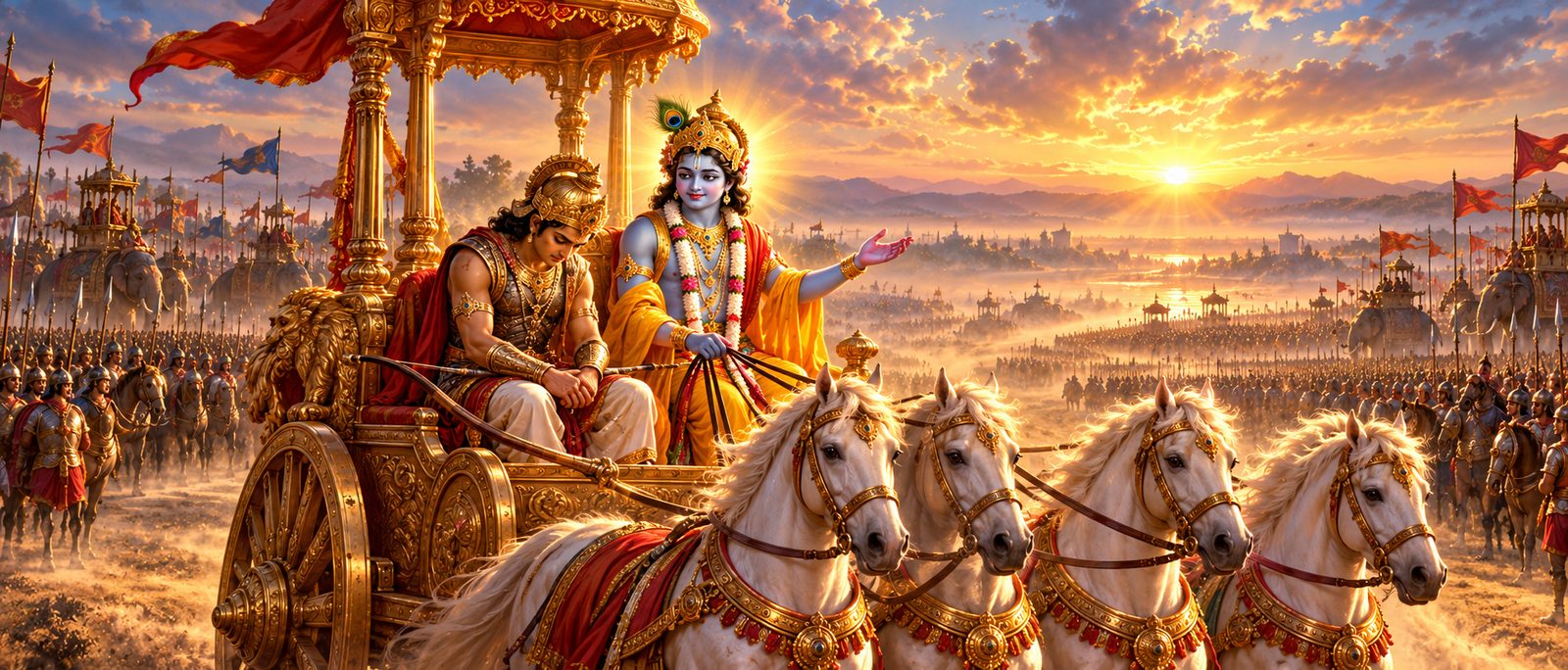
Arjuna stands between two armies and sees family, teachers and friends on both sides. His hands shake, his mind freezes, and he puts down his bow. The Gita begins with a very human moment: feeling lost when a hard choice is in front of you.

अर्जुन दोनों सेनाओं के बीच खड़े हैं और दोनों ओर अपने परिवार, गुरु और मित्रों को देखते हैं। हाथ काँपते हैं, मन सुन्न हो जाता है और वे धनुष रख देते हैं। गीता एक बहुत मानवीय पल से शुरू होती है: जब सामने कठिन चुनाव हो और समझ न आए कि क्या करें।

Show meaning in
1.1

धर्मक्षेत्रे कुरुक्षेत्रे समवेता युयुत्सवः। मामकाः पाण्डवाश्चैव किमकुर्वत सञ्जय

dhṛitarāśhtra uvācha
dharma-kṣhetre kuru-kṣhetre samavetā yuyutsavaḥ
māmakāḥ pāṇḍavāśhchaiva kimakurvata sañjaya

Dhritarashtra asks Sanjaya: on the holy field of Kurukshetra, gathered to fight, what did my sons and the sons of Pandu do?

धृतराष्ट्र संजय से पूछते हैं: धर्मभूमि कुरुक्षेत्र में युद्ध के लिए इकट्ठे हुए मेरे पुत्रों और पाण्डु के पुत्रों ने क्या किया?

What Krishna meant

The blind king Dhritarashtra asks his helper Sanjaya what his sons and the Pandavas are doing on the battlefield. His question shows how much he worries about his own sons. When we are anxious about someone, we keep asking for news; it helps more to take a calm breath and do what we can.

अंधे राजा धृतराष्ट्र अपने सहायक संजय से पूछते हैं कि युद्ध के मैदान में उनके बेटे और पांडव क्या कर रहे हैं। इस सवाल में अपने बेटों के लिए उनकी चिंता दिखती है। जब हम किसी की चिंता करते हैं तो बार-बार खबर पूछते रहते हैं; गहरी साँस लेकर जो हमारे हाथ में है वही करना ज़्यादा काम आता है।
1.2

दृष्ट्वा तु पाण्डवानीकं व्यूढं दुर्योधनस्तदा। आचार्यमुपसङ्गम्य राजा वचनमब्रवीत्

sañjaya uvācha
dṛiṣhṭvā tu pāṇḍavānīkaṁ vyūḍhaṁ duryodhanastadā
āchāryamupasaṅgamya rājā vachanamabravīt

Sanjaya says: seeing the Pandava army arranged for battle, King Duryodhana went to his teacher Drona and spoke.

संजय कहते हैं: पाण्डवों की सेना को व्यूह में खड़ी देखकर राजा दुर्योधन अपने गुरु द्रोणाचार्य के पास गया और बोला।

What Krishna meant

Sanjaya tells the king that Duryodhana saw the Pandava army standing ready and went straight to his teacher Drona. He goes to his teacher because he feels uneasy. When we feel nervous before a big task, it is natural to look for guidance, like asking a senior for advice before a hard meeting.

संजय राजा को बताते हैं कि पांडवों की सेना को तैयार खड़ा देखकर दुर्योधन सीधे अपने गुरु द्रोण के पास गया। वह बेचैन था, इसलिए गुरु के पास गया। किसी बड़े काम से पहले घबराहट हो तो मार्गदर्शन माँगना स्वाभाविक है, जैसे मुश्किल मीटिंग से पहले किसी अनुभवी से सलाह लेना।

1.3

पश्यैतां पाण्डुपुत्राणामाचार्य महतीं चमूम्। व्यूढां द्रुपदपुत्रेण तव शिष्येण धीमता

paśhyaitāṁ pāṇḍu-putrāṇām āchārya mahatīṁ chamūm
vyūḍhāṁ drupada-putreṇa tava śhiṣhyeṇa dhīmatā

Duryodhana says: Teacher, look at this great army of the Pandavas, arranged by your own clever student, the son of Drupada.

दुर्योधन कहता है: आचार्य, पाण्डवों की इस विशाल सेना को देखिए, जिसे आपके ही बुद्धिमान शिष्य द्रुपद के पुत्र ने व्यूह में खड़ा किया है।

What Krishna meant

Duryodhana speaks to Drona and points to the large Pandava army, set up by Drona's own former student. His words carry a sharp hint to the teacher. Krishna is not speaking here. We too sometimes use sharp words to cover worry, so it helps to say plainly what we are afraid of.

दुर्योधन द्रोण से कहता है कि देखिए, पांडवों की यह बड़ी सेना आपके ही पुराने शिष्य ने सजाई है। उसकी बात में गुरु के लिए एक चुभता हुआ इशारा है। यहाँ कृष्ण नहीं बोल रहे। हम भी कभी-कभी चिंता छिपाने के लिए तीखा बोल देते हैं; अच्छा है कि साफ कह दें कि हमें किस बात का डर है।

1.4

अत्र शूरा महेष्वासा भीमार्जुनसमा युधि। युयुधानो विराटश्च द्रुपदश्च महारथः

atra śhūrā maheṣhvāsā bhīmārjuna-samā yudhi
yuyudhāno virāṭaśhcha drupadaśhcha mahā-rathaḥ

Here are mighty archers equal to Bhima and Arjuna in battle: Yuyudhana, Virata and the great warrior Drupada.

यहाँ युद्ध में भीम और अर्जुन के समान बड़े धनुर्धर हैं: युयुधान, विराट और महारथी द्रुपद।

What Krishna meant

Duryodhana begins naming brave Pandava fighters such as Yuyudhana, Virata and Drupada. The verse shows him counting the enemy's strength, which tells us that worry is already in his mind.

दुर्योधन पांडवों के वीर योद्धाओं के नाम गिनाने लगता है, जैसे युयुधान, विराट और द्रुपद। इससे पता चलता है कि वह दुश्मन की ताकत गिन रहा है और उसके मन में चिंता पहले से है।

1.5

धृष्टकेतुश्चेकितानः काशिराजश्च वीर्यवान्। पुरुजित्कुन्तिभोजश्च शैब्यश्च नरपुङ्गवः

dhṛiṣhṭaketuśhchekitānaḥ kāśhirājaśhcha vīryavān
purujit kuntibhojaśhcha śhaibyaśhcha nara-puṅgavaḥ
yudhāmanyuśhcha vikrānta uttamaujāśhcha vīryavān

Also Dhrishtaketu, Chekitana, the brave King of Kashi, Purujit, Kuntibhoja and Shaibya, the best of men.

धृष्टकेतु, चेकितान, पराक्रमी काशिराज, पुरुजित्, कुन्तिभोज और मनुष्यों में श्रेष्ठ शैब्य भी हैं।

What Krishna meant

He goes on naming more warriors on the Pandava side. This long list shows that he is carefully measuring the other army, a sign of an uneasy mind.

वह पांडव पक्ष के और योद्धाओं के नाम गिनाता जाता है। यह लंबी सूची दिखाती है कि वह दूसरी सेना को बड़ी बारीकी से तौल रहा है, जो बेचैन मन की निशानी है।

1.6

युधामन्युश्च विक्रान्त उत्तमौजाश्च वीर्यवान्। सौभद्रो द्रौपदेयाश्च सर्व एव महारथाः

saubhadro draupadeyāśhcha sarva eva mahā-rathāḥ

Also brave Yudhamanyu, mighty Uttamauja, the son of Subhadra and the sons of Draupadi, all great warriors.

पराक्रमी युधामन्यु, बलवान उत्तमौजा, सुभद्रा के पुत्र अभिमन्यु और द्रौपदी के पुत्र, ये सब महारथी हैं।

What Krishna meant

The list ends with more brave fighters, including Draupadi's sons. Duryodhana is nervously counting how strong the other side is, which shows he is less confident than he looks.

सूची में कुछ और वीर जुड़ते हैं, जिनमें द्रौपदी के पुत्र भी हैं। दुर्योधन घबराकर गिन रहा है कि दूसरा पक्ष कितना मज़बूत है। इससे दिखता है कि वह उतना भरोसे में नहीं है जितना दिखता है।

1.7

अस्माकं तु विशिष्टा ये तान्निबोध द्विजोत्तम। नायका मम सैन्यस्य संज्ञार्थं तान्ब्रवीमि ते

asmākaṁ tu viśhiṣhṭā ye tānnibodha dwijottama
nāyakā mama sainyasya sanjñārthaṁ tānbravīmi te

Now hear, best of Brahmins, about the chief leaders on our side. I name them so you know them.

हे द्विजश्रेष्ठ, अब हमारी ओर के मुख्य सेनानायकों को जान लीजिए। आपकी जानकारी के लिए मैं उनके नाम बताता हूँ।

What Krishna meant

Duryodhana now turns to his own side and asks Drona to listen as he names the main leaders of his army. A good leader, in any team, knows each member's strength, and naming them with respect gives everyone real confidence.

अब दुर्योधन अपनी तरफ मुड़ता है और द्रोण से कहता है कि मैं अपनी सेना के मुख्य नायकों के नाम बताता हूँ, ध्यान से सुनिए। किसी भी टीम में अच्छा नेता हर सदस्य की ताकत जानता है, और सम्मान से उनका नाम लेने से सबका हौसला बढ़ता है।

1.8

भवान्भीष्मश्च कर्णश्च कृपश्च समितिञ्जयः। अश्वत्थामा विकर्णश्च सौमदत्तिस्तथैव च

bhavānbhīṣhmaśhcha karṇaśhcha kṛipaśhcha samitiñjayaḥ
aśhvatthāmā vikarṇaśhcha saumadattis tathaiva cha

There are you yourself, Bhishma, Karna, Kripa who always wins battles, Ashwatthama, Vikarna and the son of Somadatta.

आप स्वयं, भीष्म, कर्ण, युद्ध जीतने वाले कृपाचार्य, अश्वत्थामा, विकर्ण और सोमदत्त का पुत्र भूरिश्रवा हैं।

What Krishna meant

Duryodhana names great fighters on his own side, including Drona, Bhishma and Karna. Counting your strengths like this is what people often do to boost their courage when they are worried.

दुर्योधन अपनी ओर के महान योद्धाओं के नाम लेता है, जिनमें द्रोण, भीष्म और कर्ण भी हैं। चिंता में लोग अक्सर अपनी ताकतें गिनकर हिम्मत जुटाते हैं, वही वह यहाँ कर रहा है।

1.9

अन्ये च बहवः शूरा मदर्थे त्यक्तजीविताः। नानाशस्त्रप्रहरणाः सर्वे युद्धविशारदाः

anye cha bahavaḥ śhūrā madarthe tyaktajīvitāḥ
nānā-śhastra-praharaṇāḥ sarve yuddha-viśhāradāḥ

Many other brave men are ready to give up their lives for me, armed with many weapons and skilled in war.

और भी बहुत से वीर हैं जो मेरे लिए प्राण देने को तैयार हैं। वे अनेक शस्त्र चलाने वाले और युद्ध में कुशल हैं।

What Krishna meant

He adds that many other brave men are ready to give their lives for him. This shows his trust in his army, and also that this war will cost many lives.

वह कहता है कि और भी बहुत से वीर उसके लिए जान देने को तैयार हैं। इससे उसका अपनी सेना पर भरोसा दिखता है, और यह भी कि इस युद्ध में बहुत जानें जाएँगी।

1.10

अपर्याप्तं तदस्माकं बलं भीष्माभिरक्षितम्। पर्याप्तं त्विदमेतेषां बलं भीमाभिरक्षितम्

aparyāptaṁ tadasmākaṁ balaṁ bhīṣhmābhirakṣhitam
paryāptaṁ tvidameteṣhāṁ balaṁ bhīmābhirakṣhitam

Our army, guarded by Bhishma, is not enough to count on, while their army, guarded by Bhima, seems enough.

भीष्म द्वारा रक्षित हमारी सेना हमें अपर्याप्त लगती है, जबकि भीम द्वारा रक्षित उनकी सेना पर्याप्त लगती है।

What Krishna meant

Duryodhana says his army, guarded by Bhishma, may not be enough, while the Pandava army seems enough. Even a proud person can doubt himself deep inside. Before a big exam or talk, admit your worry, then prepare steadily instead of pretending it is not there.

दुर्योधन कहता है कि भीष्म की रक्षा वाली हमारी सेना शायद काफी नहीं है, जबकि पांडवों की सेना काफी लगती है। घमंडी इंसान भी भीतर से शक कर सकता है। बड़े इम्तिहान या बातचीत से पहले अपनी चिंता मान लें और दिखावा करने के बजाय लगातार तैयारी करें।

1.11

अयनेषु च सर्वेषु यथाभागमवस्थिताः। भीष्ममेवाभिरक्षन्तु भवन्तः सर्व एव हि

ayaneṣhu cha sarveṣhu yathā-bhāgamavasthitāḥ
bhīṣhmamevābhirakṣhantu bhavantaḥ sarva eva hi

So all of you, standing firm in your places at every entrance, must protect Bhishma above all.

इसलिए आप सब अपने-अपने स्थान पर डटे रहकर सब ओर से भीष्म की ही रक्षा करें।

What Krishna meant

Duryodhana orders his commanders to stay firm at their posts and to protect Bhishma above all. He knows his strongest person must be kept safe. A team also does well when everyone guards its key strength and does their own part carefully, without panic.

दुर्योधन अपने सेनापतियों को आदेश देता है कि सब अपनी जगह डटे रहें और सबसे बढ़कर भीष्म की रक्षा करें। वह जानता है कि सबसे मज़बूत व्यक्ति को सुरक्षित रखना ज़रूरी है। टीम भी तब अच्छा करती है जब सब अपनी मुख्य ताकत की रक्षा करें और घबराए बिना अपना काम ध्यान से करें।

1.12

तस्य संजनयन्हर्षं कुरुवृद्धः पितामहः। सिंहनादं विनद्योच्चैः शङ्खं दध्मौ प्रतापवान्

tasya sañjanayan harṣhaṁ kuru-vṛiddhaḥ pitāmahaḥ
siṁha-nādaṁ vinadyochchaiḥ śhaṅkhaṁ dadhmau pratāpavān

To cheer Duryodhana, the old grandsire Bhishma roared like a lion and blew his conch loudly.

दुर्योधन को प्रसन्न करने के लिए कुरुवंश के वृद्ध पितामह भीष्म ने सिंह की तरह गरजकर ज़ोर से शंख बजाया।

What Krishna meant

To cheer up Duryodhana, grandfather Bhishma roars like a lion and blows his conch loudly. It is a kind gesture to lift a worried young king. When a friend or colleague is low, a warm word or cheerful act from an elder can bring back their courage.

दुर्योधन का हौसला बढ़ाने के लिए दादा भीष्म शेर की तरह गरजते हैं और ज़ोर से शंख बजाते हैं। यह एक घबराए हुए युवा राजा को सहारा देने का स्नेह भरा तरीका है। जब कोई दोस्त या साथी उदास हो, तो बड़ों का एक मीठा बोल या हँसमुख व्यवहार उसकी हिम्मत लौटा सकता है।

1.13

ततः शङ्खाश्च भेर्यश्च पणवानकगोमुखाः। सहसैवाभ्यहन्यन्त स शब्दस्तुमुलोऽभवत्

tataḥ śhaṅkhāśhcha bheryaśhcha paṇavānaka-gomukhāḥ
sahasaivābhyahanyanta sa śhabdastumulo ’bhavat

Then conches, drums, tabors and horns all sounded at once, and the noise became thunderous.

फिर शंख, नगाड़े, ढोल और नरसिंगे एक साथ बज उठे और भयंकर आवाज़ हुई।

What Krishna meant

Suddenly conches, drums and horns all sound together and the noise becomes huge. This verse only sets the scene of a war about to start, and shows how loud and tense the moment was before Arjuna's quiet doubt.

अचानक शंख, नगाड़े और तुरहियाँ एक साथ बज उठते हैं और शोर गूँज जाता है। यह श्लोक बस युद्ध शुरू होने का माहौल बताता है कि अर्जुन के मन के शांत संदेह से पहले का क्षण कितना तेज़ और तनाव भरा था।

1.14

ततः श्वेतैर्हयैर्युक्ते महति स्यन्दने स्थितौ। माधवः पाण्डवश्चैव दिव्यौ शङ्खौ प्रदध्मतुः

tataḥ śhvetairhayairyukte mahati syandane sthitau
mādhavaḥ pāṇḍavaśhchaiva divyau śhaṅkhau pradadhmatuḥ

Then Krishna and Arjuna, seated in a grand chariot drawn by white horses, blew their divine conches.

तब श्वेत घोड़ों वाले महान रथ में बैठे श्रीकृष्ण और अर्जुन ने अपने दिव्य शंख बजाए।

What Krishna meant

Now Krishna and Arjuna, in a grand chariot drawn by white horses, blow their divine conches. Their clear sound answers the noise of the other side. When people around you are loud and angry, you can stay steady and let your calm confidence speak.

अब श्वेत घोड़ों वाले भव्य रथ में बैठे कृष्ण और अर्जुन अपने दिव्य शंख बजाते हैं। उनकी साफ आवाज़ दूसरी ओर के शोर का जवाब है। जब आसपास के लोग ऊँची आवाज़ में गुस्सा कर रहे हों, तब भी आप शांत रहकर अपने स्थिर भरोसे से जवाब दे सकते हैं।

1.15

पाञ्चजन्यं हृषीकेशो देवदत्तं धनंजयः। पौण्ड्रं दध्मौ महाशङ्खं भीमकर्मा वृकोदरः

pāñchajanyaṁ hṛiṣhīkeśho devadattaṁ dhanañjayaḥ
pauṇḍraṁ dadhmau mahā-śhaṅkhaṁ bhīma-karmā vṛikodaraḥ

Krishna blew the Panchajanya, Arjuna the Devadatta, and Bhima of fierce deeds blew the great conch Paundra.

श्रीकृष्ण ने पाञ्चजन्य, अर्जुन ने देवदत्त और भयंकर कर्म वाले भीम ने पौण्ड्र नामक महाशंख बजाया।

What Krishna meant

Krishna, Arjuna and Bhima each blow their own special conch. Naming each one shows that every warrior is ready, and that Krishna himself stands with Arjuna.

कृष्ण, अर्जुन और भीम अपने-अपने खास शंख बजाते हैं। हर एक का नाम लेने से पता चलता है कि हर योद्धा तैयार है और कृष्ण स्वयं अर्जुन के साथ खड़े हैं।

1.16

अनन्तविजयं राजा कुन्तीपुत्रो युधिष्ठिरः। नकुलः सहदेवश्च सुघोषमणिपुष्पकौ

anantavijayaṁ rājā kuntī-putro yudhiṣhṭhiraḥ
nakulaḥ sahadevaśhcha sughoṣha-maṇipuṣhpakau

King Yudhishthira blew the Anantavijaya, and Nakula and Sahadeva blew the Sughosha and the Manipushpaka.

राजा युधिष्ठिर ने अनन्तविजय, नकुल ने सुघोष और सहदेव ने मणिपुष्पक शंख बजाया।

What Krishna meant

Yudhishthira, Nakula and Sahadeva blow their conches too. The verse simply lists the Pandava brothers, showing the whole family standing together and ready.

युधिष्ठिर, नकुल और सहदेव भी अपने शंख बजाते हैं। यह श्लोक बस पांडव भाइयों के नाम गिनाता है, जिससे दिखता है कि पूरा परिवार साथ खड़ा और तैयार है।

1.17

काश्यश्च परमेष्वासः शिखण्डी च महारथः। धृष्टद्युम्नो विराटश्च सात्यकिश्चापराजितः

kāśhyaśhcha parameṣhvāsaḥ śhikhaṇḍī cha mahā-rathaḥ
dhṛiṣhṭadyumno virāṭaśhcha sātyakiśh chāparājitaḥ

The king of Kashi, Shikhandi, Dhrishtadyumna, Virata and the unbeaten Satyaki also blew their conches.

श्रेष्ठ धनुर्धर काशिराज, महारथी शिखण्डी, धृष्टद्युम्न, विराट और अजेय सात्यकि ने भी शंख बजाए।

What Krishna meant

More Pandava allies, such as the king of Kashi, Shikhandi and Satyaki, blow their conches. It shows how many friends and supporters had gathered beside the Pandavas.

पांडवों के और साथी, जैसे काशीराज, शिखंडी और सात्यकि, अपने शंख बजाते हैं। इससे पता चलता है कि पांडवों के साथ कितने मित्र और समर्थक आ जुटे थे।

1.18

द्रुपदो द्रौपदेयाश्च सर्वशः पृथिवीपते। सौभद्रश्च महाबाहुः शङ्खान्दध्मुः पृथक्पृथक्

drupado draupadeyāśhcha sarvaśhaḥ pṛithivī-pate
saubhadraśhcha mahā-bāhuḥ śhaṅkhāndadhmuḥ pṛithak pṛithak

Drupada, the sons of Draupadi and the mighty-armed son of Subhadra each blew their own conches.

द्रुपद, द्रौपदी के पुत्रों और महाबाहु अभिमन्यु ने भी अपने-अपने शंख अलग-अलग बजाए।

What Krishna meant

Drupada, the sons of Draupadi and Abhimanyu also blow their conches. The list closes the Pandava side's call, showing a united army, ready and without hesitation.

द्रुपद, द्रौपदी के पुत्र और अभिमन्यु भी अपने शंख बजाते हैं। यह सूची पांडव पक्ष की पुकार को पूरा करती है और दिखाती है कि पूरी सेना एकजुट और बिना झिझक तैयार है।

1.19

स घोषो धार्तराष्ट्राणां हृदयानि व्यदारयत्। नभश्च पृथिवीं चैव तुमुलो व्यनुनादयन्

sa ghoṣho dhārtarāṣhṭrāṇāṁ hṛidayāni vyadārayat
nabhaśhcha pṛithivīṁ chaiva tumulo nunādayan

That roaring sound tore the hearts of Dhritarashtra's sons and echoed through the earth and sky.

उस भयंकर ध्वनि ने पृथ्वी और आकाश को गुँजाते हुए धृतराष्ट्र के पुत्रों के हृदय चीर दिए।

What Krishna meant

The great sound of the Pandava conches shook the hearts of Dhritarashtra's sons and echoed through earth and sky. Sanjaya tells this to the king. It shows that people acting together with a clear purpose can be felt, and a united team can make doubters nervous.

पांडवों के शंखों की भारी गूँज ने धृतराष्ट्र के पुत्रों के दिल हिला दिए और धरती-आकाश में फैल गई। संजय यह राजा को बताते हैं। इससे दिखता है कि जब लोग साफ उद्देश्य के साथ मिलकर चलते हैं, तो उनकी ताकत महसूस होती है और एकजुट टीम शक करने वालों को भी घबरा देती है।

1.20

अथ व्यवस्थितान् दृष्ट्वा धार्तराष्ट्रान्कपिध्वजः। प्रवृत्ते शस्त्रसंपाते धनुरुद्यम्य पाण्डवः

atha vyavasthitān dṛiṣhṭvā dhārtarāṣhṭrān kapi-dhwajaḥ
pravṛitte śhastra-sampāte dhanurudyamya pāṇḍavaḥ
hṛiṣhīkeśhaṁ tadā vākyam idam āha mahī-pate

Then Arjuna, whose flag bore Hanuman, saw Dhritarashtra's sons ready, and as weapons were about to fly, he raised his bow.

तब कपिध्वज अर्जुन ने धृतराष्ट्र के पुत्रों को युद्ध के लिए खड़ा देखा और शस्त्र चलने का समय आने पर धनुष उठाया।

What Krishna meant

Arjuna, whose flag shows Hanuman, sees Dhritarashtra's sons ready and lifts his bow as the fight is about to begin. He is a brave, trained warrior. Before any big step, such as a hard exam or job change, it is wise to pause and look at the situation clearly.

हनुमान के झंडे वाले अर्जुन धृतराष्ट्र के पुत्रों को तैयार देखते हैं और लड़ाई शुरू होने से ठीक पहले अपना धनुष उठाते हैं। वे एक बहादुर, प्रशिक्षित योद्धा हैं। किसी भी बड़े कदम से पहले, जैसे कठिन परीक्षा या नौकरी बदलना, रुककर हालात को साफ देख लेना समझदारी है।

1.21

हृषीकेशं तदा वाक्यमिदमाह महीपते। सेनयोरुभयोर्मध्ये रथं स्थापय मेऽच्युत

arjuna uvācha
senayor ubhayor madhye rathaṁ sthāpaya me ’chyuta

Arjuna says to Krishna: Achyuta, please place my chariot between the two armies.

अर्जुन श्रीकृष्ण से कहते हैं: हे अच्युत, मेरे रथ को दोनों सेनाओं के बीच में खड़ा कीजिए।

What Krishna meant

Arjuna asks Krishna, his friend and charioteer, to place the chariot between the two armies. He treats Krishna as his guide. In life, when facing a big decision, it helps a great deal to have a trusted friend or mentor close by.

अर्जुन अपने मित्र और सारथी कृष्ण से कहते हैं कि रथ को दोनों सेनाओं के बीच ले चलो। वे कृष्ण को अपना मार्गदर्शक मानते हैं। जीवन में किसी बड़े फैसले के समय किसी भरोसेमंद दोस्त या गुरु का पास होना बहुत सहारा देता है।

1.22

यावदेतान्निरीक्षेऽहं योद्धुकामानवस्थितान्। कैर्मया सह योद्धव्यमस्मिन्रणसमुद्यमे

yāvadetān nirīkṣhe ’haṁ yoddhu-kāmān avasthitān
kairmayā saha yoddhavyam asmin raṇa-samudyame

So I can look at those who stand ready to fight, and know with whom I must battle in this war.

जिससे मैं युद्ध के लिए खड़े इन लोगों को देख सकूँ और जान सकूँ कि इस युद्ध में मुझे किनके साथ लड़ना है।

What Krishna meant

Arjuna says he wants to see who stands ready to fight and with whom he must battle. Wanting the whole picture before acting is wise. Before a tough conversation, for example, think about who is involved and how it will affect them.

अर्जुन कहते हैं कि मैं देखना चाहता हूँ कि कौन लड़ने को खड़ा है और मुझे किससे लड़ना है। कुछ करने से पहले पूरी तस्वीर देखना समझदारी है। जैसे किसी मुश्किल बातचीत से पहले सोचें कि कौन-कौन जुड़ा है और उन पर क्या असर होगा।

1.23

योत्स्यमानानवेक्षेऽहं य एतेऽत्र समागताः। धार्तराष्ट्रस्य दुर्बुद्धेर्युद्धे प्रियचिकीर्षवः

yotsyamānān avekṣhe ’haṁ ya ete ’tra samāgatāḥ
dhārtarāṣhṭrasya durbuddher yuddhe priya-chikīrṣhavaḥ

I want to see those who have gathered here to please the evil-minded son of Dhritarashtra by fighting.

दुष्ट बुद्धि वाले दुर्योधन को खुश करने के लिए जो लोग यहाँ युद्ध करने आए हैं, मैं उन्हें देखना चाहता हूँ।

What Krishna meant

Arjuna says he wants to see those who have come to fight to please the wicked Duryodhana. At this point he still sees them simply as opponents. Our first judgments about people are often simple, until we look closely and see who they really are.

अर्जुन कहते हैं कि मैं उन्हें देखना चाहता हूँ जो दुष्ट दुर्योधन को खुश करने के लिए लड़ने आए हैं। अभी वे उन्हें बस विरोधी मानते हैं। लोगों के बारे में हमारी पहली राय अक्सर सीधी-सी होती है, जब तक हम पास से देखकर समझ नहीं लेते कि वे असल में कौन हैं।

1.24

संजय उवाच एवमुक्तो हृषीकेशो गुडाकेशेन भारत। सेनयोरुभयोर्मध्ये स्थापयित्वा रथोत्तमम्

sañjaya uvācha
evam ukto hṛiṣhīkeśho guḍākeśhena bhārata
senayor ubhayor madhye sthāpayitvā rathottamam

Sanjaya says: Asked this by Arjuna, Krishna stopped the finest chariot between the two armies.

संजय कहते हैं: अर्जुन के ऐसा कहने पर श्रीकृष्ण ने उस उत्तम रथ को दोनों सेनाओं के बीच में खड़ा कर दिया।

What Krishna meant

Sanjaya tells the king that Krishna, hearing Arjuna's request, calmly stops the finest chariot between the two armies. Krishna simply does what his friend asks. Good support often means helping someone see for himself, even when the view will be hard.

संजय राजा को बताते हैं कि अर्जुन की बात सुनकर कृष्ण शांति से उस उत्तम रथ को दोनों सेनाओं के बीच खड़ा कर देते हैं। कृष्ण बस वही करते हैं जो उनके मित्र ने कहा। अच्छा साथ अक्सर यही होता है कि किसी को खुद देखने दें, भले ही वह दृश्य कठिन हो।

1.25

भीष्मद्रोणप्रमुखतः सर्वेषां च महीक्षिताम्। उवाच पार्थ पश्यैतान्समवेतान्कुरूनिति

bhīṣhma-droṇa-pramukhataḥ sarveṣhāṁ cha mahī-kṣhitām
uvācha pārtha paśhyaitān samavetān kurūn iti

Facing Bhishma, Drona and all the kings, he said: Arjuna, look at these Kurus gathered here.

भीष्म, द्रोण और सब राजाओं के सामने रथ रोककर उन्होंने कहा: हे पार्थ, इन इकट्ठे हुए कौरवों को देखो।

What Krishna meant

Krishna stops the chariot facing Bhishma and Drona and says, look at these Kurus gathered here. Krishna means: look carefully at the real people before you. Before judging a situation, look at it honestly and fully, even the parts that make you uncomfortable.

कृष्ण रथ को भीष्म और द्रोण के सामने रोकते हैं और कहते हैं कि अर्जुन, यहाँ जुटे इन कौरवों को देखो। कृष्ण का मतलब है कि सामने खड़े असली लोगों को ध्यान से देखो। किसी हालात पर राय बनाने से पहले उसे ईमानदारी और पूरा देखें, उन हिस्सों को भी जो असहज करते हैं।

1.26

तत्रापश्यत्स्थितान्पार्थः पितृ़नथ पितामहान्। आचार्यान्मातुलान्भ्रातृ़न्पुत्रान्पौत्रान्सखींस्तथा

tatrāpaśhyat sthitān pārthaḥ pitṝīn atha pitāmahān
āchāryān mātulān bhrātṝīn putrān pautrān sakhīṁs tathā
śhvaśhurān suhṛidaśh chaiva senayor ubhayor api

There Arjuna saw fathers, grandfathers, teachers, uncles, brothers, sons, grandsons and friends standing.

वहाँ अर्जुन ने अपने पिता समान बड़ों, पितामहों, गुरुओं, मामाओं, भाइयों, पुत्रों, पौत्रों और मित्रों को खड़ा देखा।

What Krishna meant

Arjuna sees fathers' generation, grandfathers, teachers, uncles, brothers, sons and friends all standing on the battlefield. The enemy is not strangers but family. A hard decision becomes heavy when it affects people we love, as in a painful family dispute.

अर्जुन देखते हैं कि चाचा-ताऊ, दादा, गुरु, मामा, भाई, बेटे और मित्र, सब युद्ध के मैदान में खड़े हैं। सामने अजनबी नहीं, अपने ही लोग हैं। जब कोई मुश्किल फैसला अपनों पर असर डालता है, जैसे परिवार के झगड़े में, तो वह बहुत भारी हो जाता है।

1.27

श्वशुरान्सुहृदश्चैव सेनयोरुभयोरपि। तान्समीक्ष्य स कौन्तेयः सर्वान्बन्धूनवस्थितान्

tān samīkṣhya sa kaunteyaḥ sarvān bandhūn avasthitān
kṛipayā parayāviṣhṭo viṣhīdann idam abravīt

He also saw fathers-in-law and well-wishers in both armies. Seeing all his relatives standing there, Arjuna was moved.

उसने दोनों सेनाओं में ससुर और शुभचिन्तकों को भी देखा। अपने सब बन्धुओं को वहाँ खड़ा देखकर अर्जुन का मन भर आया।

What Krishna meant

Arjuna also sees fathers-in-law and well-wishers in both armies, and he is deeply moved. His heart softens as he sees them all as relatives. This feeling is natural; caring for others does not make us weak, it shows a kind heart.

अर्जुन दोनों सेनाओं में ससुर और शुभचिंतकों को भी देखते हैं और भीतर तक हिल जाते हैं। सबको अपना रिश्तेदार देखकर उनका मन पिघल जाता है। ऐसा महसूस होना स्वाभाविक है; दूसरों की परवाह करना कमज़ोरी नहीं, दयालु दिल की निशानी है।

1.28

कृपया परयाऽऽविष्टो विषीदन्निदमब्रवीत्। दृष्ट्वेमं स्वजनं कृष्ण युयुत्सुं समुपस्थितम्

arjuna uvācha
dṛiṣhṭvemaṁ sva-janaṁ kṛiṣhṇa yuyutsuṁ samupasthitam

Filled with deep pity and sorrow, Arjuna says: Krishna, seeing my own people standing here ready to fight,

गहरी दया और दुःख से भरकर अर्जुन कहते हैं: हे कृष्ण, युद्ध के लिए सामने खड़े अपने ही लोगों को देखकर,

What Krishna meant

Filled with deep pity and sorrow, Arjuna begins to speak to Krishna, saying he sees his own people standing ready to fight. When emotions rise suddenly, it helps to put them into words to a trusted friend, as Arjuna does here.

गहरी करुणा और दुख से भरे अर्जुन कृष्ण से कहने लगते हैं कि मैं अपने ही लोगों को लड़ने के लिए खड़ा देख रहा हूँ। जब भावनाएँ अचानक उमड़ें, तो किसी भरोसेमंद दोस्त से उन्हें शब्दों में कह देना मदद करता है, जैसा अर्जुन यहाँ करते हैं।

1.29

सीदन्ति मम गात्राणि मुखं च परिशुष्यति। वेपथुश्च शरीरे मे रोमहर्षश्च जायते

sīdanti mama gātrāṇi mukhaṁ cha pariśhuṣhyati
vepathuśh cha śharīre me roma-harṣhaśh cha jāyate

my limbs are weak, my mouth is dry, my body trembles and my hair stands on end.

मेरे अंग शिथिल हो रहे हैं, मुँह सूख रहा है, शरीर काँप रहा है और रोंगटे खड़े हो रहे हैं।

What Krishna meant

Arjuna says his limbs feel weak, his mouth is dry, his body trembles and his hair stands on end. This is how a stressed body can feel. If you feel this before an exam or hard talk, slow your breathing and tell someone you trust.

अर्जुन कहते हैं कि मेरे अंग ढीले पड़ रहे हैं, मुँह सूख रहा है, शरीर काँप रहा है और रोंगटे खड़े हैं। तनाव में शरीर ऐसा महसूस कर सकता है। परीक्षा या कठिन बातचीत से पहले ऐसा लगे तो साँस धीमी करें और किसी भरोसेमंद को बताएँ।

1.30

गाण्डीवं स्रंसते हस्तात्त्वक्चैव परिदह्यते। न च शक्नोम्यवस्थातुं भ्रमतीव च मे मनः

gāṇḍīvaṁ sraṁsate hastāt tvak chaiva paridahyate
na cha śhaknomy avasthātuṁ bhramatīva cha me manaḥ

The Gandiva bow slips from my hand, my skin burns, I cannot stand, and my mind seems to be spinning.

गाण्डीव धनुष हाथ से गिर रहा है, त्वचा जल रही है, मैं खड़ा नहीं रह पा रहा और मेरा मन चक्कर खा रहा है।

What Krishna meant

Arjuna's famous bow slips from his hand, his skin burns, he cannot stand and his mind seems to spin. He is overwhelmed. When stress becomes too heavy, it is fine to sit down, rest and ask for help before deciding anything.

अर्जुन का प्रसिद्ध धनुष हाथ से फिसल रहा है, त्वचा जल रही है, वे खड़े नहीं रह पा रहे और मन घूमता लग रहा है। वे बुरी तरह घबराए हुए हैं। जब तनाव बहुत भारी हो जाए, तो कुछ भी तय करने से पहले बैठ जाना, आराम करना और मदद माँगना ठीक है।

1.31

निमित्तानि च पश्यामि विपरीतानि केशव। न च श्रेयोऽनुपश्यामि हत्वा स्वजनमाहवे

nimittāni cha paśhyāmi viparītāni keśhava
na cha śhreyo ’nupaśhyāmi hatvā sva-janam āhave

I see bad omens, Krishna. And I do not see any good in killing my own people in battle.

हे केशव, मुझे अपशकुन दिख रहे हैं। और अपनों को युद्ध में मारकर मुझे कोई भलाई नहीं दिखती।

What Krishna meant

Arjuna says he sees bad signs and cannot see any good in killing his own people. When we are frightened, we start reading everything as a bad sign. It helps to wait until the mind is calmer before making a big choice.

अर्जुन कहते हैं कि मुझे बुरे शकुन दिख रहे हैं और अपनों को मारने में मुझे कोई भलाई नहीं दिखती। डरे हुए हों तो हम हर चीज़ को बुरा संकेत समझने लगते हैं। कोई बड़ा फैसला करने से पहले मन के शांत होने का इंतज़ार करना अच्छा है।

1.32

न काङ्क्षे विजयं कृष्ण न च राज्यं सुखानि च। किं नो राज्येन गोविन्द किं भोगैर्जीवितेन वा

na kāṅkṣhe vijayaṁ kṛiṣhṇa na cha rājyaṁ sukhāni cha
kiṁ no rājyena govinda kiṁ bhogair jīvitena vā

I do not want victory, Krishna, nor a kingdom, nor pleasures. What use is a kingdom, or enjoyment, or even life?

हे कृष्ण, मुझे न विजय चाहिए, न राज्य, न सुख। हे गोविन्द, राज्य, भोग या जीवन से भी हमें क्या लाभ?

What Krishna meant

Arjuna says he does not want victory, a kingdom or pleasures, and asks what use they are, or even life itself. In grief, success can look empty. If you ever feel this after reaching a goal, ask yourself what really matters to you.

अर्जुन कहते हैं कि मुझे न जीत चाहिए, न राज्य, न सुख; इनका क्या फायदा, जीवन का भी क्या। दुख में सफलता खोखली लग सकती है। अगर कोई लक्ष्य पाकर भी ऐसा लगे, तो खुद से पूछिए कि आपके लिए सचमुच क्या मायने रखता है।

1.33

येषामर्थे काङ्क्षितं नो राज्यं भोगाः सुखानि च। त इमेऽवस्थिता युद्धे प्राणांस्त्यक्त्वा धनानि च

yeṣhām arthe kāṅkṣhitaṁ no rājyaṁ bhogāḥ sukhāni cha
ta ime ’vasthitā yuddhe prāṇāṁs tyaktvā dhanāni cha

Those for whose sake we want a kingdom, enjoyment and happiness are standing here ready to give up life and wealth.

जिनके लिए हम राज्य, भोग और सुख चाहते हैं, वे ही प्राण और धन छोड़कर यहाँ युद्ध के लिए खड़े हैं।

What Krishna meant

Arjuna says the very people for whose sake we want a kingdom and happiness are standing here ready to give up their lives. Winning would mean losing those we love. We should ask whom our success is for, such as family time lost to overwork.

अर्जुन कहते हैं कि जिनके लिए हम राज्य और सुख चाहते हैं, वही लोग यहाँ जान देने को खड़े हैं। जीतने का मतलब अपनों को खोना होगा। हमें पूछना चाहिए कि हमारी सफलता किसके लिए है, जैसे ज़्यादा काम में परिवार का समय खो देना।

1.34

आचार्याः पितरः पुत्रास्तथैव च पितामहाः। मातुलाः श्चशुराः पौत्राः श्यालाः सम्बन्धिनस्तथा

āchāryāḥ pitaraḥ putrās tathaiva cha pitāmahāḥ
mātulāḥ śhvaśhurāḥ pautrāḥ śhyālāḥ sambandhinas tathā

Teachers, fathers, sons, grandfathers, uncles, fathers-in-law, grandsons, brothers-in-law and other relatives.

गुरु, पिता, पुत्र, पितामह, मामा, ससुर, पौत्र, साले और अन्य सम्बन्धी, ये सब यहाँ खड़े हैं।

What Krishna meant

Arjuna keeps listing the relatives on the other side: teachers, fathers, sons, uncles and in-laws. The list shows how many people close to him would be harmed, and makes his sorrow clearer.

अर्जुन दूसरी ओर खड़े रिश्तेदारों की गिनती करते जाते हैं: गुरु, पिता, पुत्र, मामा और ससुराल वाले। यह सूची दिखाती है कि उनके कितने अपने लोग नुकसान में पड़ेंगे, और उनका दुख साफ हो जाता है।

1.35

एतान्न हन्तुमिच्छामि घ्नतोऽपि मधुसूदन। अपि त्रैलोक्यराज्यस्य हेतोः किं नु महीकृते

etān na hantum ichchhāmi ghnato ’pi madhusūdana
api trailokya-rājyasya hetoḥ kiṁ nu mahī-kṛite

I do not want to kill them, even if they kill me, even for the rule of the three worlds, let alone for this earth.

भले ही ये मुझे मार दें, मैं इन्हें मारना नहीं चाहता, तीनों लोकों के राज्य के लिए भी नहीं, फिर इस पृथ्वी की तो बात ही क्या।

What Krishna meant

Arjuna says he would not harm them even if they kill him, not even for rule over the three worlds, let alone this earth. His heart refuses to hurt loved ones. When a choice means hurting people you love, your hesitation is worth listening to.

अर्जुन कहते हैं कि वे मुझे मार भी दें तो भी मैं उन्हें नहीं मारूँगा, तीनों लोकों के राज के लिए भी नहीं, धरती की तो बात ही क्या। उनका दिल अपनों को चोट देने से इनकार करता है। जब किसी फैसले में अपनों को दुख पहुँचे, तो अपनी झिझक को सुनना ज़रूरी है।

1.36

निहत्य धार्तराष्ट्रान्नः का प्रीतिः स्याज्जनार्दन। पापमेवाश्रयेदस्मान्हत्वैतानाततायिनः

nihatya dhārtarāṣhṭrān naḥ kā prītiḥ syāj janārdana
pāpam evāśhrayed asmān hatvaitān ātatāyinaḥ

What joy would we have in killing Dhritarashtra's sons? Sin alone would come to us by killing these attackers.

धृतराष्ट्र के पुत्रों को मारकर हमें क्या प्रसन्नता होगी? इन आततायियों को मारकर भी हमें पाप ही लगेगा।

What Krishna meant

Arjuna asks what joy killing Dhritarashtra's sons could bring, and says harming them would bring only guilt. He is thinking about his conscience. A win that leaves a heavy conscience, such as cheating a rival, is not really worth it.

अर्जुन पूछते हैं कि धृतराष्ट्र के पुत्रों को मारकर हमें क्या खुशी मिलेगी, और कहते हैं कि उन्हें हानि पहुँचाने से सिर्फ पाप ही लगेगा। वे अपने ज़मीर के बारे में सोच रहे हैं। जो जीत मन पर बोझ छोड़ दे, जैसे किसी प्रतिद्वंद्वी को धोखा देकर जीतना, वह सचमुच कीमती नहीं है।

1.37

तस्मान्नार्हा वयं हन्तुं धार्तराष्ट्रान्स्वबान्धवान्। स्वजनं हि कथं हत्वा सुखिनः स्याम माधव

tasmān nārhā vayaṁ hantuṁ dhārtarāṣhṭrān sa-bāndhavān
sva-janaṁ hi kathaṁ hatvā sukhinaḥ syāma mādhava

So we should not kill our own relatives. How can we be happy after killing our own people, Madhava?

इसलिए अपने ही सम्बन्धियों को मारना हमारे लिए उचित नहीं। हे माधव, अपनों को मारकर हम सुखी कैसे होंगे?

What Krishna meant

Arjuna says we should not kill our own relatives, and asks how we could be happy after killing our own people. He means happiness cannot be built on hurting family. In a family quarrel, winning the argument can cost a relationship.

अर्जुन कहते हैं कि हमें अपने ही रिश्तेदारों को नहीं मारना चाहिए, अपनों को मारकर हम सुखी कैसे होंगे। उनका मतलब है कि परिवार को चोट देकर सुख नहीं बनता। घर के झगड़े में बहस जीतने की कीमत कभी रिश्ता हार जाना भी हो सकती है।

1.38

यद्यप्येते न पश्यन्ति लोभोपहतचेतसः। कुलक्षयकृतं दोषं मित्रद्रोहे च पातकम्

yady apy ete na paśhyanti lobhopahata-chetasaḥ
kula-kṣhaya-kṛitaṁ doṣhaṁ mitra-drohe cha pātakam

Even if they, whose minds are overcome by greed, do not see the wrong in destroying a family or betraying friends,

लोभ से जिनकी बुद्धि भ्रष्ट हो गई है, वे भले ही कुल के नाश के दोष और मित्रों से द्रोह के पाप को न देखें,

What Krishna meant

Arjuna says that Duryodhana and others, their minds covered by greed, cannot see the harm in destroying a family or betraying friends. Greed blinds people. When we want something badly, we should check that we are not ignoring the harm to others.

अर्जुन कहते हैं कि लालच से ढके मन वाले दुर्योधन और बाकी लोग परिवार के नाश या मित्रों से धोखे में बुराई नहीं देख पाते। लालच इंसान को अंधा कर देता है। जब हमें कुछ बहुत चाहिए हो, तो देख लें कि कहीं हम दूसरों को होने वाले नुकसान को अनदेखा तो नहीं कर रहे।

1.39

कथं न ज्ञेयमस्माभिः पापादस्मान्निवर्तितुम्। कुलक्षयकृतं दोषं प्रपश्यद्भिर्जनार्दन

kathaṁ na jñeyam asmābhiḥ pāpād asmān nivartitum
kula-kṣhaya-kṛitaṁ doṣhaṁ prapaśhyadbhir janārdana

why should we not know to turn away from this sin, Janardana, when we clearly see the wrong in destroying a family?

फिर भी हे जनार्दन, कुल के नाश का दोष साफ़ देखने वाले हम इस पाप से हटना क्यों न जानें?

What Krishna meant

Arjuna asks why he, who clearly sees the harm of destroying a family, should not turn away from this wrong. He feels that knowing carries responsibility. If you know a shortcut hurts others, you can choose to stay away from it.

अर्जुन पूछते हैं कि जब मैं परिवार के नाश की बुराई साफ देख रहा हूँ, तो इस गलती से पीछे क्यों न हटूँ। वे मानते हैं कि जान लेना ज़िम्मेदारी भी देता है। अगर आप जानते हैं कि कोई शॉर्टकट दूसरों को चोट पहुँचाएगा, तो आप उससे दूर रहना चुन सकते हैं।

1.40

कुलक्षये प्रणश्यन्ति कुलधर्माः सनातनाः। धर्मे नष्टे कुलं कृत्स्नमधर्मोऽभिभवत्युत

kula-kṣhaye praṇaśhyanti kula-dharmāḥ sanātanāḥ
dharme naṣhṭe kulaṁ kṛitsnam adharmo ’bhibhavaty uta

When a family is destroyed, its ancient family duties die out, and when duty is lost, wrong overcomes the whole family.

कुल के नाश से उसके सनातन कुलधर्म नष्ट हो जाते हैं, और धर्म के नष्ट होने पर पूरा कुल अधर्म से दब जाता है।

What Krishna meant

Arjuna says when a family is destroyed, its old good traditions fade, and when good values are lost, wrong behaviour spreads. Values are passed down by living families. We can protect our family's kindness and honesty by practising them ourselves at home.

अर्जुन कहते हैं कि जब परिवार नष्ट होता है तो उसकी पुरानी अच्छी परंपराएँ मिट जाती हैं, और अच्छे मूल्य खोने पर गलत आचरण फैलता है। मूल्य जीते-जागते परिवारों से आगे बढ़ते हैं। हम अपने घर में खुद दया और ईमानदारी निभाकर परिवार के संस्कार बचा सकते हैं।

1.41

अधर्माभिभवात्कृष्ण प्रदुष्यन्ति कुलस्त्रियः। स्त्रीषु दुष्टासु वार्ष्णेय जायते वर्णसङ्करः

adharmābhibhavāt kṛiṣhṇa praduṣhyanti kula-striyaḥ
strīṣhu duṣhṭāsu vārṣhṇeya jāyate varṇa-saṅkaraḥ

When wrong spreads, Krishna, the women of the family become corrupted, and from that comes mixing of social orders.

हे कृष्ण, अधर्म बढ़ने पर कुल की स्त्रियाँ बिगड़ जाती हैं, और उनके बिगड़ने से वर्णसंकर पैदा होता है।

What Krishna meant

Arjuna fears that when wrong spreads, the family's care and order break down and society becomes confused. This reflects the worries of his time. The lesson is that when habits of care weaken, the vulnerable suffer first, so look after those who depend on you.

अर्जुन को डर है कि जब गलत फैलता है तो परिवार की देखभाल और व्यवस्था टूट जाती है और समाज उलझ जाता है। यह उनके समय की चिंता को दिखाता है। सीख यह है कि जब देखभाल की आदतें कमज़ोर पड़ती हैं, तो सबसे पहले कमज़ोर लोग सहते हैं, इसलिए जो आप पर निर्भर हैं उनका ध्यान रखें।

1.42

सङ्करो नरकायैव कुलघ्नानां कुलस्य च। पतन्ति पितरो ह्येषां लुप्तपिण्डोदकक्रियाः

saṅkaro narakāyaiva kula-ghnānāṁ kulasya cha
patanti pitaro hy eṣhāṁ lupta-piṇḍodaka-kriyāḥ

This mixing leads the family and its destroyers to hell, and their ancestors fall, deprived of the offerings of food and water.

यह मिश्रण कुल को और कुल के नाश करने वालों को नरक में ले जाता है, और पिण्ड-जल की क्रिया बंद होने से उनके पितर गिर जाते हैं।

What Krishna meant

Arjuna says such confusion leads the family and those who ruined it into great suffering, and the ancestors lose the offerings made for them. He fears harm passing through generations. Our choices today do affect those who come after us, like our children.

अर्जुन कहते हैं कि ऐसी उलझन परिवार और उसे बिगाड़ने वालों को भारी दुख की ओर ले जाती है, और पितरों के लिए किए जाने वाले अर्पण रुक जाते हैं। उन्हें डर है कि नुकसान पीढ़ियों तक जाएगा। हमारे आज के फैसले आने वाले लोगों, जैसे हमारे बच्चों, पर सचमुच असर डालते हैं।

1.43

दोषैरेतैः कुलघ्नानां वर्णसङ्करकारकैः। उत्साद्यन्ते जातिधर्माः कुलधर्माश्च शाश्वताः

doṣhair etaiḥ kula-ghnānāṁ varṇa-saṅkara-kārakaiḥ
utsādyante jāti-dharmāḥ kula-dharmāśh cha śhāśhvatāḥ

By these faults of the destroyers of the family, which cause mixing of orders, the ancient duties of birth and family are ruined.

कुल का नाश करने वालों के इन दोषों से, जो वर्णसंकर पैदा करते हैं, सनातन जाति-धर्म और कुल-धर्म नष्ट हो जाते हैं।

What Krishna meant

Arjuna says these faults of the family-destroyers ruin the old duties of birth and family. He keeps repeating his fear that one wrong act harms the whole community. Think of a workplace where one dishonest act spoils trust for everybody.

अर्जुन कहते हैं कि परिवार बिगाड़ने वालों की इन गलतियों से जन्म और कुल के पुराने कर्तव्य नष्ट हो जाते हैं। वे बार-बार यही डर दोहराते हैं कि एक गलत काम पूरे समाज को चोट देता है। सोचिए, किसी दफ्तर में एक बेईमानी सबका भरोसा बिगाड़ देती है।

1.44

उत्सन्नकुलधर्माणां मनुष्याणां जनार्दन। नरकेऽनियतं वासो भवतीत्यनुशुश्रुम

utsanna-kula-dharmāṇāṁ manuṣhyāṇāṁ janārdana
narake ‘niyataṁ vāso bhavatītyanuśhuśhruma

We have heard, Janardana, that people whose family duties are destroyed must live in hell for a long time.

हे जनार्दन, हमने सुना है कि जिन मनुष्यों के कुलधर्म नष्ट हो जाते हैं, उन्हें अनिश्चित काल तक नरक में रहना पड़ता है।

What Krishna meant

Arjuna says he has heard that people whose family traditions are lost must live in suffering for a long time. He is repeating what elders taught him. When afraid, we often repeat warnings we have heard; it is good to check what we truly believe.

अर्जुन कहते हैं कि मैंने सुना है कि जिनकी कुल की परंपराएँ नष्ट हो जाती हैं, उन्हें बहुत समय तक दुख में रहना पड़ता है। वे वही दोहरा रहे हैं जो बड़ों ने सिखाया था। डर में हम अक्सर सुनी हुई चेतावनियाँ दोहराने लगते हैं; अच्छा है कि जाँच लें कि हम खुद क्या मानते हैं।

1.45

अहो बत महत्पापं कर्तुं व्यवसिता वयम्। यद्राज्यसुखलोभेन हन्तुं स्वजनमुद्यताः

aho bata mahat pāpaṁ kartuṁ vyavasitā vayam
yad rājya-sukha-lobhena hantuṁ sva-janam udyatāḥ

Alas, we are ready to commit a great sin, since out of greed for the pleasure of a kingdom we are set to kill our own people.

हाय, कितने दुःख की बात है कि हम बड़ा पाप करने को तैयार हैं, क्योंकि राज्य के सुख के लोभ में अपने ही स्वजनों को मारने चले हैं।

What Krishna meant

Arjuna cries out that they are ready to do a terrible wrong, killing their own people out of greed for the pleasure of ruling. He suddenly sees the cost of ambition. If a goal ever starts turning you against loved ones, stop and think again.

अर्जुन पुकार उठते हैं कि राज के सुख के लालच में हम अपने ही लोगों को मारने जैसा भयंकर पाप करने को तैयार हैं। उन्हें अचानक महत्वाकांक्षा की कीमत दिखती है। अगर कोई लक्ष्य आपको अपनों के खिलाफ करने लगे, तो रुकिए और फिर से सोचिए।

1.46

यदि मामप्रतीकारमशस्त्रं शस्त्रपाणयः। धार्तराष्ट्रा रणे हन्युस्तन्मे क्षेमतरं भवेत्

yadi mām apratīkāram aśhastraṁ śhastra-pāṇayaḥ
dhārtarāṣhṭrā raṇe hanyus tan me kṣhemataraṁ bhavet

If the sons of Dhritarashtra, weapons in hand, kill me unarmed and unresisting in battle, that would be better for me.

यदि हथियार लिए हुए धृतराष्ट्र के पुत्र मुझ निहत्थे और बिना प्रतिकार करने वाले को युद्ध में मार दें, तो वह मेरे लिए अधिक कल्याणकारी होगा।

What Krishna meant

Arjuna says it would be better for him if Dhritarashtra's sons killed him while he stands unarmed and does not resist. This shows how deep his despair is. If you ever feel so hopeless, speak to someone you trust; despair is a feeling, not the final truth.

अर्जुन कहते हैं कि अगर धृतराष्ट्र के पुत्र मुझ निहत्थे और बिना विरोध करने वाले को मार दें, तो वह मेरे लिए बेहतर होगा। इससे उनकी गहरी निराशा दिखती है। अगर आपको कभी इतनी निराशा लगे, तो किसी भरोसेमंद से बात करें; निराशा एक भावना है, अंतिम सच नहीं।

1.47

एवमुक्त्वाऽर्जुनः संख्ये रथोपस्थ उपाविशत्। विसृज्य सशरं चापं शोकसंविग्नमानसः

sañjaya uvācha
evam uktvārjunaḥ saṅkhye rathopastha upāviśhat
visṛijya sa-śharaṁ chāpaṁ śhoka-saṁvigna-mānasaḥ

Sanjaya says: Having spoken thus on the battlefield, Arjuna sat down in the chariot, put aside his bow and arrows, his mind overwhelmed by grief.

संजय कहते हैं: युद्धभूमि में ऐसा कहकर अर्जुन शोक से व्याकुल मन के साथ धनुष-बाण छोड़कर रथ के पिछले भाग में बैठ गए।

What Krishna meant

Sanjaya tells the king that after speaking, Arjuna sat down in the chariot, put aside his bow and arrows, and his mind was overcome with grief. This low point is where the Gita's teaching begins. When we hit bottom, it can be the moment we are ready to listen and learn.

संजय राजा को बताते हैं कि यह कहकर अर्जुन रथ में बैठ गए, धनुष-बाण एक ओर रख दिए और उनका मन शोक से भर गया। यही वह निचला मोड़ है जहाँ से गीता की शिक्षा शुरू होती है। जब हम सबसे नीचे पहुँचते हैं, तो वही समय हो सकता है जब हम सुनने और सीखने को तैयार हों।