
Kundli Kaka

Chapter 4 of 18 · 42 verses

Knowledge and Action ज्ञानकर्मसंन्यासयोग

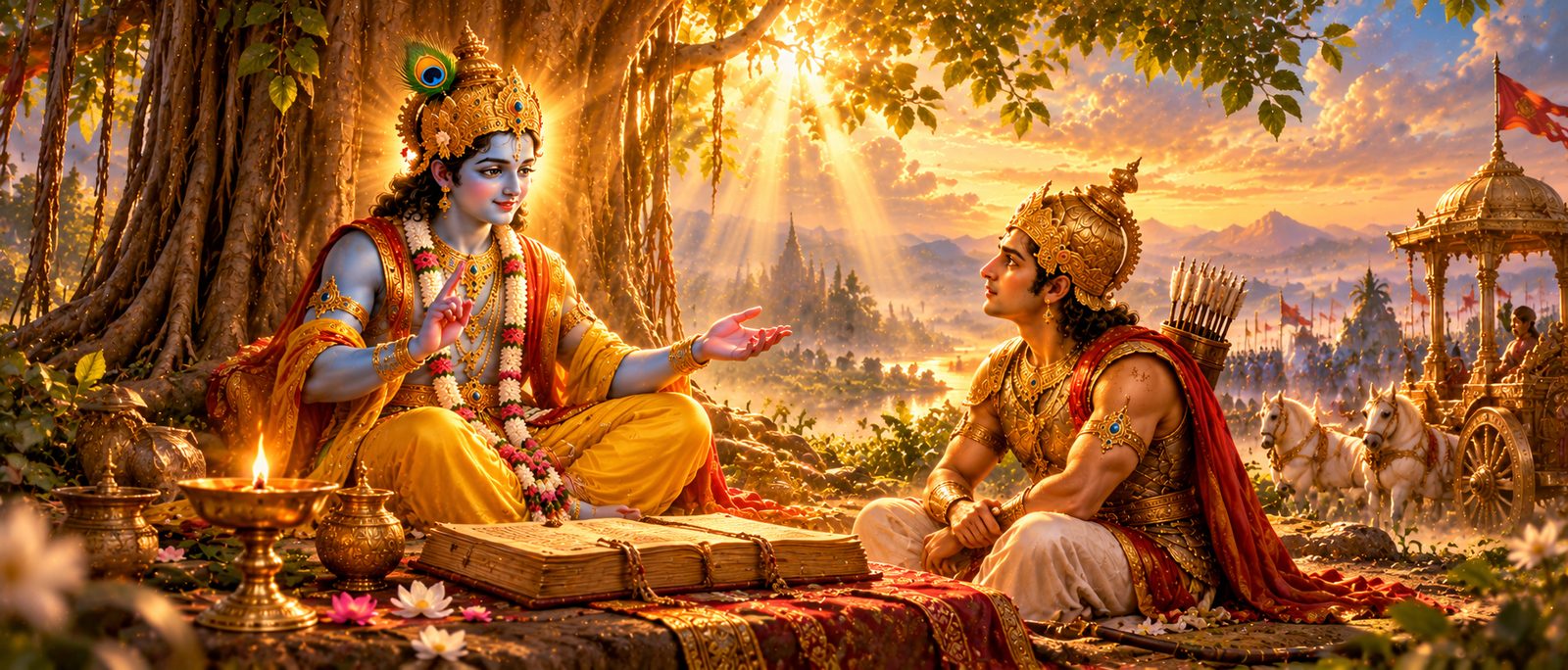
Krishna explains that whenever goodness fades and wrong grows, he comes into the world to restore balance. He teaches that action done with understanding does not bind us, and that knowledge is the best purifier. Faith, discipline and a questioning mind lead to peace.

कृष्ण बताते हैं कि जब-जब धर्म घटता है और अधर्म बढ़ता है, तब-तब वे संसार में आते हैं। वे सिखाते हैं कि समझ के साथ किया गया कर्म बाँधता नहीं, और ज्ञान सबसे बड़ा शुद्ध करने वाला है। श्रद्धा, अनुशासन और जिज्ञासा से शान्ति मिलती है।

Show meaning in
4.1

इमं विवस्वते योगं प्रोक्तवानहमव्ययम्। विवस्वान् मनवे प्राह मनुरिक्ष्वाकवेऽब्रवीत्

śhrī bhagavān uvācha
imaṁ vivasvate yogaṁ proktavān aham avyayam
vivasvān manave prāha manur ikṣhvākave ’bravīt

The Blessed Lord says: I taught this eternal yoga to Vivasvan, the sun god. He told it to Manu, and Manu told it to Ikshvaku.

भगवान कहते हैं: मैंने यह अविनाशी योग सूर्य देव विवस्वान को बताया। विवस्वान ने मनु से कहा और मनु ने इक्ष्वाकु से कहा।

What Krishna meant

Krishna begins by telling Arjuna that this ancient teaching was passed from the sun god to Manu and then to Ikshvaku. It is old wisdom, handed down person to person. Think of a family recipe or a craft taught by a grandparent: good knowledge travels because someone cared to teach it.

कृष्ण शुरू में अर्जुन को बताते हैं कि यह प्राचीन शिक्षा सूर्य देव से मनु और फिर इक्ष्वाकु तक पहुँची। यह पुराना ज्ञान है जो एक से दूसरे को मिलता गया। सोचिए दादी की कोई ख़ास रेसिपी या कोई हुनर: अच्छा ज्ञान तभी आगे जाता है जब कोई उसे सिखाने की परवाह करे।

4.2

एवं परम्पराप्राप्तमिमं राजर्षयो विदुः। स कालेनेह महता योगो नष्टः परन्तप

evaṁ paramparā-prāptam imaṁ rājarṣhayo viduḥ
sa kāleneha mahatā yogo naṣhṭaḥ parantapa

Handed down in this way, royal sages knew it. But after a long time this yoga was lost here, Arjuna.

इस प्रकार परम्परा से मिले इस योग को राजर्षियों ने जाना। लेकिन हे परंतप, बहुत समय बीतने पर यह योग लुप्त हो गया।

What Krishna meant

Krishna says that wise kings knew this teaching as it was handed down, but after a long time it was lost. Even good knowledge fades if no one practises it. A skill like swimming or cooking disappears from a family if nobody keeps doing it, so keep your good habits alive.

कृष्ण कहते हैं कि समझदार राजा यह शिक्षा जानते थे, पर लंबे समय बाद वह खो गई। अच्छा ज्ञान भी तब मिट जाता है जब कोई उसका अभ्यास न करे। तैराकी या खाना बनाने जैसा हुनर भी परिवार से चला जाता है अगर कोई उसे करता न रहे, इसलिए अपनी अच्छी आदतें ज़िंदा रखिए।

4.3

स एवायं मया तेऽद्य योगः प्रोक्तः पुरातनः। भक्तोऽसि मे सखा चेति रहस्यं ह्येतदुत्तमम्

sa evāyaṁ mayā te ’dya yogaḥ proktaḥ purātanaḥ
bhakto ’si me sakhā cheti rahasyaṁ hyetad uttamam

That same ancient yoga I have told you today, because you are my devotee and friend. This is a supreme secret.

वही पुरातन योग आज मैंने तुम्हें बताया, क्योंकि तुम मेरे भक्त और सखा हो। यह बहुत उत्तम रहस्य है।

What Krishna meant

Krishna tells Arjuna that he is sharing this old teaching today because Arjuna is his friend and devoted follower. Real learning needs trust and openness. When you share a worry with a close friend or mentor, you receive their best advice, which a stranger might never give you.

कृष्ण अर्जुन से कहते हैं कि वे यह पुरानी शिक्षा आज इसलिए बता रहे हैं क्योंकि अर्जुन उनका मित्र और भक्त है। सच्ची सीख के लिए भरोसा और खुलापन चाहिए। जब आप अपनी चिंता किसी क़रीबी दोस्त या मार्गदर्शक से बाँटते हैं, तो उनकी सबसे अच्छी सलाह मिलती है, जो कोई अजनबी शायद न दे।

4.4

अपरं भवतो जन्म परं जन्म विवस्वतः। कथमेतद्विजानीयां त्वमादौ प्रोक्तवानिति

arjuna uvācha
aparaṁ bhavato janma paraṁ janma vivasvataḥ
katham etad vijānīyāṁ tvam ādau proktavān iti

Arjuna asks: Your birth was later and Vivasvan's earlier. How am I to understand that you told it in the beginning?

अर्जुन पूछते हैं: आपका जन्म तो बाद का है और विवस्वान का पहले का। फिर मैं कैसे समझूँ कि आपने ही आरम्भ में यह कहा था?

What Krishna meant

Arjuna asks a fair question. Krishna was born in recent times, and the sun god lived long ago, so how could Krishna have taught him? He is not doubting, he is trying to understand. When something sounds puzzling, asking politely is better than quietly rejecting it or pretending to follow.

अर्जुन एक जायज़ सवाल पूछता है। कृष्ण का जन्म तो हाल का है और सूर्य देव बहुत पहले हुए, तो कृष्ण ने उन्हें कैसे सिखाया? वह शक नहीं कर रहा, समझने की कोशिश कर रहा है। जब कोई बात उलझन भरी लगे, तो चुपचाप नकार देने या समझने का नाटक करने से बेहतर है विनम्रता से पूछ लेना।

4.5

बहूनि मे व्यतीतानि जन्मानि तव चार्जुन। तान्यहं वेद सर्वाणि न त्वं वेत्थ परन्तप

śhrī bhagavān uvācha
bahūni me vyatītāni janmāni tava chārjuna
tānyahaṁ veda sarvāṇi na tvaṁ vettha parantapa

The Blessed Lord says: Many births of mine and yours have passed, Arjuna. I know them all, but you do not.

भगवान कहते हैं: हे अर्जुन, मेरे और तुम्हारे बहुत से जन्म बीत चुके हैं। उन सबको मैं जानता हूँ, तुम नहीं जानते।

What Krishna meant

Krishna answers that both he and Arjuna have passed through many births, and he remembers them all while Arjuna does not. The point is that we are carrying much more than we see. Just as you forget most of your childhood days but they still shaped you, the past shapes us quietly.

कृष्ण जवाब देते हैं कि उनके और अर्जुन के बहुत से जन्म बीत चुके हैं, कृष्ण को सब याद हैं और अर्जुन को नहीं। बात यह है कि हमारे भीतर जितना दिखता है उससे बहुत ज़्यादा है। जैसे बचपन के ज़्यादातर दिन आप भूल गए हैं पर उन्होंने आपको गढ़ा है, वैसे ही अतीत चुपचाप हमें गढ़ता है।

4.6

अजोऽपि सन्नव्ययात्मा भूतानामीश्वरोऽपि सन्। प्रकृतिं स्वामधिष्ठाय संभवाम्यात्ममायया

ajo ’pi sannavyayātmā bhūtānām īśhvaro ’pi san
prakṛitiṁ svām adhiṣhṭhāya sambhavāmyātma-māyayā

Though unborn and unchanging, and Lord of all beings, I come into being by taking charge of my own nature through my own power.

मैं अजन्मा, अविनाशी और सब प्राणियों का स्वामी होते हुए भी अपनी प्रकृति को वश में करके अपनी माया से प्रकट होता हूँ।

What Krishna meant

Krishna explains that although he is without birth and never changes, he takes form by using his own power over nature. He is not forced into the world. This reminds us that real strength is choosing to come down to help. A kind person chooses to step into someone else's trouble.

कृष्ण समझाते हैं कि वे जन्म-रहित और अपरिवर्तनीय हैं, फिर भी अपनी शक्ति से प्रकृति को संभालकर रूप लेते हैं। उन्हें दुनिया में कोई मजबूर नहीं करता। इससे यह सीख मिलती है कि असली ताक़त मदद के लिए नीचे उतर आने का चुनाव है। एक दयालु इंसान किसी और की मुसीबत में खुद आगे बढ़ता है।

4.7

यदा यदा हि धर्मस्य ग्लानिर्भवति भारत। अभ्युत्थानमधर्मस्य तदाऽऽत्मानं सृजाम्यहम्

yadā yadā hi dharmasya glānir bhavati bhārata
abhyutthānam adharmasya tadātmānaṁ sṛijāmyaham

Whenever goodness fades and wrong rises, Arjuna, I come into being.

हे भारत, जब-जब धर्म की हानि और अधर्म की वृद्धि होती है, तब-तब मैं स्वयं को प्रकट करता हूँ।

What Krishna meant

Krishna says that whenever goodness weakens and wrong grows strong, he appears. It is a message of hope in hard times. When your office, school or neighbourhood feels unfair, do not lose heart, and become one of those who quietly stand for what is right.

कृष्ण कहते हैं कि जब भी अच्छाई कमज़ोर पड़ती है और बुराई बढ़ती है, वे प्रकट होते हैं। यह कठिन समय में उम्मीद का संदेश है। जब आपका दफ़्तर, स्कूल या मोहल्ला अन्यायी लगे, तो हिम्मत मत हारिए, और उन लोगों में शामिल हो जाइए जो चुपचाप सही के साथ खड़े रहते हैं।

4.8

परित्राणाय साधूनां विनाशाय च दुष्कृताम्। धर्मसंस्थापनार्थाय संभवामि युगे युगे

paritrāṇāya sādhūnāṁ vināśhāya cha duṣhkṛitām
dharma-sansthāpanārthāya sambhavāmi yuge yuge

To protect the good, to destroy the wrongdoers and to re-establish dharma, I come in every age.

सज्जनों की रक्षा, दुष्टों के विनाश और धर्म की स्थापना के लिए मैं युग-युग में प्रकट होता हूँ।

What Krishna meant

Krishna says he comes in every age to protect the good, to put a stop to wrongdoing, and to set dharma, the right way of living, back on its feet. Good people are not forgotten. If you are trying to do right at work or home and feel alone, remember that your effort counts.

कृष्ण कहते हैं कि वे हर युग में अच्छे लोगों की रक्षा करने, बुरे कामों को रोकने और धर्म यानी सही जीने के तरीक़े को फिर खड़ा करने आते हैं। अच्छे लोग भुलाए नहीं जाते। अगर आप काम या घर पर सही करने की कोशिश में अकेला महसूस करते हैं, तो याद रखिए कि आपकी कोशिश गिनी जाती है।

4.9

जन्म कर्म च मे दिव्यमेवं यो वेत्ति तत्त्वतः। त्यक्त्वा देहं पुनर्जन्म नैति मामेति सोऽर्जुन

janma karma cha me divyam evaṁ yo vetti tattvataḥ
tyaktvā dehaṁ punar janma naiti mām eti so ’rjuna

One who truly knows my divine birth and action does not take birth again after leaving the body, and comes to me, Arjuna.

जो मेरे दिव्य जन्म और कर्म को तत्त्व से जानता है, वह शरीर छोड़कर फिर जन्म नहीं लेता, वह मुझे ही पाता है।

What Krishna meant

Krishna says that one who truly understands his divine birth and action is not caught in the cycle of rebirth, and comes to him. In simple words, knowing the purpose behind life brings freedom from fear. When you understand why you are doing a difficult task, it feels lighter.

कृष्ण कहते हैं कि जो उनके दिव्य जन्म और कर्म को सच में समझ लेता है, वह फिर जन्म के चक्र में नहीं फँसता और उन्हीं को पाता है। सरल शब्दों में, जीवन का उद्देश्य जान लेने से डर से राहत मिलती है। जब आप समझ जाते हैं कि कठिन काम आप क्यों कर रहे हैं, तो वह हल्का लगता है।

4.10

वीतरागभयक्रोधा मन्मया मामुपाश्रिताः। बहवो ज्ञानतपसा पूता मद्भावमागताः

vīta-rāga-bhaya-krodhā man-mayā mām upāśhritāḥ
bahavo jñāna-tapasā pūtā mad-bhāvam āgatāḥ

Free from attachment, fear and anger, absorbed in me and taking refuge in me, many people purified by wisdom and discipline have reached my nature.

राग, भय और क्रोध से रहित, मुझमें लीन और मेरे आश्रित होकर बहुत-से लोग ज्ञान की तपस्या से पवित्र होकर मेरे स्वरूप को प्राप्त हो चुके हैं।

What Krishna meant

Krishna says that many people, free from attachment, fear and anger, and taking shelter in him, have been cleansed by knowledge and reached his nature. Fear and anger can be let go. When you feel scared before a big day, steady yourself by trusting something larger than your worry.

कृष्ण कहते हैं कि बहुत से लोग लगाव, भय और क्रोध से मुक्त होकर और उनकी शरण लेकर, ज्ञान से शुद्ध हुए और उनके स्वभाव को पा गए। भय और क्रोध छोड़े जा सकते हैं। जब किसी बड़े दिन से पहले डर लगे, तो अपनी चिंता से बड़ी किसी चीज़ पर भरोसा करके खुद को सँभालिए।

4.11

ये यथा मां प्रपद्यन्ते तांस्तथैव भजाम्यहम्। मम वर्त्मानुवर्तन्ते मनुष्याः पार्थ सर्वशः

ye yathā māṁ prapadyante tāns tathaiva bhajāmyaham
mama vartmānuvartante manuṣhyāḥ pārtha sarvaśhaḥ

In whatever way people approach me, I respond in the same way. In every way, people follow my path, Arjuna.

जो मुझे जिस भाव से भजते हैं, मैं भी उन्हें उसी भाव से भजता हूँ। हे पार्थ, सब मनुष्य सब प्रकार से मेरे ही मार्ग पर चलते हैं।

What Krishna meant

Krishna says that however people come to him, he meets them in the same spirit, and in every way people are following his path. This is a kind, open idea. Different people pray and live in different ways, and there is room for all, so we need not argue over whose way is right.

कृष्ण कहते हैं कि लोग जिस भाव से उनके पास आते हैं, वे उसी भाव से उन्हें अपनाते हैं, और हर तरह से लोग उन्हीं के रास्ते पर चल रहे हैं। यह एक दयालु और खुली सोच है। अलग-अलग लोग अलग तरीक़ों से पूजा और जीवन जीते हैं, सबके लिए जगह है, इसलिए किसका तरीक़ा सही है इस पर झगड़ने की ज़रूरत नहीं।

4.12

काङ्क्षन्तः कर्मणां सिद्धिं यजन्त इह देवताः। क्षिप्रं हि मानुषे लोके सिद्धिर्भवति कर्मजा

kāṅkṣhantaḥ karmaṇāṁ siddhiṁ yajanta iha devatāḥ
kṣhipraṁ hi mānuṣhe loke siddhir bhavati karmajā

Those who want success in their actions worship the gods here, because success from action comes quickly in the human world.

जो कर्मों की सिद्धि चाहते हैं, वे यहाँ देवताओं की पूजा करते हैं, क्योंकि मनुष्य लोक में कर्मों से मिलने वाली सिद्धि जल्दी होती है।

What Krishna meant

Krishna observes that people who want quick success in their work pray to lesser powers, because results from action show up fast in this world. Quick gains are tempting. If you only do good work to be noticed quickly, you may skip the deeper thing, like learning properly, which pays slowly.

कृष्ण देखते हैं कि जो लोग अपने काम में जल्दी सफलता चाहते हैं, वे छोटी शक्तियों को पूजते हैं, क्योंकि इस दुनिया में कर्म का नतीजा जल्दी दिखता है। जल्दी मिलने वाला फ़ायदा लुभाता है। अगर आप सिर्फ़ जल्दी पहचान पाने के लिए काम करेंगे, तो गहरी चीज़, जैसे ठीक से सीखना, छूट सकती है जिसका फल धीरे मिलता है।

4.13

चातुर्वर्ण्यं मया सृष्टं गुणकर्मविभागशः। तस्य कर्तारमपि मां विद्ध्यकर्तारमव्ययम्

chātur-varṇyaṁ mayā sṛiṣhṭaṁ guṇa-karma-vibhāgaśhaḥ
tasya kartāram api māṁ viddhyakartāram avyayam

The fourfold order was created by me according to qualities and actions. Though I am its maker, know me as the non-doer, unchanging.

गुण और कर्म के विभाग से चार वर्ण मैंने रचे हैं। उसका कर्ता होते हुए भी मुझे अकर्ता और अविनाशी जानो।

What Krishna meant

Krishna says he created the four social groups according to people's qualities and work, but he himself is the non-doer and unchanging. Here he explains the world has different roles, built on what people do and how they are. The point we can use: respect everyone's work, since every job is needed.

कृष्ण कहते हैं कि उन्होंने लोगों के गुण और काम के अनुसार चार वर्ग बनाए, पर वे स्वयं अकर्ता और अपरिवर्तनीय हैं। यहाँ वे बताते हैं कि दुनिया में अलग-अलग भूमिकाएँ हैं, जो लोगों के काम और स्वभाव पर बनी हैं। हमारे काम की बात यह है: हर किसी के काम का आदर कीजिए, क्योंकि हर काम की ज़रूरत है।

4.14

न मां कर्माणि लिम्पन्ति न मे कर्मफले स्पृहा। इति मां योऽभिजानाति कर्मभिर्न स बध्यते

na māṁ karmāṇi limpanti na me karma-phale spṛihā
iti māṁ yo ’bhijānāti karmabhir na sa badhyate

Actions do not stain me, and I have no craving for their fruits. One who knows me this way is not bound by actions.

कर्म मुझे लिप्त नहीं करते और मुझे कर्मफल की इच्छा नहीं। जो मुझे इस प्रकार जानता है, वह कर्मों से नहीं बँधता।

What Krishna meant

Krishna says actions do not stain him, and he does not crave their results. One who knows him this way is not tied by actions either. A good example is a teacher who teaches well without needing a reward from every student. When you do not crave results, you work with a lighter heart.

कृष्ण कहते हैं कि कर्म उन्हें लिप्त नहीं करते और उन्हें कर्मों के फल की चाह नहीं है। जो उन्हें इस रूप में जानता है, वह भी कर्मों से नहीं बँधता। एक अच्छा उदाहरण वह शिक्षक है जो हर विद्यार्थी से इनाम की चाह रखे बिना अच्छा पढ़ाता है। जब आप फल की लालसा नहीं रखते, तो हल्के मन से काम करते हैं।

4.15

एवं ज्ञात्वा कृतं कर्म पूर्वैरपि मुमुक्षुभिः। कुरु कर्मैव तस्मात्त्वं पूर्वैः पूर्वतरं कृतम्

evaṁ jñātvā kṛitaṁ karma pūrvair api mumukṣhubhiḥ
kuru karmaiva tasmāttvaṁ pūrvaiḥ pūrvataraṁ kṛitam

Knowing this, even ancient seekers of freedom acted. So you also act, as the ancients did before.

यह जानकर पहले के मुक्ति चाहने वालों ने भी कर्म किया। इसलिए तुम भी वही कर्म करो जो पूर्वजों ने पहले किया।

What Krishna meant

Krishna says that even seekers of freedom in earlier times knew this and still acted, so Arjuna too should act as the ancients did. Wise people did not run away from duty. If you are tempted to avoid a hard family or work responsibility, learn from those who handled theirs with calm.

कृष्ण कहते हैं कि पुराने समय के मुक्ति चाहने वाले भी यह जानकर काम करते रहे, इसलिए अर्जुन को भी वैसे ही काम करना चाहिए जैसे प्राचीन लोग करते थे। समझदार लोग फ़र्ज़ से भागे नहीं। अगर आपका मन घर या काम की कठिन ज़िम्मेदारी से बचने का हो, तो उनसे सीखिए जिन्होंने शांति से अपनी ज़िम्मेदारी निभाई।

4.16

किं कर्म किमकर्मेति कवयोऽप्यत्र मोहिताः। तत्ते कर्म प्रवक्ष्यामि यज्ज्ञात्वा मोक्ष्यसेऽशुभात्

kiṁ karma kim akarmeti kavayo ’pyatra mohitāḥ
tat te karma pravakṣhyāmi yaj jñātvā mokṣhyase ’śhubhāt

Even the wise are confused about what is action and what is inaction. I will explain action, knowing which you will be freed from evil.

क्या कर्म है और क्या अकर्म, इस विषय में ज्ञानी भी भ्रमित हैं। मैं तुम्हें वह कर्म बताऊँगा जिसे जानकर तुम अशुभ से छूट जाओगे।

What Krishna meant

Krishna admits that even wise people get confused about what counts as action and what counts as inaction. He promises to explain it so Arjuna can be free of trouble. It is fine to be unsure about right and wrong choices. When a decision is tricky, take time to learn the facts before deciding.

कृष्ण मानते हैं कि समझदार लोग भी इस बारे में उलझ जाते हैं कि क्या कर्म है और क्या अकर्म। वे समझाने का वादा करते हैं ताकि अर्जुन मुसीबत से बच सके। सही-ग़लत के चुनाव में अनिश्चित होना ठीक है। जब कोई फ़ैसला पेचीदा हो, तो निर्णय लेने से पहले समय लेकर तथ्य समझ लीजिए।

4.17

कर्मणो ह्यपि बोद्धव्यं बोद्धव्यं च विकर्मणः। अकर्मणश्च बोद्धव्यं गहना कर्मणो गतिः

karmaṇo hyapi boddhavyaṁ boddhavyaṁ cha vikarmaṇaḥ
akarmaṇaśh cha boddhavyaṁ gahanā karmaṇo gatiḥ

One must understand action, wrong action and inaction. The way of action is hard to understand.

कर्म को भी समझना चाहिए, विकर्म को भी और अकर्म को भी समझना चाहिए। कर्म की गति गहन है।

What Krishna meant

Krishna says we must understand three things: right action, wrong action and doing nothing, and that the path of action is subtle and hard to read. Not all situations are black and white. Before you speak up or stay silent in a tense moment, think about what is really helpful.

कृष्ण कहते हैं कि हमें तीन बातें समझनी चाहिए: सही कर्म, ग़लत कर्म और कुछ न करना, और कर्म की राह बारीक और समझने में कठिन है। हर हालात काले-सफ़ेद नहीं होते। तनाव के पल में बोलने या चुप रहने से पहले सोचिए कि असल में क्या मददगार है।

4.18

कर्मण्यकर्म यः पश्येदकर्मणि च कर्म यः। स बुद्धिमान् मनुष्येषु स युक्तः कृत्स्नकर्मकृत्

karmaṇyakarma yaḥ paśhyed akarmaṇi cha karma yaḥ
sa buddhimān manuṣhyeṣhu sa yuktaḥ kṛitsna-karma-kṛit

One who sees inaction in action and action in inaction is wise among people, is steady in yoga and has done all that needs to be done.

जो कर्म में अकर्म और अकर्म में कर्म देखता है, वही मनुष्यों में बुद्धिमान है, वह योगी है और सब कर्म करने वाला है।

What Krishna meant

Krishna says the wise person sees stillness inside action and action inside stillness. Such a person is steady and has done what needs doing. For example, a calm nurse stays quiet inside even while busy, and someone resting may still be quietly thinking. The inner state matters most.

कृष्ण कहते हैं कि समझदार इंसान कर्म में भी शांति देखता है और शांति में भी कर्म। ऐसा इंसान स्थिर होता है और जो करना था वह कर चुका होता है। जैसे एक शांत नर्स व्यस्त रहकर भी भीतर से शांत रहती है, और आराम करता व्यक्ति भी मन में कुछ सोच रहा हो सकता है। भीतर की स्थिति सबसे अहम है।

4.19

यस्य सर्वे समारम्भाः कामसङ्कल्पवर्जिताः। ज्ञानाग्निदग्धकर्माणं तमाहुः पण्डितं बुधाः

yasya sarve samārambhāḥ kāma-saṅkalpa-varjitāḥ
jñānāgni-dagdha-karmāṇaṁ tam āhuḥ paṇḍitaṁ budhāḥ

One whose every undertaking is free from desire and plans, and whose actions are burnt in the fire of knowledge, the wise call a sage.

जिसके सब कर्म कामना और संकल्प से रहित हैं और जिसके कर्म ज्ञान की अग्नि में जल चुके हैं, उसे ज्ञानी लोग पण्डित कहते हैं।

What Krishna meant

Krishna says the wise call someone a sage when all their efforts are free from craving and over-planning, and their actions are burnt in the fire of knowledge. Work done with understanding does not leave you stressed. Do your best, then stop replaying the what-ifs in your head.

कृष्ण कहते हैं कि समझदार उसे ऋषि कहते हैं जिसके सारे प्रयास लालसा और ज़्यादा योजनाओं से मुक्त हों और जिसके कर्म ज्ञान की आग में जल चुके हों। समझ के साथ किया गया काम तनाव नहीं छोड़ता। अपना सर्वश्रेष्ठ कीजिए, फिर मन में 'अगर ऐसा हो जाता' दोहराना बंद कीजिए।

4.20

त्यक्त्वा कर्मफलासङ्गं नित्यतृप्तो निराश्रयः। कर्मण्यभिप्रवृत्तोऽपि नैव किञ्चित्करोति सः

tyaktvā karma-phalāsaṅgaṁ nitya-tṛipto nirāśhrayaḥ
karmaṇyabhipravṛitto ’pi naiva kiñchit karoti saḥ

Giving up attachment to the fruit of action, always content and independent, such a person does nothing, even while fully engaged in action.

कर्मफल की आसक्ति छोड़कर, सदा तृप्त और किसी पर निर्भर न रहने वाला मनुष्य कर्म में लगा हुआ भी कुछ नहीं करता।

What Krishna meant

Krishna says that one who gives up clinging to results, is always content and independent, is as if doing nothing even while busy. Think of a person cooking for guests who enjoys the cooking itself and does not wait for compliments. Their mind stays easy even on a hectic day.

कृष्ण कहते हैं कि जो नतीजे से लगाव छोड़ देता है, हमेशा संतुष्ट और स्वतंत्र रहता है, वह व्यस्त रहकर भी मानो कुछ नहीं कर रहा होता। सोचिए मेहमानों के लिए खाना बनाता वह इंसान जो बनाने में ही मज़ा लेता है और तारीफ़ का इंतज़ार नहीं करता। भागदौड़ वाले दिन भी उसका मन सहज रहता है।

4.21

निराशीर्यतचित्तात्मा त्यक्तसर्वपरिग्रहः। शारीरं केवलं कर्म कुर्वन्नाप्नोति किल्बिषम्

nirāśhīr yata-chittātmā tyakta-sarva-parigrahaḥ
śhārīraṁ kevalaṁ karma kurvan nāpnoti kilbiṣham

Without expectations, with mind and self controlled, giving up all possessions, doing only bodily action, one incurs no sin.

आशा रहित, मन और शरीर को वश में रखने वाला, सब संग्रह छोड़ने वाला और केवल शरीर से कर्म करने वाला पाप को नहीं प्राप्त होता।

What Krishna meant

Krishna says that someone who expects nothing, keeps mind and self in control, and holds on to nothing greedily, does only the actions the body needs and stays free of guilt. It is about travelling light. When you stop hoarding things or grudges, life feels simpler and your conscience stays clear.

कृष्ण कहते हैं कि जो किसी चीज़ की उम्मीद नहीं रखता, मन और खुद को क़ाबू में रखता है और लालच से कुछ नहीं पकड़ता, वह सिर्फ़ शरीर के लिए ज़रूरी काम करता है और दोष से मुक्त रहता है। यह हल्के चलने की बात है। जब आप चीज़ें और शिकायतें जमा करना छोड़ देते हैं, तो ज़िंदगी सरल और मन साफ़ रहता है।

4.22

यदृच्छालाभसन्तुष्टो द्वन्द्वातीतो विमत्सरः। समः सिद्धावसिद्धौ च कृत्वापि न निबध्यते

yadṛichchhā-lābha-santuṣhṭo dvandvātīto vimatsaraḥ
samaḥ siddhāvasiddhau cha kṛitvāpi na nibadhyate

Content with what comes by chance, beyond the pairs of opposites, free from envy, equal in success and failure, one is not bound even by acting.

जो अपने आप जो मिल जाए उसमें संतुष्ट है, द्वन्द्वों से परे है, ईर्ष्या से रहित है और सफलता-असफलता में समान है, वह कर्म करके भी नहीं बँधता।

What Krishna meant

Krishna says such a person is content with whatever comes, is above the ups and downs of life, free of envy, and calm in both success and failure. A simple use: on a day when a plan fails or a colleague gets praised, take a breath, say fine, and move on without bitterness.

कृष्ण कहते हैं कि ऐसा इंसान जो मिल जाए उसमें संतुष्ट रहता है, सुख-दुख के उतार-चढ़ाव से ऊपर रहता है, जलन से मुक्त होता है और सफलता-असफलता में शांत रहता है। एक आसान उपयोग: जिस दिन आपकी योजना बिगड़े या किसी सहकर्मी की तारीफ़ हो, तो एक साँस लीजिए, ठीक है कहिए और बिना कड़वाहट के आगे बढ़िए।

4.23

गतसङ्गस्य मुक्तस्य ज्ञानावस्थितचेतसः। यज्ञायाचरतः कर्म समग्रं प्रविलीयते

gata-saṅgasya muktasya jñānāvasthita-chetasaḥ
yajñāyācharataḥ karma samagraṁ pravilīyate

For one who is free from attachment, liberated, and whose mind is fixed in knowledge, and who acts as a service, all action melts away.

जो आसक्ति से मुक्त है, ज्ञान में स्थित चित्त वाला है और यज्ञ के लिए कर्म करता है, उसके सब कर्म नष्ट हो जाते हैं।

What Krishna meant

Krishna says that for someone free from attachment, whose mind rests in knowledge and who works as service, all the weight of action melts away. When you do your job to help rather than to prove yourself, the pressure fades. A cook who loves feeding people feels less tired than one chasing awards.

कृष्ण कहते हैं कि जो इंसान लगाव से मुक्त है, जिसका मन ज्ञान में टिका है और जो सेवा-भाव से काम करता है, उसके कर्मों का सारा बोझ पिघल जाता है। जब आप अपना काम खुद को साबित करने की जगह मदद के लिए करते हैं, तो दबाव घट जाता है। जिसे लोगों को खिलाना पसंद है, वह इनाम के पीछे भागने वाले से कम थकता है।

4.24

ब्रह्मार्पणं ब्रह्महविर्ब्रह्माग्नौ ब्रह्मणा हुतम्। ब्रह्मैव तेन गन्तव्यं ब्रह्मकर्मसमाधिना

brahmārpaṇaṁ brahma havir brahmāgnau brahmaṇā hutam
brahmaiva tena gantavyaṁ brahma-karma-samādhinā

The offering is Brahman, the oil is Brahman, it is poured by Brahman into the fire of Brahman. One who sees Brahman in all action reaches Brahman.

अर्पण ब्रह्म है, हवि ब्रह्म है, ब्रह्मरूप अग्नि में ब्रह्म द्वारा ही अर्पित की जाती है। जो कर्म में ब्रह्म को देखता है, वह ब्रह्म को ही पाता है।

What Krishna meant

Krishna describes a deep view where the offering, the butter, the one who offers and the fire are all one Supreme truth. One who sees the Supreme in every act reaches it. In life, this means treating ordinary work as sacred. Washing dishes with care can feel like a quiet prayer.

कृष्ण एक गहरी दृष्टि बताते हैं जिसमें अर्पण, घी, अर्पण करने वाला और अग्नि, सब एक ही परम सत्य हैं। जो हर काम में उसी को देखता है, वह उसे पा लेता है। जीवन में इसका मतलब है साधारण काम को पवित्र मानना। ध्यान से बर्तन माँजना भी एक शांत प्रार्थना जैसा लग सकता है।

4.25

दैवमेवापरे यज्ञं योगिनः पर्युपासते। ब्रह्माग्नावपरे यज्ञं यज्ञेनैवोपजुह्वति

daivam evāpare yajñaṁ yoginaḥ paryupāsate
brahmāgnāvapare yajñaṁ yajñenaivopajuhvati

Some yogis worship through offerings to the gods, while others offer sacrifice itself into the fire of Brahman.

कुछ योगी देवताओं के लिए यज्ञ करते हैं, और कुछ अन्य ब्रह्म रूप अग्नि में यज्ञ द्वारा ही यज्ञ को अर्पित करते हैं।

What Krishna meant

Krishna lists the different ways people offer their lives. Some worship the divine through rituals, while others offer the self itself into the fire of the highest truth. Not everyone has the same path. Some find peace in a temple, some in service, and some in a quiet walk.

कृष्ण बताते हैं कि लोग अलग-अलग तरीक़ों से अपना जीवन अर्पित करते हैं। कुछ अनुष्ठानों से ईश्वर की उपासना करते हैं और कुछ स्वयं को ही परम सत्य की अग्नि में अर्पित कर देते हैं। सबका रास्ता एक जैसा नहीं होता। कोई मंदिर में सुकून पाता है, कोई सेवा में और कोई शांत टहलने में।

4.26

श्रोत्रादीनीन्द्रियाण्यन्ये संयमाग्निषु जुह्वति। शब्दादीन्विषयानन्य इन्द्रियाग्निषु जुह्वति

śhrotrādīnīndriyāṇyanye sanyamāgniṣhu juhvati
śhabdādīn viṣhayānanya indriyāgniṣhu juhvati

Some offer hearing and the other senses into the fires of self-control, others offer sounds and sense objects into the fire of the senses.

कुछ लोग श्रोत्र आदि इन्द्रियों को संयम की अग्नि में अर्पित करते हैं, और कुछ शब्द आदि विषयों को इन्द्रियों की अग्नि में अर्पित करते हैं।

What Krishna meant

Krishna continues the list: some offer their hearing and other senses into the fire of self-control, and others offer sounds and sights into the fire of the senses. In plain terms, some people quieten the senses, and others use them mindfully. You can limit noisy distractions, or enjoy music with full attention.

कृष्ण सूची आगे बढ़ाते हैं: कुछ अपनी सुनने और दूसरी इंद्रियों को संयम की अग्नि में अर्पित करते हैं और कुछ ध्वनि व दृश्यों को इंद्रियों की अग्नि में। सीधे शब्दों में, कुछ लोग इंद्रियों को शांत करते हैं और कुछ उनका सावधानी से उपयोग करते हैं। आप शोर वाली चीज़ें कम कर सकते हैं या पूरे ध्यान से संगीत सुन सकते हैं।

4.27

सर्वाणीन्द्रियकर्माणि प्राणकर्माणि चापरे। आत्मसंयमयोगाग्नौ जुह्वति ज्ञानदीपिते

sarvāṇīndriya-karmāṇi prāṇa-karmāṇi chāpare
ātma-sanyama-yogāgnau juhvati jñāna-dīpite

Others offer all actions of the senses and of the breath into the fire of self-control, lit by knowledge.

दूसरे लोग सब इन्द्रियों के कर्मों और प्राणों के कर्मों को ज्ञान से जगाई हुई आत्म-संयम रूप योग की अग्नि में अर्पित करते हैं।

What Krishna meant

Krishna says others offer all the work of their senses and breath into the fire of self-control, lit by knowledge. This describes people who bring awareness to everything they do. For example, eating slowly and noticing each bite, or listening fully to a friend without checking your phone.

कृष्ण कहते हैं कि कुछ लोग अपनी इंद्रियों और प्राणों के सारे काम को ज्ञान से जली संयम की अग्नि में अर्पित करते हैं। यह उन लोगों की बात है जो हर काम में जागरूकता लाते हैं। जैसे धीरे खाते हुए हर कौर पर ध्यान देना, या फ़ोन देखे बिना दोस्त की बात पूरे मन से सुनना।

4.28

द्रव्ययज्ञास्तपोयज्ञा योगयज्ञास्तथापरे। स्वाध्यायज्ञानयज्ञाश्च यतयः संशितव्रताः

dravya-yajñās tapo-yajñā yoga-yajñās tathāpare
swādhyāya-jñāna-yajñāśh cha yatayaḥ sanśhita-vratāḥ

Some offer wealth, some austerity, some yoga, and others, with strict vows, offer study and knowledge as their sacrifice.

कुछ द्रव्य का यज्ञ करते हैं, कुछ तप का, कुछ योग का, और कठोर व्रत वाले साधक स्वाध्याय और ज्ञान का यज्ञ करते हैं।

What Krishna meant

Krishna lists more ways of offering: some give their wealth, some give up comforts for discipline, some practise yoga, and others study and learn with strict vows. Every gift or effort of yours can be an offering. Donating, practising a skill daily, or studying hard are all valuable.

कृष्ण अर्पण के और तरीक़े गिनाते हैं: कुछ धन देते हैं, कुछ अनुशासन के लिए सुख-सुविधा छोड़ते हैं, कुछ योग साधते हैं और कुछ कठोर नियमों के साथ पढ़ाई और ज्ञान करते हैं। आपका हर दान या प्रयास एक अर्पण हो सकता है। दान देना, रोज़ किसी हुनर का अभ्यास करना या मन से पढ़ना, सब क़ीमती हैं।

4.29

अपाने जुह्वति प्राण प्राणेऽपानं तथाऽपरे। प्राणापानगती रुद्ध्वा प्राणायामपरायणाः

apāne juhvati prāṇaṁ prāṇe ’pānaṁ tathāpare
prāṇāpāna-gatī ruddhvā prāṇāyāma-parāyaṇāḥ
apare niyatāhārāḥ prāṇān prāṇeṣhu juhvati
sarve ’pyete yajña-vido yajña-kṣhapita-kalmaṣhāḥ

Others offer the outgoing breath into the incoming, and the incoming into the outgoing, holding the flow of both, devoted to breath control.

कुछ अन्य अपान में प्राण को और प्राण में अपान को अर्पित करते हैं, और प्राण-अपान की गति को रोककर प्राणायाम में लगे रहते हैं।

What Krishna meant

Krishna names those who practise breath control, offering the outgoing breath into the incoming one and the reverse, holding the flow of both. This is only one way among many. In daily life, slow, steady breathing is a simple tool to calm yourself when you feel anxious or angry.

कृष्ण उनका ज़िक्र करते हैं जो प्राणायाम करते हैं, यानी बाहर जाती साँस को भीतर आती साँस में और भीतर आती को बाहर जाती में अर्पित करते हैं और दोनों का प्रवाह थामते हैं। यह कई तरीक़ों में से एक है। रोज़ की ज़िंदगी में धीमी, स्थिर साँस घबराहट या गुस्से में खुद को शांत करने का आसान साधन है।

4.30

अपरे नियताहाराः प्राणान्प्राणेषु जुह्वति। सर्वेऽप्येते यज्ञविदो यज्ञक्षपितकल्मषाः

apare niyatāhārāḥ prāṇān prāṇeṣu juhvati
sarve py 'ete yajña-vido yajña-kṣapita-kalmaṣāḥ

Others, restricting their food, offer breaths into breaths. All of these know what sacrifice is and have their sins destroyed by sacrifice.

अन्य लोग नियमित आहार करके प्राणों को प्राणों में अर्पित करते हैं। ये सब यज्ञ को जानने वाले हैं और यज्ञ से उनके पाप नष्ट हो चुके हैं।

What Krishna meant

Krishna says others reduce their food and offer breath into breath, and that all of these people truly understand what an offering is, and their faults are washed away by it. Simple self-discipline, like eating a little less or fasting wisely, helps some people focus. Do what suits your health.

कृष्ण कहते हैं कि कुछ लोग भोजन घटाकर साँस को साँस में अर्पित करते हैं, और ये सब लोग सचमुच जानते हैं कि अर्पण क्या होता है, और उससे इनकी कमियाँ धुल जाती हैं। सरल आत्म-अनुशासन, जैसे थोड़ा कम खाना, कुछ लोगों को एकाग्र करने में मदद करता है। वही कीजिए जो आपकी सेहत के अनुकूल हो।

4.31

यज्ञशिष्टामृतभुजो यान्ति ब्रह्म सनातनम्। नायं लोकोऽस्त्ययज्ञस्य कुतो़ऽन्यः कुरुसत्तम

yajña-śhiṣhṭāmṛita-bhujo yānti brahma sanātanam
nāyaṁ loko ’styayajñasya kuto ’nyaḥ kuru-sattama

Those who eat the nectar left after sacrifice reach the eternal Brahman. This world is not for one who does not sacrifice, so how could another be?

यज्ञ से बचे हुए अमृत को खाने वाले सनातन ब्रह्म को प्राप्त करते हैं। यज्ञ न करने वाले के लिए यह लोक भी नहीं है, फिर दूसरा कैसे?

What Krishna meant

Krishna says those who eat what is left after offering, like sharing food first, attain the eternal. If even this world is not for those who give nothing, how could a higher one be? The message is to share before you enjoy. A simple habit is offering a meal or a smile before your own comfort.

कृष्ण कहते हैं कि जो अर्पण के बाद बचा हुआ खाते हैं, जैसे पहले बाँटकर फिर खाना, वे शाश्वत को पाते हैं। जिनके पास देने को कुछ नहीं, उनके लिए यह दुनिया भी नहीं, तो ऊँची दुनिया कैसे हो? संदेश है कि भोगने से पहले बाँटो। एक सरल आदत है अपने आराम से पहले किसी को भोजन या मुस्कान देना।

4.32

एवं बहुविधा यज्ञा वितता ब्रह्मणो मुखे। कर्मजान्विद्धि तान्सर्वानेवं ज्ञात्वा विमोक्ष्यसे

evaṁ bahu-vidhā yajñā vitatā brahmaṇo mukhe
karma-jān viddhi tān sarvān evaṁ jñātvā vimokṣhyase

Many such sacrifices are spread out in the mouth of Brahman. Know them all as born of action, and knowing this you will be free.

इस प्रकार अनेक तरह के यज्ञ वेद के मुख में फैले हुए हैं। उन सबको कर्म से उत्पन्न जानो, ऐसा जानकर तुम मुक्त हो जाओगे।

What Krishna meant

Krishna says that many kinds of offering are laid out before the highest truth, and all of them are born from action. Knowing this frees you. It means no single path is the only way, and anything done with sincerity counts, so do not feel small about your own ordinary effort.

कृष्ण कहते हैं कि परम सत्य के सामने अनेक प्रकार के अर्पण बिछे हैं, और सब कर्म से पैदा होते हैं। यह जान लेना आपको मुक्त करता है। इसका मतलब है कि कोई एक ही रास्ता नहीं है और सच्चे मन से किया गया हर काम गिना जाता है, इसलिए अपने साधारण प्रयास को छोटा मत समझिए।

4.33

श्रेयान्द्रव्यमयाद्यज्ञाज्ज्ञानयज्ञः परन्तप। सर्वं कर्माखिलं पार्थ ज्ञाने परिसमाप्यते

śhreyān dravya-mayād yajñāj jñāna-yajñaḥ parantapa
sarvaṁ karmākhilaṁ pārtha jñāne parisamāpyate

The sacrifice of knowledge is better than any sacrifice of material things, Arjuna. All actions end in knowledge.

हे परंतप, द्रव्यमय यज्ञ से ज्ञानयज्ञ श्रेष्ठ है। हे पार्थ, सब कर्म ज्ञान में समाप्त हो जाते हैं।

What Krishna meant

Krishna says that giving knowledge, learning and understanding is better than giving only material things, because all action finally ends in knowledge. A gift of money helps for a day, but teaching a skill helps for life. Help a younger cousin or a coworker learn something, and you give lasting value.

कृष्ण कहते हैं कि ज्ञान, सीख और समझ का अर्पण केवल वस्तुओं के दान से बेहतर है, क्योंकि सारा कर्म अंत में ज्ञान में पूरा होता है। पैसे का दान एक दिन मदद करता है, पर कोई हुनर सिखाना जीवन भर काम आता है। छोटे भाई-बहन या सहकर्मी को कुछ सिखाइए, आप स्थायी चीज़ देते हैं।

4.34

तद्विद्धि प्रणिपातेन परिप्रश्नेन सेवया। उपदेक्ष्यन्ति ते ज्ञानं ज्ञानिनस्तत्त्वदर्शिनः

tad viddhi praṇipātena paripraśhnena sevayā
upadekṣhyanti te jñānaṁ jñāninas tattva-darśhinaḥ

Learn that by humble respect, by asking questions and by service. Those who have seen the truth will teach you knowledge.

उसे तुम प्रणाम करके, सवाल पूछकर और सेवा करके जानो। तत्त्व को देखने वाले ज्ञानी तुम्हें ज्ञान का उपदेश देंगे।

What Krishna meant

Krishna says to learn this by showing humble respect, asking questions and serving, and that those who have seen the truth will teach you. Learning needs humility. In real life, ask a good teacher or an experienced elder questions politely, and do some small service for them in return.

कृष्ण कहते हैं कि यह ज्ञान विनम्र आदर, सवाल पूछने और सेवा से सीखो, और जिन्होंने सत्य देखा है वे तुम्हें सिखाएँगे। सीखने के लिए विनम्रता चाहिए। असल ज़िंदगी में किसी अच्छे शिक्षक या अनुभवी बुज़ुर्ग से नम्रता से सवाल पूछिए और बदले में उनकी कोई छोटी सेवा कीजिए।

4.35

यज्ज्ञात्वा न पुनर्मोहमेवं यास्यसि पाण्डव। येन भूतान्यशेषेण द्रक्ष्यस्यात्मन्यथो मयि

yaj jñātvā na punar moham evaṁ yāsyasi pāṇḍava
yena bhūtānyaśheṣheṇa drakṣhyasyātmanyatho mayi

Knowing it you will never again fall into confusion, and by it you will see all beings in yourself and in me.

जिसे जानकर तुम फिर इस प्रकार मोह में नहीं पड़ोगे और जिससे तुम सब प्राणियों को अपने में और फिर मुझमें देखोगे।

What Krishna meant

Krishna says that once Arjuna has this knowledge, he will not fall into confusion again, and he will see all beings within himself and in Krishna. This means growing a sense of oneness. When you remember that the person who annoys you also has worries and hopes like yours, you become gentler.

कृष्ण कहते हैं कि यह ज्ञान पा लेने पर अर्जुन फिर भ्रम में नहीं पड़ेगा और सब प्राणियों को अपने भीतर और कृष्ण में देखेगा। इसका मतलब है एकता की भावना बढ़ाना। जब आप याद रखते हैं कि जो इंसान आपको खिजाता है उसकी भी आपकी तरह चिंताएँ और उम्मीदें हैं, तो आप नरम हो जाते हैं।

4.36

अपि चेदसि पापेभ्यः सर्वेभ्यः पापकृत्तमः। सर्वं ज्ञानप्लवेनैव वृजिनं सन्तरिष्यसि

api ched asi pāpebhyaḥ sarvebhyaḥ pāpa-kṛit-tamaḥ
sarvaṁ jñāna-plavenaiva vṛijinaṁ santariṣhyasi

Even if you are the greatest sinner of all, you will cross over all wrong by the boat of knowledge.

यदि तुम सब पापियों में भी सबसे बड़े पापी हो, तब भी ज्ञान रूपी नौका से सारे पाप को पार कर जाओगे।

What Krishna meant

Krishna encourages Arjuna: even if you feel you are the worst of wrongdoers, the boat of knowledge can carry you across all your faults. Nobody is beyond improvement. If you made a big mistake at work or in a relationship, learning from it and starting again is always possible.

कृष्ण अर्जुन को हौसला देते हैं: चाहे तुम्हें लगे कि तुम सबसे बड़े अपराधी हो, ज्ञान की नाव तुम्हें तुम्हारी सारी भूलों के पार ले जा सकती है। कोई भी सुधरने से परे नहीं है। अगर काम या रिश्ते में कोई बड़ी ग़लती हो गई है, तो उससे सीखकर फिर से शुरू करना हमेशा संभव है।

4.37

यथैधांसि समिद्धोऽग्निर्भस्मसात्कुरुतेऽर्जुन। ज्ञानाग्निः सर्वकर्माणि भस्मसात्कुरुते तथा

yathaidhānsi samiddho ’gnir bhasma-sāt kurute ’rjuna
jñānāgniḥ sarva-karmāṇi bhasma-sāt kurute tathā

As a blazing fire turns wood to ashes, Arjuna, so the fire of knowledge turns all actions to ashes.

जैसे जलती हुई आग लकड़ियों को राख कर देती है, हे अर्जुन, वैसे ही ज्ञान की अग्नि सब कर्मों को राख कर देती है।

What Krishna meant

Krishna gives a picture: as a blazing fire turns wood to ashes, the fire of knowledge turns the burdens of past actions to ashes. Understanding can lighten what weighs on you. Once you truly see why you reacted badly, the guilt starts to loosen and you can move on.

कृष्ण एक चित्र देते हैं: जैसे जलती आग लकड़ी को राख कर देती है, वैसे ही ज्ञान की आग पिछले कर्मों के बोझ को राख कर देती है। समझ से वह चीज़ हल्की हो सकती है जो आप पर बोझ है। जब आप सचमुच देख लेते हैं कि आपने बुरी प्रतिक्रिया क्यों दी, तो ग्लानि ढीली पड़ने लगती है और आप आगे बढ़ सकते हैं।

4.38

न हि ज्ञानेन सदृशं पवित्रमिह विद्यते। तत्स्वयं योगसंसिद्धः कालेनात्मनि विन्दति

na hi jñānena sadṛiśhaṁ pavitramiha vidyate
tatsvayaṁ yogasansiddhaḥ kālenātmani vindati

There is nothing in this world as purifying as knowledge. One who is perfected in yoga finds it in oneself in time.

इस संसार में ज्ञान के समान पवित्र करने वाला कुछ नहीं है। योग में सिद्ध हुआ मनुष्य समय आने पर उसे स्वयं अपने भीतर पा लेता है।

What Krishna meant

Krishna says nothing in this world cleans the mind like knowledge, and one who practises steadily will find it within in time. There is no need to hurry. Read a few lines every day or reflect for a few minutes. Slow, regular effort brings clear understanding more surely than a sudden burst.

कृष्ण कहते हैं कि इस दुनिया में ज्ञान जैसा मन को साफ़ करने वाला कुछ नहीं है, और जो लगातार अभ्यास करता है वह समय पर उसे भीतर ही पा लेता है। जल्दबाज़ी की ज़रूरत नहीं। रोज़ कुछ पंक्तियाँ पढ़िए या कुछ मिनट मनन कीजिए। धीमी, नियमित कोशिश अचानक के जोश से ज़्यादा पक्का फल देती है।

4.39

श्रद्धावाँल्लभते ज्ञानं तत्परः संयतेन्द्रियः। ज्ञानं लब्ध्वा परां शान्तिमचिरेणाधिगच्छति

śhraddhāvān labhate jñānaṁ tat-paraḥ sanyatendriyaḥ
jñānaṁ labdhvā parāṁ śhāntim achireṇādhigachchhati

One who has faith, is devoted and has control of the senses gains knowledge, and having gained knowledge soon reaches supreme peace.

श्रद्धावान, उसमें लगा हुआ और इन्द्रियों को वश में रखने वाला ज्ञान पाता है, और ज्ञान पाकर शीघ्र परम शान्ति को प्राप्त होता है।

What Krishna meant

Krishna says that one who has faith, is devoted and keeps the senses in check gains knowledge, and then soon finds deep peace. Trust, sincerity and self-control work together. For example, a student who believes in the teacher, pays attention and avoids distractions learns far more than a distracted one.

कृष्ण कहते हैं कि जिसमें श्रद्धा है, जो समर्पित है और इंद्रियों को क़ाबू में रखता है, वह ज्ञान पाता है और फिर जल्दी गहरी शांति पाता है। भरोसा, सच्चाई और संयम साथ काम करते हैं। जैसे जो विद्यार्थी शिक्षक पर विश्वास करता है, ध्यान देता है और भटकावों से बचता है, वह बिखरे मन वाले से बहुत ज़्यादा सीखता है।

4.40

अज्ञश्चाश्रद्दधानश्च संशयात्मा विनश्यति। नायं लोकोऽस्ति न परो न सुखं संशयात्मनः

ajñaśh chāśhraddadhānaśh cha sanśhayātmā vinaśhyati
nāyaṁ loko ’sti na paro na sukhaṁ sanśhayātmanaḥ

The ignorant, the faithless and the doubting person is lost. For the doubter there is neither this world, nor the next, nor happiness.

अज्ञानी, श्रद्धाहीन और संशय करने वाला नष्ट हो जाता है। संशय करने वाले के लिए न यह लोक है, न परलोक, न सुख।

What Krishna meant

Krishna cautions that a person who is ignorant, lacks faith and is always doubting loses out, and constant doubt brings no happiness here or anywhere. Some questions are healthy, but endless suspicion is a trap. If you doubt every advice you get, you never take a step, so decide, try, and learn.

कृष्ण चेताते हैं कि जो अज्ञानी है, श्रद्धा नहीं रखता और हमेशा शक करता है, वह नुकसान में रहता है, और लगातार शक से कहीं भी सुख नहीं मिलता। कुछ सवाल अच्छे होते हैं, पर अंतहीन शक एक जाल है। अगर आप हर सलाह पर शक करेंगे, तो कभी क़दम नहीं उठाएँगे, इसलिए तय कीजिए, आज़माइए और सीखिए।

4.41

योगसंन्यस्तकर्माणं ज्ञानसंछिन्नसंशयम्। आत्मवन्तं न कर्माणि निबध्नन्ति धनञ्जय

yoga-sannyasta-karmāṇaṁ jñāna-sañchhinna-sanśhayam
ātmavantaṁ na karmāṇi nibadhnanti dhanañjaya

Actions do not bind one who has given up action through yoga, whose doubts are cut by knowledge and who is self-possessed, Arjuna.

हे धनञ्जय, जिसने योग से कर्मों का त्याग कर दिया, ज्ञान से संशय काट दिए और जो आत्मा में स्थित है, उसे कर्म नहीं बाँधते।

What Krishna meant

Krishna says actions do not bind one who offers action to the higher truth, whose doubts have been cut by knowledge and who is steady in the Self. Such a person works without being tangled up. A calm worker who knows why they are doing the job is not shaken by every small criticism.

कृष्ण कहते हैं कि कर्म उसे नहीं बाँधते जो अपने कर्म को ऊँचे सत्य को अर्पित करता है, जिसके संशय ज्ञान से कट चुके हैं और जो आत्मा में स्थिर है। ऐसा इंसान उलझे बिना काम करता है। जो शांत कर्मचारी जानता है कि वह यह काम क्यों कर रहा है, वह हर छोटी आलोचना से नहीं हिलता।

4.42

तस्मादज्ञानसंभूतं हृत्स्थं ज्ञानासिनाऽऽत्मनः। छित्त्वैनं संशयं योगमातिष्ठोत्तिष्ठ भारत

tasmād ajñāna-sambhūtaṁ hṛit-sthaṁ jñānāsinātmanaḥ
chhittvainaṁ sanśhayaṁ yogam ātiṣhṭhottiṣhṭha bhārata

So, with the sword of knowledge, cut away this doubt born of ignorance that sits in your heart. Take up yoga and stand up, Arjuna.

इसलिए हे भारत, अपने हृदय में बैठे अज्ञान से उत्पन्न इस संशय को ज्ञान की तलवार से काटकर योग का सहारा लो और उठ खड़े हो।

What Krishna meant

Krishna ends the chapter with a firm, loving push. He tells Arjuna to take the sword of knowledge, cut the doubt in his heart, take up yoga and stand up. When you are stuck in worry, gather what you know, decide, and take the first small step. Doubt shrinks once you begin.

कृष्ण अध्याय का अंत एक दृढ़ और स्नेह भरे धक्के से करते हैं। वे अर्जुन से कहते हैं कि ज्ञान की तलवार उठाओ, दिल का संशय काटो, योग को अपनाओ और उठ खड़े हो। जब आप चिंता में अटके हों, तो जो जानते हैं उसे जोड़िए, तय कीजिए और पहला छोटा क़दम उठाइए। शुरू करते ही संशय घटने लगता है।