
Kundli Kaka

Chapter 9 of 18 · 34 verses

The Royal Secret राजविद्याराजगुह्ययोग

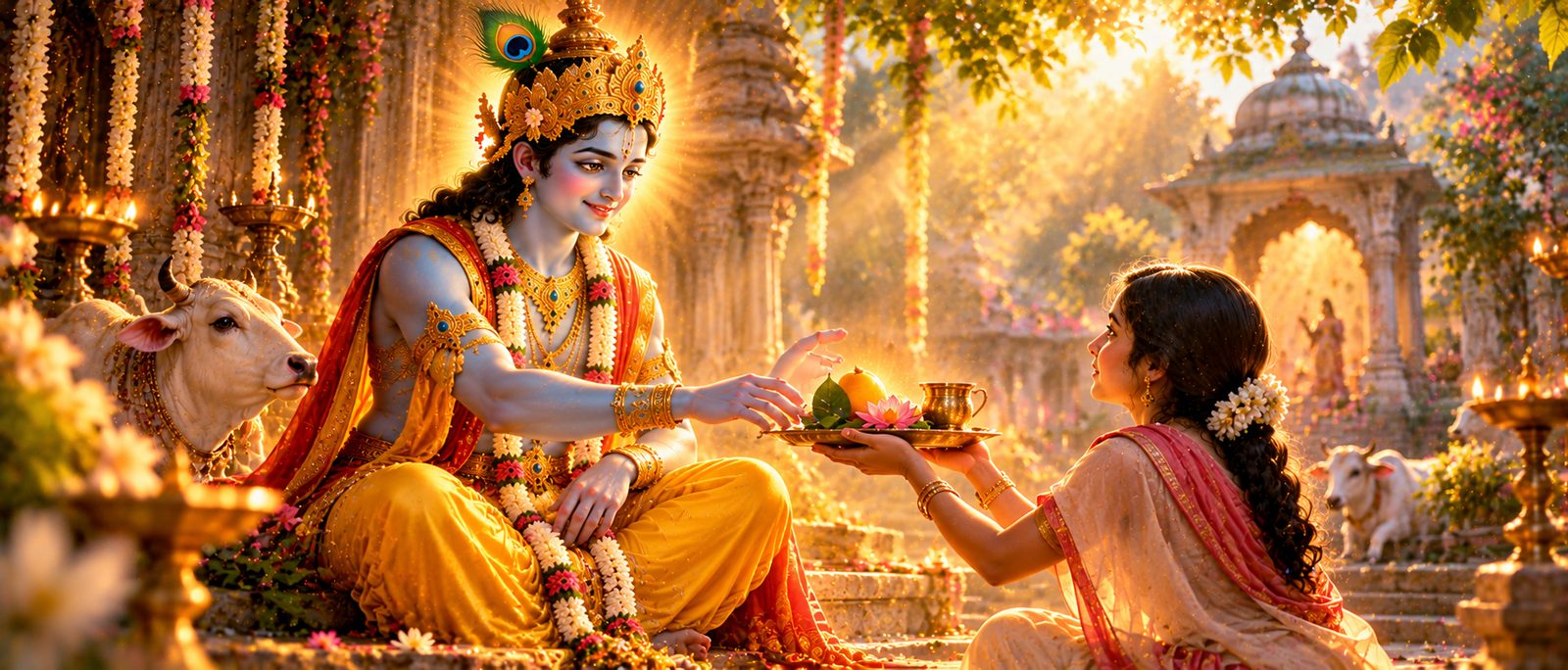
Krishna calls this the king of all knowledge. He says everything rests in him, and he is the friend of all beings. A simple offering of a leaf, a flower, a fruit or water, given with love, is accepted. Whatever you do, offer it to him. Even someone with a troubled past who turns to him sincerely becomes good.

कृष्ण इसे सब विद्याओं का राजा कहते हैं। वे बताते हैं कि सब कुछ उन्हीं में टिका है और वे सब प्राणियों के मित्र हैं। प्रेम से अर्पित एक पत्ता, फूल, फल या जल भी वे स्वीकार करते हैं। तुम जो भी करो, उन्हें अर्पित करो। जिसका अतीत बुरा रहा हो, वह भी सच्चे मन से उनकी ओर मुड़े तो अच्छा बन जाता है।

Show meaning in
9.1

इदं तु ते गुह्यतमं प्रवक्ष्याम्यनसूयवे। ज्ञानं विज्ञानसहितं यज्ज्ञात्वा मोक्ष्यसेऽशुभात्

śhrī bhagavān uvācha
idaṁ tu te guhyatamaṁ pravakṣhyāmyanasūyave
jñānaṁ vijñāna-sahitaṁ yaj jñātvā mokṣhyase ’śhubhāt

The Blessed Lord says: To you, who do not find fault, I will tell the most secret knowledge with its realisation, knowing which you will be freed from evil.

भगवान कहते हैं: दोष न निकालने वाले तुमको मैं अनुभव सहित यह अत्यन्त गोपनीय ज्ञान कहूँगा, जिसे जानकर तुम अशुभ से मुक्त हो जाओगे।

What Krishna meant

Krishna says he will now share his deepest teaching with Arjuna, because Arjuna listens without finding fault or arguing. Krishna means that real learning begins with an open mind. Example: when an elder or teacher explains something, hear the whole thing first before judging it, and you will understand far more.

कृष्ण अर्जुन से कहते हैं कि अब वे उसे अपनी सबसे गहरी बात बताएँगे, क्योंकि अर्जुन बिना दोष निकाले ध्यान से सुनता है। कृष्ण का मतलब है कि सीखना खुले मन से शुरू होता है। जैसे, जब कोई बड़ा कुछ समझाए, तो पहले पूरी बात सुनिए, फिर राय बनाइए। तब बात ज़्यादा समझ आती है।

9.2

राजविद्या राजगुह्यं पवित्रमिदमुत्तमम्। प्रत्यक्षावगमं धर्म्यं सुसुखं कर्तुमव्ययम्

rāja-vidyā rāja-guhyaṁ pavitram idam uttamam
pratyakṣhāvagamaṁ dharmyaṁ su-sukhaṁ kartum avyayam

This is the king of knowledge, the king of secrets, the supreme purifier, directly understood, in line with dharma, easy to practise and imperishable.

यह विद्याओं का राजा, गोपनीयों का राजा, अत्यन्त पवित्र और उत्तम है। यह प्रत्यक्ष अनुभव होने वाला, धर्मयुक्त, करने में सरल और अविनाशी है।

What Krishna meant

Krishna calls this knowledge the king of all teachings. It is direct, easy to practise and it never wears out. Krishna means the best wisdom is not complicated. Example: being honest, kind and steady each day needs no special tools, yet it helps your work and home life more than clever tricks.

कृष्ण इस ज्ञान को सब ज्ञानों का राजा कहते हैं। यह सीधा है, निभाने में आसान है और कभी घटता नहीं। कृष्ण का मतलब है कि सबसे अच्छी समझ उलझी हुई नहीं होती। जैसे, रोज़ सच बोलना, नरमी रखना और शांत रहना कोई मुश्किल काम नहीं, फिर भी घर और दफ़्तर में यही सबसे ज़्यादा काम आता है।

9.3

अश्रद्दधानाः पुरुषा धर्मस्यास्य परन्तप। अप्राप्य मां निवर्तन्ते मृत्युसंसारवर्त्मनि

aśhraddadhānāḥ puruṣhā dharmasyāsya parantapa
aprāpya māṁ nivartante mṛityu-samsāra-vartmani

People without faith in this dharma, Arjuna, do not reach me and return to the path of death and rebirth.

हे परंतप, इस धर्म में श्रद्धा न रखने वाले लोग मुझे न पाकर मृत्यु रूप संसार के मार्ग में लौटते रहते हैं।

What Krishna meant

Krishna tells Arjuna that people who have no trust in this way of living miss the peace it gives, and keep going round in the same worries. Krishna means some faith in goodness gives life a direction. Example: someone who trusts in doing right can face a hard week at work with more calm.

कृष्ण अर्जुन से कहते हैं कि जिन लोगों को इस राह पर भरोसा नहीं होता, वे इसकी शांति से दूर रहकर उन्हीं चिंताओं में घूमते रहते हैं। कृष्ण का मतलब है कि अच्छाई पर थोड़ा भरोसा जीवन को दिशा देता है। जैसे, जिसे सही काम करने पर भरोसा है, वह काम के मुश्किल हफ़्ते में भी ज़्यादा शांत रह पाता है।

9.4

मया ततमिदं सर्वं जगदव्यक्तमूर्तिना। मत्स्थानि सर्वभूतानि न चाहं तेष्ववस्थितः

mayā tatam idaṁ sarvaṁ jagad avyakta-mūrtinā
mat-sthāni sarva-bhūtāni na chāhaṁ teṣhvavasthitaḥ

All this world is pervaded by me in my unseen form. All beings rest in me, but I do not rest in them.

मुझ अव्यक्त स्वरूप से यह सारा जगत व्याप्त है। सब प्राणी मुझमें स्थित हैं, पर मैं उनमें स्थित नहीं हूँ।

What Krishna meant

Krishna says this whole world is filled with him, though he cannot be seen, and all beings live within him while he is not limited by them. Krishna means the sacred is hidden everywhere. Example: when you meet someone rude, remember there is something precious in them too, and answer with respect.

कृष्ण कहते हैं कि यह सारा संसार उनसे भरा है, भले ही वे दिखते नहीं। सब प्राणी उनमें रहते हैं, पर वे किसी में बँधे नहीं हैं। कृष्ण का मतलब है कि पवित्रता हर जगह छिपी है। जैसे, कोई आपसे रूखेपन से बात करे, तो याद रखिए कि उसमें भी कुछ अच्छा है, और आदर से जवाब दीजिए।

9.5

न च मत्स्थानि भूतानि पश्य मे योगमैश्वरम्। भूतभृन्न च भूतस्थो ममात्मा भूतभावनः

na cha mat-sthāni bhūtāni paśhya me yogam aiśhwaram
bhūta-bhṛin na cha bhūta-stho mamātmā bhūta-bhāvanaḥ

And yet beings do not rest in me. See my divine power: my self supports all beings without being in them, and brings them into being.

और फिर भी प्राणी मुझमें स्थित नहीं हैं। मेरी ईश्वरीय योगशक्ति को देखो: मेरा आत्मा प्राणियों को धारण करने और उत्पन्न करने वाला है, पर उनमें स्थित नहीं।

What Krishna meant

Krishna says this is his divine mystery: he holds up all beings and brings them into being, yet stays untouched by them. Krishna means true strength supports others without getting tangled up. Example: a good parent or manager helps everyone, yet keeps a calm centre instead of being dragged into every quarrel.

कृष्ण कहते हैं कि यह उनकी दिव्य शक्ति का रहस्य है। वे सबको सहारा देते हैं और सबको रचते हैं, फिर भी किसी से उलझते नहीं। कृष्ण का मतलब है कि असली ताक़त वह है जो दूसरों का सहारा बने और खुद शांत रहे। जैसे, अच्छा माता-पिता या मैनेजर सबकी मदद करता है, पर हर झगड़े में नहीं फँसता।

9.6

यथाऽऽकाशस्थितो नित्यं वायुः सर्वत्रगो महान्। तथा सर्वाणि भूतानि मत्स्थानीत्युपधारय

yathākāśha-sthito nityaṁ vāyuḥ sarvatra-go mahān
tathā sarvāṇi bhūtāni mat-sthānītyupadhāraya

As the mighty wind moving everywhere always rests in space, know that all beings rest in me.

जैसे सब जगह चलने वाली महान वायु सदा आकाश में स्थित रहती है, वैसे ही सब प्राणी मुझमें स्थित हैं, ऐसा जानो।

What Krishna meant

Krishna gives Arjuna a picture: the strong wind blows everywhere, yet it always stays inside the open sky. In the same way all beings rest in him. Krishna means everything changes, but something steady holds it. Example: on a stormy, busy day, remember the calm space inside you, like the sky around the wind.

कृष्ण अर्जुन को एक तस्वीर दिखाते हैं। तेज़ हवा हर तरफ़ बहती है, पर रहती हमेशा खुले आकाश में ही है। वैसे ही सब प्राणी उनमें टिके हैं। कृष्ण का मतलब है कि सब कुछ बदलता है, पर कोई स्थिर चीज़ सबको थामे रहती है। जैसे, भागदौड़ भरे दिन में याद रखिए कि आपके भीतर आकाश जैसी शांत जगह है।

9.7

सर्वभूतानि कौन्तेय प्रकृतिं यान्ति मामिकाम्। कल्पक्षये पुनस्तानि कल्पादौ विसृजाम्यहम्

sarva-bhūtāni kaunteya prakṛitiṁ yānti māmikām
kalpa-kṣhaye punas tāni kalpādau visṛijāmyaham

At the end of an age, Arjuna, all beings return to my nature. At the start of the next age I send them forth again.

हे कुन्तीपुत्र, कल्प के अन्त में सब प्राणी मेरी प्रकृति में लीन हो जाते हैं और कल्प के आरम्भ में मैं उन्हें फिर रचता हूँ।

What Krishna meant

Krishna says that when a great age of the world ends, all beings return into him, and when the next begins he sends them out again. Krishna means every ending leads to a new beginning. Example: when a job, a school year or a hard phase ends, you can treat it as a calm step toward something fresh.

कृष्ण कहते हैं कि जब संसार का एक बड़ा युग खत्म होता है, तो सब प्राणी उनमें लौट जाते हैं, और नया युग शुरू होने पर वे उन्हें फिर भेजते हैं। कृष्ण का मतलब है कि हर अंत एक नई शुरुआत है। जैसे, नौकरी, स्कूल का साल या कोई मुश्किल दौर खत्म हो, तो उसे शांति से एक नए मोड़ की तरह देखिए।

9.8

प्रकृतिं स्वामवष्टभ्य विसृजामि पुनः पुनः। भूतग्राममिमं कृत्स्नमवशं प्रकृतेर्वशात्

prakṛitiṁ svām avaṣhṭabhya visṛijāmi punaḥ punaḥ
bhūta-grāmam imaṁ kṛitsnam avaśhaṁ prakṛiter vaśhāt

Taking charge of my own nature, I send forth again and again this whole multitude of beings, who are helpless under the force of nature.

अपनी प्रकृति को वश में करके मैं प्रकृति के वश में पड़े इस सारे प्राणिसमूह को बार-बार रचता हूँ।

What Krishna meant

Krishna says he takes charge of nature and sends beings out again and again, while they are carried along by nature's pull. Krishna means we are often pushed by habits and moods without noticing. Example: notice an angry habit just before it speaks, and a short pause gives you some choice back.

कृष्ण कहते हैं कि वे प्रकृति को संभालकर प्राणियों को बार-बार भेजते हैं, और प्राणी प्रकृति के खिंचाव में बहते रहते हैं। कृष्ण का मतलब है कि हम अक्सर आदतों और मूड के धक्के में चलते हैं और पता भी नहीं चलता। जैसे, गुस्से की आदत बोलने से ठीक पहले पहचान लीजिए। एक छोटा-सा ठहराव आपको चुनने का मौका लौटा देता है।

9.9

न च मां तानि कर्माणि निबध्नन्ति धनञ्जय। उदासीनवदासीनमसक्तं तेषु कर्मसु

na cha māṁ tāni karmāṇi nibadhnanti dhanañjaya
udāsīna-vad āsīnam asaktaṁ teṣhu karmasu

These actions do not bind me, Arjuna, since I sit as one who is detached and unattached to them.

हे धनञ्जय, वे कर्म मुझे नहीं बाँधते, क्योंकि मैं उनमें आसक्ति रहित उदासीन की तरह स्थित रहता हूँ।

What Krishna meant

Krishna says his actions do not tie him down, because he stays apart from them and unattached. Krishna means we can work fully without being trapped by the results. Example: give your best to an exam or project, then let go of constant worry about the marks. The effort was yours; the result need not own you.

कृष्ण कहते हैं कि उनके काम उन्हें बाँधते नहीं, क्योंकि वे उनसे अलग और बेलगाव रहते हैं। कृष्ण का मतलब है कि हम पूरे मन से काम कर सकते हैं और नतीजे के जाल में नहीं फँसते। जैसे, परीक्षा या प्रोजेक्ट में अपना सबसे अच्छा दीजिए, फिर नंबरों की लगातार चिंता छोड़ दीजिए। मेहनत आपकी थी, नतीजा आपको जकड़े नहीं।

9.10

मयाऽध्यक्षेण प्रकृतिः सूयते सचराचरम्। हेतुनाऽनेन कौन्तेय जगद्विपरिवर्तते

mayādhyakṣheṇa prakṛitiḥ sūyate sa-charācharam
hetunānena kaunteya jagad viparivartate

Under my supervision, nature brings forth all things moving and unmoving. For this reason the world turns, Arjuna.

मेरी अध्यक्षता में प्रकृति चर और अचर सबको रचती है। हे कुन्तीपुत्र, इसी कारण से जगत घूमता रहता है।

What Krishna meant

Krishna says nature works under his watch and brings forth everything that moves and does not move, and this is why the world keeps turning. Krishna means there is an order behind life. Example: when a plan is delayed and things feel random, do your part calmly and trust the bigger rhythm.

कृष्ण कहते हैं कि प्रकृति उनकी निगरानी में चलती है और हर चलने वाली और न चलने वाली चीज़ को जन्म देती है। इसी से संसार घूमता रहता है। कृष्ण का मतलब है कि जीवन के पीछे एक व्यवस्था है। जैसे, कोई योजना अटक जाए और सब बेतरतीब लगे, तो अपना काम शांति से कीजिए और बड़ी लय पर भरोसा रखिए।

9.11

अवजानन्ति मां मूढा मानुषीं तनुमाश्रितम्। परं भावमजानन्तो मम भूतमहेश्वरम्

avajānanti māṁ mūḍhā mānuṣhīṁ tanum āśhritam
paraṁ bhāvam ajānanto mama bhūta-maheśhvaram

The foolish disregard me when I take a human form, not knowing my higher nature as the great Lord of all beings.

मूर्ख लोग मनुष्य का शरीर धारण करने वाले मुझे, प्राणियों के महान ईश्वर के रूप में मेरे परम भाव को न जानकर, तुच्छ समझते हैं।

What Krishna meant

Krishna says foolish people overlook him because he comes in an ordinary human form, and they miss his higher nature. Krishna means we often fail to see greatness when it looks plain. Example: a quiet grandmother or a simple colleague may hold deep wisdom, so listen before deciding someone has little to teach.

कृष्ण कहते हैं कि नासमझ लोग उन्हें नहीं पहचानते, क्योंकि वे साधारण इंसान के रूप में आए हैं। वे उनके ऊँचे स्वरूप को नहीं देखते। कृष्ण का मतलब है कि महानता सादे रूप में हो तो हम उसे अनदेखा कर देते हैं। जैसे, एक शांत दादी या सीधा-सादा सहकर्मी गहरी समझ रख सकता है, इसलिए पहले सुनिए, फिर तय कीजिए।

9.12

मोघाशा मोघकर्माणो मोघज्ञाना विचेतसः। राक्षसीमासुरीं चैव प्रकृतिं मोहिनीं श्रिताः

moghāśhā mogha-karmāṇo mogha-jñānā vichetasaḥ
rākṣhasīm āsurīṁ chaiva prakṛitiṁ mohinīṁ śhritāḥ

With empty hopes, empty actions and empty knowledge, and without discernment, they take shelter in a deceiving, demonic nature.

व्यर्थ आशा, व्यर्थ कर्म और व्यर्थ ज्ञान वाले, विवेक से रहित लोग मोहित करने वाली राक्षसी और आसुरी प्रकृति का आश्रय लेते हैं।

What Krishna meant

Krishna describes people who lose their way: empty hopes, wasted efforts and shallow thinking, leaning on a confused and harsh side of themselves. Krishna means a mind driven only by greed and anger goes astray. Example: cheating at work for a quick gain may give a little profit and a heavy heart.

कृष्ण उन लोगों के बारे में बताते हैं जो राह भटक जाते हैं। उनकी आशाएँ खोखली, मेहनत बेकार और समझ उथली होती है, और वे अपने उलझे, कठोर स्वभाव का सहारा लेते हैं। कृष्ण का मतलब है कि सिर्फ लालच और गुस्से से चलने वाला मन भटक जाता है। जैसे, काम में धोखा देकर थोड़ा फ़ायदा मिल भी जाए, तो मन भारी रहता है।

9.13

महात्मानस्तु मां पार्थ दैवीं प्रकृतिमाश्रिताः। भजन्त्यनन्यमनसो ज्ञात्वा भूतादिमव्ययम्

mahātmānas tu māṁ pārtha daivīṁ prakṛitim āśhritāḥ
bhajantyananya-manaso jñātvā bhūtādim avyayam

But great souls, sheltered in the divine nature, worship me with undivided mind, knowing me as the source of all beings and as unchanging.

लेकिन हे पार्थ, दैवी प्रकृति का आश्रय लेने वाले महात्मा मुझे सब प्राणियों का आदि और अविनाशी जानकर अनन्य मन से भजते हैं।

What Krishna meant

Krishna says great-hearted people rely on their better, divine side and love him with a single mind, knowing he is the source of everything and never changes. Krishna means steady devotion gives strength. Example: someone who keeps even five quiet minutes of prayer or reflection daily often meets problems with more calm.

कृष्ण कहते हैं कि महान मन वाले लोग अपने अच्छे, दिव्य स्वभाव का सहारा लेते हैं और एकाग्र मन से उन्हें प्रेम करते हैं, यह जानकर कि वे ही सबका स्रोत हैं और कभी बदलते नहीं। कृष्ण का मतलब है कि स्थिर श्रद्धा ताक़त देती है। जैसे, जो रोज़ पाँच मिनट शांत बैठकर प्रार्थना करता है, वह परेशानियों में अक्सर ज़्यादा शांत रहता है।

9.14

सततं कीर्तयन्तो मां यतन्तश्च दृढव्रताः। नमस्यन्तश्च मां भक्त्या नित्ययुक्ता उपासते

satataṁ kīrtayanto māṁ yatantaśh cha dṛiḍha-vratāḥ
namasyantaśh cha māṁ bhaktyā nitya-yuktā upāsate

Always singing my praises, striving with firm vows and bowing to me with devotion, ever steady, they worship me.

सदा मेरा कीर्तन करते हुए, दृढ़ व्रत वाले, प्रयत्न करते हुए और भक्ति से मुझे प्रणाम करते हुए, सदा मुझमें लगे वे मेरी उपासना करते हैं।

What Krishna meant

Krishna describes his devotees: they always praise him, work hard with firm resolve, bow with love and stay steady. Krishna means regular, sincere practice matters more than a rare big effort. Example: five calm minutes every morning, kept up daily, can help more than one long session once a month.

कृष्ण अपने भक्तों का हाल बताते हैं। वे हमेशा उनका गुणगान करते हैं, पक्के इरादे से कोशिश करते हैं, प्रेम से झुकते हैं और स्थिर रहते हैं। कृष्ण का मतलब है कि नियमित और सच्चा अभ्यास कभी-कभार के बड़े प्रयास से ज़्यादा काम आता है। जैसे, हर सुबह पाँच शांत मिनट महीने में एक लंबे सत्र से ज़्यादा मदद कर सकते हैं।

9.15

ज्ञानयज्ञेन चाप्यन्ये यजन्तो मामुपासते। एकत्वेन पृथक्त्वेन बहुधा विश्वतोमुखम्

jñāna-yajñena chāpyanye yajanto mām upāsate
ekatvena pṛithaktvena bahudhā viśhvato-mukham

Others worship me through the sacrifice of knowledge, as one, as many, and as my many-faced form.

दूसरे लोग ज्ञानयज्ञ द्वारा मुझे एक रूप में, अनेक रूपों में और विश्वरूप में उपासते हुए मेरी पूजा करते हैं।

What Krishna meant

Krishna says some people worship him through the path of knowledge, seeing him as one, as many, or as the face of the whole world. Krishna means there are many ways to approach the same truth. Example: in one family, one person prays, another serves, another studies. Respect each person's way.

कृष्ण कहते हैं कि कुछ लोग ज्ञान के रास्ते से उनकी उपासना करते हैं। वे उन्हें एक, अनेक या पूरे संसार के रूप में देखते हैं। कृष्ण का मतलब है कि एक ही सच तक पहुँचने के कई रास्ते हैं। जैसे, एक परिवार में कोई पूजा करता है, कोई सेवा, कोई पढ़ाई। हर किसी के अपने तरीके का सम्मान कीजिए।

9.16

अहं क्रतुरहं यज्ञः स्वधाऽहमहमौषधम्। मंत्रोऽहमहमेवाज्यमहमग्निरहं हुतम्

ahaṁ kratur ahaṁ yajñaḥ svadhāham aham auṣhadham
mantro ’ham aham evājyam aham agnir ahaṁ hutam

I am the ritual, I am the sacrifice, I am the offering to the ancestors, I am the herb. I am the mantra, I am the ghee, I am the fire and I am the offering.

मैं क्रतु हूँ, मैं यज्ञ हूँ, मैं स्वधा हूँ और मैं औषधि हूँ। मैं मन्त्र हूँ, मैं घी हूँ, मैं अग्नि हूँ और मैं ही हवन हूँ।

What Krishna meant

Krishna says he is the ritual, the offering, the herb, the chant, the fire and the act of offering itself. Krishna means the divine is present in every part of worship and every part of life. Example: when you cook for your family with care, the food, the effort and the love can all be an offering.

कृष्ण कहते हैं कि वही यज्ञ है, वही अर्पण, वही जड़ी-बूटी, वही मंत्र, वही अग्नि और वही आहुति देने का काम भी है। कृष्ण का मतलब है कि ईश्वर पूजा के हर हिस्से में और जीवन के हर पल में है। जैसे, जब आप परिवार के लिए प्यार से खाना बनाते हैं, तो खाना, मेहनत और प्रेम सब एक भेंट बन जाते हैं।

9.17

पिताऽहमस्य जगतो माता धाता पितामहः। वेद्यं पवित्रमोंकार ऋक् साम यजुरेव च

pitāham asya jagato mātā dhātā pitāmahaḥ
vedyaṁ pavitram oṁkāra ṛik sāma yajur eva cha

I am the father of this world, the mother, the supporter and the grandfather. I am what is to be known, the purifier, the sacred Om, and the Rig, Sama and Yajur Vedas.

मैं इस जगत का पिता, माता, धाता और पितामह हूँ। मैं जानने योग्य, पवित्र करने वाला, ओंकार तथा ऋक्, साम और यजुर्वेद हूँ।

What Krishna meant

Krishna says he is the father, mother, supporter and grandfather of the world, the thing to be known, the purifier and the sacred Om. Krishna means the divine cares for all like a family. Example: when you feel alone, remember you are held by something larger, and pass that care on to someone else.

कृष्ण कहते हैं कि वही संसार के पिता, माता, पालनहार और दादा हैं, वही जानने योग्य हैं, वही शुद्ध करने वाले हैं और वही पवित्र ओम हैं। कृष्ण का मतलब है कि ईश्वर परिवार की तरह सबकी परवाह करता है। जैसे, अकेलापन लगे तो याद कीजिए कि आप किसी बड़ी शक्ति की गोद में हैं, और वही देखभाल किसी और तक पहुँचाइए।

9.18

गतिर्भर्ता प्रभुः साक्षी निवासः शरणं सुहृत्। प्रभवः प्रलयः स्थानं निधानं बीजमव्ययम्

gatir bhartā prabhuḥ sākṣhī nivāsaḥ śharaṇaṁ suhṛit
prabhavaḥ pralayaḥ sthānaṁ nidhānaṁ bījam avyayam

I am the goal, the sustainer, the Lord, the witness, the home, the refuge and the friend. I am the origin, the end, the foundation, the storehouse and the imperishable seed.

मैं गति, पालक, स्वामी, साक्षी, निवास, शरण और मित्र हूँ। मैं उत्पत्ति, प्रलय, आधार, निधान और अविनाशी बीज हूँ।

What Krishna meant

Krishna says he is the goal, the supporter, the witness, the home, the shelter and the friend, the beginning, the end and the seed that never runs out. Krishna means he is everything a person looks for. Example: in a hard decision, think of a steady, trusted presence you can return to like a home.

कृष्ण कहते हैं कि वही मंज़िल हैं, सहारा हैं, साक्षी हैं, घर हैं, शरण हैं और दोस्त हैं। वही शुरुआत, अंत और कभी न खत्म होने वाला बीज हैं। कृष्ण का मतलब है कि इंसान जो कुछ ढूँढता है, वह सब उन्हीं में है। जैसे, कोई मुश्किल फ़ैसला हो तो किसी भरोसेमंद, स्थिर सहारे को याद कीजिए, जो घर की तरह लौटने की जगह हो।

9.19

तपाम्यहमहं वर्षं निगृह्णाम्युत्सृजामि च। अमृतं चैव मृत्युश्च सदसच्चाहमर्जुन

tapāmyaham ahaṁ varṣhaṁ nigṛihṇāmyutsṛijāmi cha
amṛitaṁ chaiva mṛityuśh cha sad asach chāham arjuna

I give heat, I hold back and send forth the rain. I am immortality and also death, and I am both being and non-being, Arjuna.

मैं तपता हूँ, मैं वर्षा को रोकता और बरसाता हूँ। हे अर्जुन, मैं अमृत भी हूँ और मृत्यु भी, तथा सत् और असत् भी मैं ही हूँ।

What Krishna meant

Krishna says he gives heat, holds back the rain and sends it forth, and he is both life and death. Krishna means that everything in nature, easy or hard, belongs to one whole. Example: a tough season at work is like a dry spell, and patience helps until the rain comes.

कृष्ण कहते हैं कि वे गर्मी देते हैं, बारिश रोकते भी हैं और बरसाते भी हैं। वही जीवन हैं और वही मृत्यु भी। कृष्ण का मतलब है कि प्रकृति की हर चीज़, सुखद हो या कठिन, एक ही पूरे का हिस्सा है। जैसे, काम का कठिन दौर सूखे मौसम जैसा है। बारिश आने तक धीरज रखना काम आता है।

9.20

त्रैविद्या मां सोमपाः पूतपापा यज्ञैरिष्ट्वा स्वर्गतिं प्रार्थयन्ते। ते पुण्यमासाद्य सुरेन्द्रलोक मश्नन्ति दिव्यान्दिवि देवभोगान्

trai-vidyā māṁ soma-pāḥ pūta-pāpā
yajñair iṣhṭvā svar-gatiṁ prārthayante
te puṇyam āsādya surendra-lokam
aśhnanti divyān divi deva-bhogān

Those who know the three Vedas and drink the soma, cleansed of sin, worship me with sacrifices and pray for heaven. They reach the world of Indra and enjoy divine pleasures in heaven.

तीनों वेदों को जानने वाले, सोमपान करने वाले, पाप से शुद्ध हुए लोग यज्ञों से मेरी पूजा करके स्वर्ग की प्रार्थना करते हैं। वे पुण्य से इन्द्रलोक पाकर स्वर्ग में दिव्य भोग भोगते हैं।

What Krishna meant

Krishna says people who follow rituals for the sake of heaven and pleasure do receive those joys. Krishna means that worship done for a reward brings that reward. Example: working only for a bonus may get you the bonus, which is fine, but it may not give lasting satisfaction.

कृष्ण कहते हैं कि जो लोग स्वर्ग और सुख पाने के लिए कर्मकांड करते हैं, उन्हें वे सुख मिलते हैं। कृष्ण का मतलब है कि इनाम के लिए की गई पूजा से वही इनाम मिलता है। जैसे, सिर्फ बोनस के लिए काम करने पर बोनस मिल जाएगा, यह ठीक है, पर शायद टिकने वाला संतोष न मिले।

9.21

ते तं भुक्त्वा स्वर्गलोकं विशालं क्षीणे पुण्ये मर्त्यलोकं विशन्ति। एव त्रयीधर्ममनुप्रपन्ना गतागतं कामकामा लभन्ते

te taṁ bhuktvā swarga-lokaṁ viśhālaṁ
kṣhīṇe puṇye martya-lokaṁ viśhanti
evaṁ trayī-dharmam anuprapannā
gatāgataṁ kāma-kāmā labhante

Having enjoyed the wide heaven, when their merit is spent they return to the mortal world. Thus those who follow the Vedic rituals out of desire come and go.

उस विशाल स्वर्गलोक को भोगकर पुण्य क्षीण होने पर वे मृत्युलोक में लौट आते हैं। इस प्रकार वेद-विधि का पालन करने वाले, कामनाओं वाले लोग आते-जाते रहते हैं।

What Krishna meant

Krishna says that after enjoying heaven, when their good deeds are used up, those people come back to the earth. Krishna means pleasures that are earned as rewards do not last forever. Example: the joy of a holiday fades when you return home, so lasting happiness needs something deeper than treats.

कृष्ण कहते हैं कि स्वर्ग का सुख भोगने के बाद, जब पुण्य खत्म हो जाता है, तो वे लोग फिर धरती पर लौट आते हैं। कृष्ण का मतलब है कि इनाम में मिले सुख हमेशा नहीं टिकते। जैसे, छुट्टियों की खुशी घर लौटते ही फीकी पड़ जाती है। टिकने वाली खुशी के लिए इससे गहरी चीज़ चाहिए।

9.22

अनन्याश्चिन्तयन्तो मां ये जनाः पर्युपासते। तेषां नित्याभियुक्तानां योगक्षेमं वहाम्यहम्

ananyāśh chintayanto māṁ ye janāḥ paryupāsate
teṣhāṁ nityābhiyuktānāṁ yoga-kṣhemaṁ vahāmyaham

For those who think of me alone and worship me without any other thought, constantly steady, I carry what they lack and protect what they have.

जो अनन्य भाव से मेरा चिन्तन करते हुए मेरी उपासना करते हैं, उन नित्य मुझमें लगे हुए लोगों का योगक्षेम मैं स्वयं वहन करता हूँ।

What Krishna meant

Krishna says that for those who think of him alone and stay steady, he looks after what they lack and protects what they have. Krishna means trust brings a feeling of being cared for. Example: after preparing honestly for an interview, you can rest in the thought that you are not alone.

कृष्ण कहते हैं कि जो सिर्फ उन्हीं को याद करते हैं और स्थिर रहते हैं, उनकी कमी वे पूरी करते हैं और जो उनके पास है उसकी रक्षा करते हैं। कृष्ण का मतलब है कि भरोसे से सहारे का एहसास मिलता है। जैसे, इंटरव्यू की ईमानदारी से तैयारी के बाद आप इस भरोसे पर आराम कर सकते हैं कि आप अकेले नहीं हैं।

9.23

येऽप्यन्यदेवता भक्ता यजन्ते श्रद्धयाऽन्विताः। तेऽपि मामेव कौन्तेय यजन्त्यविधिपूर्वकम्

ye ’pyanya-devatā-bhaktā yajante śhraddhayānvitāḥ
te ’pi mām eva kaunteya yajantyavidhi-pūrvakam

Even those devotees who worship other gods with faith, Arjuna, are really worshipping me, though not in the proper way.

हे कुन्तीपुत्र, जो भक्त श्रद्धा से दूसरे देवताओं की पूजा करते हैं, वे भी मुझे ही पूजते हैं, पर विधि के बिना।

What Krishna meant

Krishna says even those who worship other gods with faith are really worshipping him, though not in the fullest way. Krishna means sincere faith of any kind is respected. Example: at a family gathering where people pray in different ways, there is no need to argue, because sincerity is what counts.

कृष्ण कहते हैं कि जो लोग श्रद्धा से दूसरे देवताओं को पूजते हैं, वे भी असल में उन्हीं को पूजते हैं, भले ही पूरे तरीके से नहीं। कृष्ण का मतलब है कि किसी भी रूप की सच्ची श्रद्धा का सम्मान है। जैसे, परिवार में सब अलग तरह से पूजा करें, तो बहस की ज़रूरत नहीं, क्योंकि सच्चाई ही मायने रखती है।

9.24

अहं हि सर्वयज्ञानां भोक्ता च प्रभुरेव च। न तु मामभिजानन्ति तत्त्वेनातश्च्यवन्ति ते

ahaṁ hi sarva-yajñānāṁ bhoktā cha prabhureva cha
na tu mām abhijānanti tattvenātaśh chyavanti te

I am the enjoyer and also the Lord of all sacrifices. But they do not know me in truth, and so they fall.

सब यज्ञों का भोक्ता और स्वामी मैं ही हूँ। पर वे मुझे तत्त्व से नहीं जानते, इसलिए गिर जाते हैं।

What Krishna meant

Krishna says he is the enjoyer and the lord of every offering, but people who do not see this slip. Krishna means that when we forget the bigger picture, we get stuck in small goals. Example: someone who treats a job only as a way to impress others often feels empty, while a bigger purpose gives meaning.

कृष्ण कहते हैं कि हर यज्ञ का भोक्ता और स्वामी वही हैं, पर जो यह नहीं जानते, वे फिसल जाते हैं। कृष्ण का मतलब है कि बड़ी तस्वीर भूलने पर हम छोटे लक्ष्यों में अटक जाते हैं। जैसे, जो नौकरी को सिर्फ दूसरों को प्रभावित करने का ज़रिया मानता है, वह अक्सर खालीपन महसूस करता है। बड़ा मक़सद अर्थ देता है।

9.25

यान्ति देवव्रता देवान् पितृ़न्यान्ति पितृव्रताः। भूतानि यान्ति भूतेज्या यान्ति मद्याजिनोऽपि माम्

yānti deva-vratā devān pitṝīn yānti pitṛi-vratāḥ
bhūtāni yānti bhūtejyā yānti mad-yājino ’pi mām

Worshippers of the gods go to the gods, worshippers of the ancestors go to the ancestors, worshippers of spirits go to the spirits, and my worshippers come to me.

देवताओं को पूजने वाले देवताओं को पाते हैं, पितरों को पूजने वाले पितरों को, भूतों को पूजने वाले भूतों को, और मेरी पूजा करने वाले मुझे ही पाते हैं।

What Krishna meant

Krishna says people become like what they devote themselves to: those who honour gods reach gods, those who honour ancestors reach ancestors, and those devoted to him reach him. Krishna means where we put our heart shapes who we become. Example: time spent with kind friends slowly shapes your character.

कृष्ण कहते हैं कि इंसान उसी जैसा बन जाता है जिसमें वह मन लगाता है। देवताओं को पूजने वाले देवताओं तक, पितरों को पूजने वाले पितरों तक और उनके भक्त उन तक पहुँचते हैं। कृष्ण का मतलब है कि हम जहाँ दिल लगाते हैं, वही हमें गढ़ता है। जैसे, अच्छे दोस्तों के साथ बिताया समय धीरे-धीरे आपका स्वभाव बनाता है।

9.26

पत्रं पुष्पं फलं तोयं यो मे भक्त्या प्रयच्छति। तदहं भक्त्युपहृतमश्नामि प्रयतात्मनः

patraṁ puṣhpaṁ phalaṁ toyaṁ yo me bhaktyā prayachchhati
tadahaṁ bhaktyupahṛitam aśhnāmi prayatātmanaḥ

Whoever offers me with devotion a leaf, a flower, a fruit or water, I accept that loving offering of the pure-hearted.

जो कोई मुझे भक्ति से पत्ता, फूल, फल या जल अर्पित करता है, उस शुद्ध मन वाले की भक्तिपूर्वक दी हुई वह भेंट मैं स्वीकार करता हूँ।

What Krishna meant

Krishna says that if anyone offers him a leaf, a flower, a fruit or water with love, he accepts it gladly. Krishna means love matters, not how costly the gift is. Example: a child's small hand-drawn card can mean more than an expensive present, so offer your small, true effort without shame.

कृष्ण कहते हैं कि कोई प्रेम से उन्हें एक पत्ता, फूल, फल या जल भी चढ़ाए, तो वे उसे खुशी से स्वीकार करते हैं। कृष्ण का मतलब है कि प्रेम मायने रखता है, तोहफ़े की कीमत नहीं। जैसे, बच्चे का हाथ से बनाया कार्ड महँगे उपहार से ज़्यादा प्यारा लग सकता है। अपनी छोटी, सच्ची कोशिश बिना शर्म के दीजिए।

9.27

यत्करोषि यदश्नासि यज्जुहोषि ददासि यत्। यत्तपस्यसि कौन्तेय तत्कुरुष्व मदर्पणम्

yat karoṣhi yad aśhnāsi yaj juhoṣhi dadāsi yat
yat tapasyasi kaunteya tat kuruṣhva mad-arpaṇam

Whatever you do, whatever you eat, whatever you offer, give or practise as austerity, Arjuna, do it as an offering to me.

हे कुन्तीपुत्र, तुम जो करते हो, जो खाते हो, जो हवन करते हो, जो दान देते हो और जो तप करते हो, वह सब मुझे अर्पित करो।

What Krishna meant

Krishna tells Arjuna that whatever he does, eats, gives or practises, he should do it as an offering. Krishna means turn every ordinary act into something done with care. Example: answering an email, washing dishes or helping a customer can be done with full attention, as a gift rather than a chore.

कृष्ण अर्जुन से कहते हैं कि तुम जो भी करो, खाओ, दान दो या तप करो, उसे एक भेंट की तरह करो। कृष्ण का मतलब है कि हर साधारण काम को देखभाल के साथ करो। जैसे, ईमेल का जवाब देना, बर्तन धोना या ग्राहक की मदद करना, सब पूरे ध्यान से किया जा सकता है, बोझ की तरह नहीं, तोहफ़े की तरह।

9.28

शुभाशुभफलैरेवं मोक्ष्यसे कर्मबन्धनैः। संन्यासयोगयुक्तात्मा विमुक्तो मामुपैष्यसि

śhubhāśhubha-phalair evaṁ mokṣhyase karma-bandhanaiḥ
sannyāsa-yoga-yuktātmā vimukto mām upaiṣhyasi

In this way you will be freed from the bonds of action, which bear good and bad results. With a mind steady in renunciation and yoga, you will be free and come to me.

इस प्रकार तुम शुभ-अशुभ फल देने वाले कर्म-बन्धनों से मुक्त हो जाओगे। संन्यास और योग से युक्त चित्त वाले होकर मुक्त होकर मुझे पाओगे।

What Krishna meant

Krishna says that by doing this Arjuna will be freed from the ties of action and its good and bad results, and become light and free. Krishna means offering our work lets us stop carrying the weight of results. Example: after a project, whether praised or criticised, you can rest more easily.

कृष्ण कहते हैं कि ऐसा करने से अर्जुन कर्म के बंधन और उनके अच्छे-बुरे फलों से मुक्त हो जाएगा और हल्का महसूस करेगा। कृष्ण का मतलब है कि काम को अर्पण कर दें तो नतीजों का बोझ ढोना नहीं पड़ता। जैसे, प्रोजेक्ट के बाद तारीफ़ मिले या आलोचना, आप ज़्यादा चैन से रह सकते हैं।

9.29

समोऽहं सर्वभूतेषु न मे द्वेष्योऽस्ति न प्रियः। ये भजन्ति तु मां भक्त्या मयि ते तेषु चाप्यहम्

samo ’haṁ sarva-bhūteṣhu na me dveṣhyo ’sti na priyaḥ
ye bhajanti tu māṁ bhaktyā mayi te teṣhu chāpyaham

I am the same to all beings. No one is hated by me and no one is especially dear. But those who worship me with devotion are in me, and I am in them.

मैं सब प्राणियों में समान हूँ, न कोई मेरा द्वेषी है, न प्रिय। पर जो भक्ति से मुझे भजते हैं, वे मुझमें हैं और मैं भी उनमें हूँ।

What Krishna meant

Krishna says he is the same to everyone: he hates no one and has no favourites, but those who love him are close to him. Krishna means kindness is open to all, and we come near by turning toward it. Example: sunlight falls on everyone, but opening your window lets it into your room.

कृष्ण कहते हैं कि वे सबके लिए एक जैसे हैं। न किसी से नफ़रत है, न कोई खास प्यारा है, पर जो उन्हें प्रेम करते हैं वे उनके पास रहते हैं। कृष्ण का मतलब है कि कृपा सबके लिए खुली है, और हम उसकी ओर मुड़कर पास आते हैं। जैसे, धूप सब पर पड़ती है, पर खिड़की खोलने से ही कमरे में आती है।

9.30

अपि चेत्सुदुराचारो भजते मामनन्यभाक्। साधुरेव स मन्तव्यः सम्यग्व्यवसितो हि सः

api chet su-durāchāro bhajate mām ananya-bhāk
sādhur eva sa mantavyaḥ samyag vyavasito hi saḥ

Even a person of very bad conduct who worships me with undivided devotion should be seen as good, for such a person has made the right decision.

यदि बहुत बुरे आचरण वाला भी अनन्य भाव से मुझे भजता है, तो उसे साधु ही मानना चाहिए, क्योंकि उसने ठीक निश्चय कर लिया है।

What Krishna meant

Krishna says even a person with a very bad past, who now turns to him with full devotion, should be seen as good, for they have made the right decision. Krishna means a sincere change counts. Example: if a friend is trying to give up lying, support the effort instead of reminding them of old mistakes.

कृष्ण कहते हैं कि बहुत बुरे आचरण वाला इंसान भी अगर अब पूरे मन से उनकी ओर मुड़ गया है, तो उसे अच्छा ही मानो, क्योंकि उसने सही फ़ैसला किया है। कृष्ण का मतलब है कि सच्चा बदलाव मायने रखता है। जैसे, कोई दोस्त झूठ बोलना छोड़ने की कोशिश कर रहा हो, तो पुरानी गलतियाँ याद दिलाने के बजाय उसका साथ दीजिए।

9.31

क्षिप्रं भवति धर्मात्मा शश्वच्छान्तिं निगच्छति। कौन्तेय प्रतिजानीहि न मे भक्तः प्रणश्यति

kṣhipraṁ bhavati dharmātmā śhaśhvach-chhāntiṁ nigachchhati
kaunteya pratijānīhi na me bhaktaḥ praṇaśhyati

Soon such a person becomes righteous and finds lasting peace. Know for certain, Arjuna, that my devotee is never lost.

वह शीघ्र धर्मात्मा हो जाता है और सदा रहने वाली शान्ति को पाता है। हे कुन्तीपुत्र, निश्चय जानो कि मेरा भक्त कभी नष्ट नहीं होता।

What Krishna meant

Krishna says such a person soon becomes good and finds lasting peace, and promises Arjuna that a devoted person is never lost. Krishna means it is never too late to turn toward goodness. Example: if you snapped at your family today, begin again tomorrow with a kind word. That is a real beginning.

कृष्ण कहते हैं कि ऐसा इंसान जल्दी ही अच्छा बन जाता है और टिकने वाली शांति पाता है। वे अर्जुन को भरोसा देते हैं कि उनका भक्त कभी नष्ट नहीं होता। कृष्ण का मतलब है कि अच्छाई की ओर मुड़ने में कभी देर नहीं होती। जैसे, आज घरवालों पर चिल्ला दिए हों, तो कल एक मीठे बोल से फिर शुरू कीजिए। यह सच्ची शुरुआत है।

9.32

मां हि पार्थ व्यपाश्रित्य येऽपि स्युः पापयोनयः। स्त्रियो वैश्यास्तथा शूद्रास्तेऽपि यान्ति परां गतिम्

māṁ hi pārtha vyapāśhritya ye ’pi syuḥ pāpa-yonayaḥ
striyo vaiśhyās tathā śhūdrās te ’pi yānti parāṁ gatim

Even those of humble birth, Arjuna, women, traders and workers, who take refuge in me reach the supreme goal.

हे पार्थ, जो भी पापयोनि वाले, स्त्रियाँ, वैश्य और शूद्र हों, वे भी मेरी शरण लेकर परम गति को पाते हैं।

What Krishna meant

Krishna says even people society may look down on, such as women, traders and workers, can reach the highest goal if they take refuge in him. Krishna means everyone stands equal before the divine. Example: at work, a cleaner and a manager both deserve respect, because worth is not decided by position.

कृष्ण कहते हैं कि जिन्हें समाज छोटा समझता है, जैसे स्त्रियाँ, व्यापारी और मज़दूर, वे भी उनकी शरण लेकर सबसे ऊँची मंज़िल पा सकते हैं। कृष्ण का मतलब है कि ईश्वर के सामने सब बराबर हैं। जैसे, दफ़्तर में सफ़ाई कर्मचारी और मैनेजर, दोनों आदर के हक़दार हैं, क्योंकि इंसान की कीमत पद से तय नहीं होती।

9.33

किं पुनर्ब्राह्मणाः पुण्या भक्ता राजर्षयस्तथा। अनित्यमसुखं लोकमिमं प्राप्य भजस्व माम्

kiṁ punar brāhmaṇāḥ puṇyā bhaktā rājarṣhayas tathā
anityam asukhaṁ lokam imaṁ prāpya bhajasva mām

How much more so the pure Brahmins and devoted royal sages. Having come into this short-lived, joyless world, worship me.

फिर पुण्य कर्म वाले ब्राह्मणों और भक्त राजर्षियों की तो बात ही क्या। इस नाशवान और दुःखमय संसार में आकर तुम मेरा भजन करो।

What Krishna meant

Krishna says that if even those seen as ordinary can reach the goal, the pure and wise certainly can, and since this life is short and full of difficulty, Arjuna should turn to him. Krishna means do not delay what matters. Example: if you keep postponing time with your parents, begin this week.

कृष्ण कहते हैं कि जब साधारण माने जाने वाले लोग भी मंज़िल पा सकते हैं, तो पवित्र और ज्ञानी लोग तो ज़रूर पाएँगे। यह जीवन छोटा और मुश्किलों भरा है, इसलिए अर्जुन उनकी ओर मुड़े। कृष्ण का मतलब है कि ज़रूरी बात को टालो मत। जैसे, माता-पिता के साथ समय बिताना टालते आ रहे हैं, तो इसी हफ़्ते शुरू कीजिए।

9.34

मन्मना भव मद्भक्तो मद्याजी मां नमस्कुरु। मामेवैष्यसि युक्त्वैवमात्मानं मत्परायणः

man-manā bhava mad-bhakto mad-yājī māṁ namaskuru
mām evaiṣhyasi yuktvaivam ātmānaṁ mat-parāyaṇaḥ

Fix your mind on me, be devoted to me, worship me and bow to me. Joining yourself to me in this way, with me as your goal, you will come to me.

मुझमें मन लगाओ, मेरे भक्त बनो, मेरा पूजन करो और मुझे नमस्कार करो। इस प्रकार मुझमें अपने को लगाकर और मेरे परायण होकर तुम मुझे ही पाओगे।

What Krishna meant

Krishna ends the chapter by telling Arjuna to fix his mind on him, love him, offer to him and bow to him, with him as the goal. Krishna means keep your heart turned toward the good. Example: when you are worried, pause, breathe, and bring to mind what you trust most. Return to it daily.

कृष्ण अध्याय को यह कहकर पूरा करते हैं कि अर्जुन अपना मन उनमें लगाए, उन्हें प्रेम करे, उन्हें अर्पण करे और उन्हें प्रणाम करे, और उन्हें ही अपना लक्ष्य माने। कृष्ण का मतलब है कि अपना मन अच्छाई की ओर रखो। जैसे, चिंता में हों तो रुकिए, साँस लीजिए और उस बात को याद कीजिए जिस पर आपको सबसे ज़्यादा भरोसा है। रोज़ उसी पर लौटिए।