
Kundli Kaka

Chapter 11 of 18 · 55 verses

The Universal Form विश्वरूपदर्शनयोग

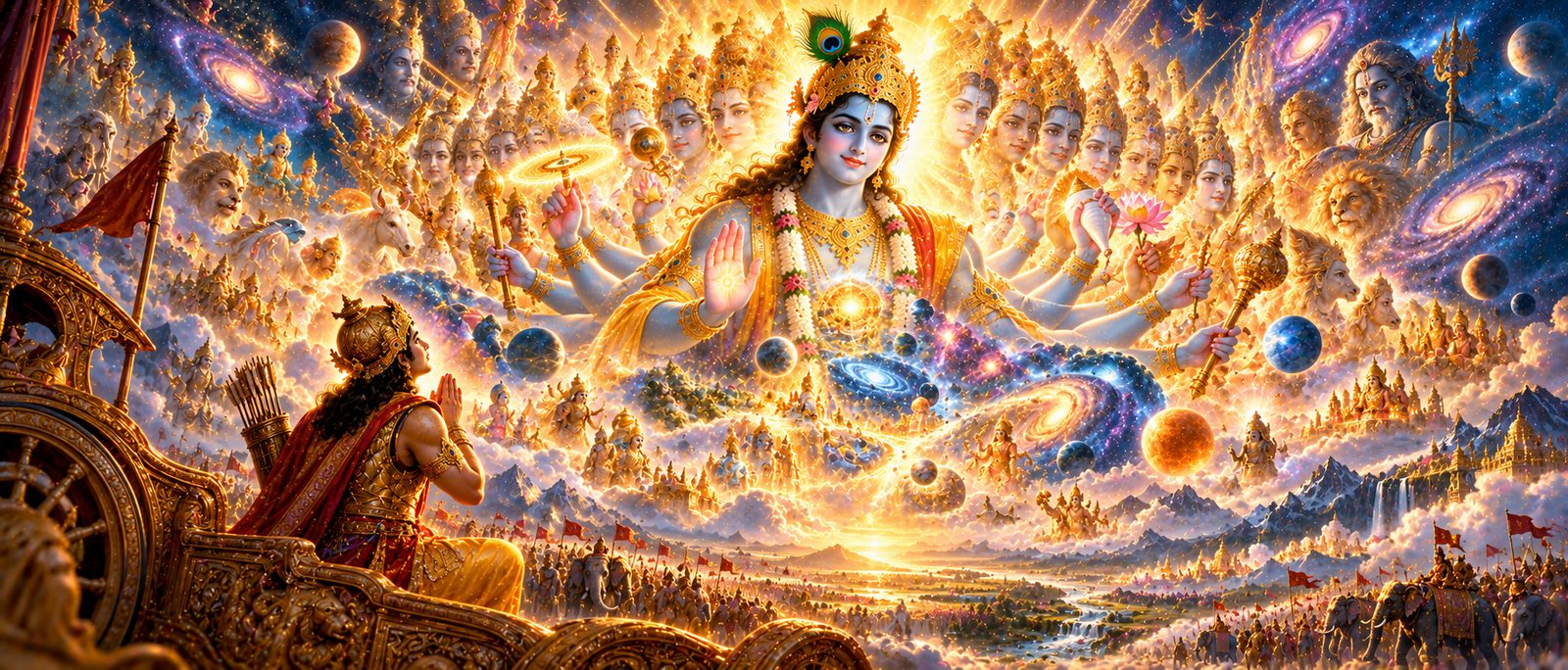
Arjuna asks to see Krishna's true form. Krishna gives him divine sight, and Arjuna sees the whole universe in one body, vast, bright and also frightening. Arjuna is overwhelmed and asks Krishna to return to his gentle, familiar form. Krishna says that love and devotion are the way to him.

अर्जुन कृष्ण का वास्तविक रूप देखना चाहते हैं। कृष्ण उन्हें दिव्य दृष्टि देते हैं और अर्जुन एक ही शरीर में पूरा ब्रह्माण्ड देखते हैं: विशाल, तेजस्वी और डरावना भी। अर्जुन घबरा जाते हैं और कृष्ण से अपने सौम्य, जाने-पहचाने रूप में लौटने को कहते हैं। कृष्ण कहते हैं कि प्रेम और भक्ति ही उन तक पहुँचने का मार्ग है।

Show meaning in
11.1

मदनुग्रहाय परमं गुह्यमध्यात्मसंज्ञितम्। यत्त्वयोक्तं वचस्तेन मोहोऽयं विगतो मम

arjuna uvācha
mad-anugrahāya paramaṁ guhyam adhyātma-sanjñitam
yat tvayoktaṁ vachas tena moho ’yaṁ vigato mama

Arjuna says: By your kindness you told me this deepest secret about the Self, and my confusion is gone.

अर्जुन कहते हैं: आपने कृपा करके मुझे आत्मा का यह परम गोपनीय ज्ञान बताया, उससे मेरा मोह दूर हो गया।

What Krishna meant

Arjuna speaks to Krishna and says that thanks to Krishna's kindness, his confusion is gone. Arjuna means that good teaching can clear a troubled mind. Example: after a long talk with a wise friend, a tangled problem can suddenly look clear, and it is good to say thank you.

अर्जुन कृष्ण से कहते हैं कि आपकी कृपा से मेरा भ्रम दूर हो गया है। अर्जुन का मतलब है कि अच्छी सीख उलझे मन को साफ़ कर देती है। जैसे, किसी समझदार दोस्त से लंबी बात के बाद उलझी हुई समस्या अचानक साफ़ दिखने लगती है, और तब धन्यवाद कहना अच्छा लगता है।
11.2

भवाप्ययौ हि भूतानां श्रुतौ विस्तरशो मया। त्वत्तः कमलपत्राक्ष माहात्म्यमपि चाव्ययम्

bhavāpyayau hi bhūtānāṁ śhrutau vistaraśho mayā
tvattaḥ kamala-patrākṣha māhātmyam api chāvyayam

I have heard from you in detail how beings come and go, and also about your endless greatness.

मैंने आपसे प्राणियों की उत्पत्ति और लय को विस्तार से सुना, और आपकी अनन्त महिमा भी।

What Krishna meant

Arjuna tells Krishna he has heard in detail how beings come and go, and also about Krishna's endless greatness. Arjuna means he has understood the teaching well. Example: after learning something properly, such as a new skill at work, it feels good to pause and see how far you have come.

अर्जुन कृष्ण से कहते हैं कि मैंने आपसे विस्तार से सुना कि प्राणी कैसे आते और जाते हैं, और आपकी अनंत महिमा के बारे में भी। अर्जुन का मतलब है कि उन्होंने सीख को अच्छे से समझ लिया है। जैसे, काम में कोई नया हुनर सीखने के बाद रुककर देखना अच्छा लगता है कि आप कितना आगे आ गए।

11.3

एवमेतद्यथात्थ त्वमात्मानं परमेश्वर। द्रष्टुमिच्छामि ते रूपमैश्वरं पुरुषोत्तम

evam etad yathāttha tvam ātmānaṁ parameśhvara
draṣhṭum ichchhāmi te rūpam aiśhwaraṁ puruṣhottama

Lord, it is just as you describe yourself. Now I wish to see your divine form.

हे परमेश्वर, आपने अपने बारे में जैसा कहा, वह वैसा ही है। अब मैं आपका ईश्वरीय रूप देखना चाहता हूँ।

What Krishna meant

Arjuna says that everything is just as Krishna described, and now he wishes to see Krishna's divine form. Arjuna means he wants to see for himself, not only hear. Example: it is natural to want to see what you have been told about, like visiting a place a friend keeps describing.

अर्जुन कहते हैं कि प्रभु, सब कुछ वैसा ही है जैसा आपने बताया, और अब मैं आपका दिव्य रूप देखना चाहता हूँ। अर्जुन का मतलब है कि वे सिर्फ सुनना नहीं, खुद देखना चाहते हैं। जैसे, जिस जगह के बारे में दोस्त बार-बार बताता है, उसे अपनी आँखों से देखने की इच्छा स्वाभाविक है।

11.4

मन्यसे यदि तच्छक्यं मया द्रष्टुमिति प्रभो। योगेश्वर ततो मे त्वं दर्शयाऽत्मानमव्ययम्

manyase yadi tach chhakyaṁ mayā draṣhṭum iti prabho
yogeśhvara tato me tvaṁ darśhayātmānam avyayam

If you think I am able to see it, Lord of yoga, then please show me your eternal form.

हे प्रभु, यदि आप मानते हैं कि मैं उसे देख सकता हूँ, तो हे योगेश्वर, मुझे अपना अविनाशी रूप दिखाइए।

What Krishna meant

Arjuna politely asks that if Krishna thinks he is able to see it, Krishna may please show his eternal form. Arjuna means he asks with humility, not demand. Example: when you want something big from someone, asking gently and admitting your limits works better than pushing.

अर्जुन विनम्रता से कहते हैं कि अगर आप समझते हैं कि मैं उसे देख सकता हूँ, तो कृपया अपना शाश्वत रूप दिखाइए। अर्जुन का मतलब है कि वे माँग नहीं रहे, विनय से पूछ रहे हैं। जैसे, किसी से कोई बड़ी चीज़ चाहिए हो, तो अपनी सीमा मानकर नरमी से पूछना ज़्यादा अच्छा काम करता है।

11.5

पश्य मे पार्थ रूपाणि शतशोऽथ सहस्रशः। नानाविधानि दिव्यानि नानावर्णाकृतीनि च

śhrī-bhagavān uvācha
paśhya me pārtha rūpāṇi śhataśho ’tha sahasraśhaḥ
nānā-vidhāni divyāni nānā-varṇākṛitīni cha

Krishna says: See my forms, Arjuna, hundreds and thousands, divine, of many kinds, colours and shapes.

श्रीकृष्ण कहते हैं: हे पार्थ, मेरे सैकड़ों-हज़ारों दिव्य रूप देखो, जो तरह-तरह के, अनेक रंगों और आकारों के हैं।

What Krishna meant

Krishna says to Arjuna, look at my many forms, hundreds and thousands, of many kinds, colours and shapes. Krishna means that life shows itself in endless variety. Example: when you meet people very different from you at work, remember that variety is part of something greater, and be curious instead of judging.

कृष्ण अर्जुन से कहते हैं कि मेरे सैकड़ों और हज़ारों रूप देखो, अलग-अलग तरह के, रंगों और आकारों के। कृष्ण का मतलब है कि जीवन अनगिनत रूपों में दिखता है। जैसे, काम में अपने से बहुत अलग लोग मिलें, तो याद रखिए कि यह विविधता किसी बड़ी चीज़ का हिस्सा है, इसलिए फ़ैसला करने के बजाय जिज्ञासु रहिए।

11.6

पश्यादित्यान्वसून्रुद्रानश्िवनौ मरुतस्तथा। बहून्यदृष्टपूर्वाणि पश्याऽश्चर्याणि भारत

paśhyādityān vasūn rudrān aśhvinau marutas tathā
bahūny adṛiṣhṭa-pūrvāṇi paśhyāśhcharyāṇi bhārata

See the Adityas, Vasus, Rudras, Ashvins and Maruts. See many wonders that no one has seen before.

आदित्यों, वसुओं, रुद्रों, अश्विनी कुमारों और मरुतों को देखो। ऐसे बहुत से आश्चर्य देखो जो पहले किसी ने नहीं देखे।

What Krishna meant

Krishna invites Arjuna to see the groups of gods and many wonders no one has seen before. This shows that the universe holds far more than we usually notice. It matters because a little wonder every day can ease a heavy mind.

कृष्ण अर्जुन को देवताओं के समूह और ऐसे कई चमत्कार देखने को कहते हैं जिन्हें पहले किसी ने नहीं देखा। इससे दिखता है कि ब्रह्मांड में उससे कहीं ज़्यादा है जितना हम आम तौर पर देखते हैं। यह इसलिए ज़रूरी है कि रोज़ थोड़ा आश्चर्य भारी मन को हल्का कर सकता है।

11.7

इहैकस्थं जगत्कृत्स्नं पश्याद्य सचराचरम्। मम देहे गुडाकेश यच्चान्यद्द्रष्टुमिच्छसि

ihaika-sthaṁ jagat kṛitsnaṁ paśhyādya sa-charācharam
mama dehe guḍākeśha yach chānyad draṣhṭum ichchhasi

See the whole universe, moving and unmoving, all in one place in my body, and whatever else you wish to see.

आज मेरे इस शरीर में एक जगह स्थित पूरे चराचर जगत को देखो, और जो कुछ और देखना चाहो, वह भी।

What Krishna meant

Krishna tells Arjuna to see the whole universe, moving and unmoving, together in one place in his body. Krishna means all of life is connected as one. Example: when you feel alone in a problem, remember that you are part of a much bigger web of people and things holding each other up.

कृष्ण अर्जुन से कहते हैं कि पूरा संसार, चलने वाला और न चलने वाला, एक ही जगह मेरे शरीर में देखो। कृष्ण का मतलब है कि सारा जीवन एक में जुड़ा है। जैसे, किसी समस्या में अकेले लगें, तो याद रखिए कि आप लोगों और चीज़ों के एक बड़े जाल का हिस्सा हैं जो एक-दूसरे को थामे हैं।

11.8

न तु मां शक्यसे द्रष्टुमनेनैव स्वचक्षुषा। दिव्यं ददामि ते चक्षुः पश्य मे योगमैश्वरम्

na tu māṁ śhakyase draṣhṭum anenaiva sva-chakṣhuṣhā
divyaṁ dadāmi te chakṣhuḥ paśhya me yogam aiśhwaram

But you cannot see me with these ordinary eyes. I give you divine sight. Look at my divine power.

पर तुम अपनी इन आँखों से मुझे नहीं देख सकते। इसलिए मैं तुम्हें दिव्य दृष्टि देता हूँ। मेरी ईश्वरीय शक्ति को देखो।

What Krishna meant

Krishna tells Arjuna that he cannot see this with ordinary eyes, so Krishna gives him divine sight. Krishna means some things need a deeper way of seeing. Example: understanding a loved one's silence often needs patience and care, not just quick looking.

कृष्ण अर्जुन से कहते हैं कि तुम इसे इन साधारण आँखों से नहीं देख सकते, इसलिए मैं तुम्हें दिव्य दृष्टि देता हूँ। कृष्ण का मतलब है कि कुछ बातें समझने के लिए गहरी नज़र चाहिए। जैसे, किसी अपने की चुप्पी समझने के लिए जल्दी देखने से ज़्यादा धीरज और परवाह चाहिए।

11.9

एवमुक्त्वा ततो राजन्महायोगेश्वरो हरिः। दर्शयामास पार्थाय परमं रूपमैश्वरम्

sañjaya uvācha
evam uktvā tato rājan mahā-yogeśhvaro hariḥ
darśhayām āsa pārthāya paramaṁ rūpam aiśhwaram

Sanjaya says: Having said this, O king, the great Lord Hari showed Arjuna his supreme divine form.

सञ्जय कहते हैं: हे राजन्, यह कहकर महायोगेश्वर हरि ने अर्जुन को अपना परम ईश्वरीय रूप दिखाया।

What Krishna meant

Sanjaya, who is telling the story to King Dhritarashtra, says that Krishna then showed Arjuna his supreme divine form. This begins the great vision. It matters because Sanjaya reminds us that even great events are best told simply and honestly.

संजय, जो राजा धृतराष्ट्र को यह कथा सुना रहे हैं, कहते हैं कि इसके बाद हरि कृष्ण ने अर्जुन को अपना परम दिव्य रूप दिखाया। यहीं से महान दर्शन शुरू होता है। यह इसलिए ज़रूरी है कि संजय हमें याद दिलाते हैं कि बड़ी घटनाएँ भी सीधे और ईमानदारी से बताई जाती हैं।

11.10

अनेकवक्त्रनयनमनेकाद्भुतदर्शनम्। अनेकदिव्याभरणं दिव्यानेकोद्यतायुधम्

aneka-vaktra-nayanam anekādbhuta-darśhanam
aneka-divyābharaṇaṁ divyānekodyatāyudham

It had many mouths and eyes, many wonderful sights, many divine ornaments and many raised weapons.

उसमें अनेक मुख और आँखें थीं, अनेक अद्भुत दृश्य थे, अनेक दिव्य आभूषण थे और अनेक उठे हुए शस्त्र थे।

What Krishna meant

Sanjaya describes the form to Dhritarashtra: it had many mouths and eyes, many wonderful sights, many ornaments and many raised weapons. The picture shows something far beyond human size and power. It matters because it makes Arjuna, and us, feel how small our worries are.

संजय धृतराष्ट्र को उस रूप का वर्णन करते हैं: उसमें अनेक मुख और नेत्र थे, कई अद्भुत दृश्य, कई गहने और कई उठे हुए शस्त्र। यह तस्वीर इंसानी आकार और ताक़त से बहुत बड़ी चीज़ दिखाती है। यह इसलिए ज़रूरी है कि इससे अर्जुन और हमें अपनी चिंताएँ छोटी लगने लगती हैं।

11.11

दिव्यमाल्याम्बरधरं दिव्यगन्धानुलेपनम्। सर्वाश्चर्यमयं देवमनन्तं विश्वतोमुखम्

divya-mālyāmbara-dharaṁ divya-gandhānulepanam
sarvāśhcharya-mayaṁ devam anantaṁ viśhvato-mukham

He wore divine garlands and clothes and was covered in divine fragrance. He was full of wonders, endless, and faced every direction.

वे दिव्य माला और वस्त्र पहने थे, दिव्य सुगन्ध लगाए थे। वे सब आश्चर्यों से भरे, अनन्त और सब ओर मुख वाले देव थे।

What Krishna meant

Sanjaya says the form wore divine garlands and clothes, was covered in divine fragrance, and was full of wonder, endless and facing every direction. It shows beauty and greatness together. It matters because it reminds us that the sacred can be full of grace as well as power.

संजय कहते हैं कि उस रूप ने दिव्य मालाएँ और वस्त्र पहने थे, उस पर दिव्य सुगंध लगी थी, और वह अद्भुत, अनंत और हर दिशा में मुख वाला था। इसमें सुंदरता और महानता साथ दिखती हैं। यह इसलिए ज़रूरी है कि पवित्रता में शक्ति के साथ कोमलता भी हो सकती है।

11.12

दिवि सूर्यसहस्रस्य भवेद्युगपदुत्थिता। यदि भाः सदृशी सा स्याद्भासस्तस्य महात्मनः

divi sūrya-sahasrasya bhaved yugapad utthitā
yadi bhāḥ sadṛiśhī sā syād bhāsas tasya mahātmanaḥ

If the light of a thousand suns rose in the sky all at once, it might be like the brightness of that great being.

यदि आकाश में हज़ार सूर्यों का प्रकाश एक साथ उठे, तो शायद वह उस महात्मा के तेज जैसा हो।

What Krishna meant

Sanjaya says that if the light of a thousand suns rose in the sky at once, it might be like the brightness of that great being. It shows a light beyond all words. It matters because some things can only be pointed to, not fully explained, and that is all right.

संजय कहते हैं कि अगर आकाश में हज़ार सूर्यों का प्रकाश एक साथ उग जाए, तो शायद वह उस महान रूप की चमक जैसा होगा। यह शब्दों से परे प्रकाश दिखाता है। यह इसलिए ज़रूरी है कि कुछ बातों की ओर सिर्फ इशारा किया जा सकता है, उन्हें पूरा समझाया नहीं जा सकता, और यह ठीक है।

11.13

तत्रैकस्थं जगत्कृत्स्नं प्रविभक्तमनेकधा। अपश्यद्देवदेवस्य शरीरे पाण्डवस्तदा

tatraika-sthaṁ jagat kṛitsnaṁ pravibhaktam anekadhā
apaśhyad deva-devasya śharīre pāṇḍavas tadā

There Arjuna saw the whole universe, divided in many ways, all together in the body of the God of gods.

तब अर्जुन ने देवों के देव के शरीर में अनेक भागों में बँटे पूरे जगत को एक साथ देखा।

What Krishna meant

Sanjaya says Arjuna saw the whole universe, divided in many ways, all together in the body of the God of gods. It shows that all the separate things in life are part of one whole. It matters because seeing the whole can calm our small disagreements.

संजय कहते हैं कि अर्जुन ने देवों के देव के शरीर में पूरा संसार देखा, जो कई तरह से बँटा था पर सब एक साथ था। इससे दिखता है कि जीवन की सब अलग चीज़ें एक पूरे का हिस्सा हैं। यह इसलिए ज़रूरी है कि पूरी तस्वीर देखने से हमारे छोटे मतभेद शांत हो जाते हैं।

11.14

ततः स विस्मयाविष्टो हृष्टरोमा धनञ्जयः। प्रणम्य शिरसा देवं कृताञ्जलिरभाषत

tataḥ sa vismayāviṣhṭo hṛiṣhṭa-romā dhanañjayaḥ
praṇamya śhirasā devaṁ kṛitāñjalir abhāṣhata

Filled with wonder, with hair standing on end, Arjuna bowed his head and spoke with folded hands.

तब आश्चर्य से भरे, रोमांचित अर्जुन ने सिर झुकाकर प्रणाम किया और हाथ जोड़कर कहा।

What Krishna meant

Sanjaya says Arjuna, filled with wonder and with his hair standing on end, bowed his head and spoke with folded hands. It shows a natural response to awe. It matters because humility is a good way to meet something bigger than us, whether in a temple or in a mountain view.

संजय कहते हैं कि अर्जुन ने आश्चर्य से भरकर, रोंगटे खड़े होने के साथ, सिर झुकाया और हाथ जोड़कर बोलना शुरू किया। यह विस्मय का स्वाभाविक रूप है। यह इसलिए ज़रूरी है कि अपने से बड़ी चीज़ से मिलने का अच्छा तरीका विनम्रता है, चाहे मंदिर में हो या पहाड़ के नज़ारे में।

11.15

पश्यामि देवांस्तव देव देहे सर्वांस्तथा भूतविशेषसङ्घान्। ब्रह्माणमीशं कमलासनस्थ मृषींश्च सर्वानुरगांश्च दिव्यान्

arjuna uvācha
paśhyāmi devāns tava deva dehe
sarvāns tathā bhūta-viśheṣha-saṅghān
brahmāṇam īśhaṁ kamalāsana-stham
ṛiṣhīnśh cha sarvān uragānśh cha divyān

Arjuna says: I see all the gods in your body, God, and all kinds of beings, Brahma on the lotus seat, the sages and the divine serpents.

अर्जुन कहते हैं: हे देव, मैं आपके शरीर में सब देवताओं को, तरह-तरह के प्राणियों को, कमल पर बैठे ब्रह्मा को, सब ऋषियों को और दिव्य सर्पों को देखता हूँ।

What Krishna meant

Arjuna says he sees all the gods and all kinds of beings in Krishna's body, with Brahma on the lotus seat, sages and divine serpents. He means the whole of creation is inside this one form. It shows how connected everything is, and why we should treat all beings with care.

अर्जुन कहते हैं कि मैं आपके शरीर में सब देवताओं और सब तरह के प्राणियों को देख रहा हूँ, कमल के आसन पर ब्रह्मा को, ऋषियों को और दिव्य सर्पों को। उनका मतलब है कि पूरी सृष्टि इसी एक रूप में है। यह दिखाता है कि सब कुछ कितना जुड़ा है, इसलिए हर प्राणी के साथ देखभाल से पेश आना चाहिए।

11.16

अनेकबाहूदरवक्त्रनेत्रं पश्यामि त्वां सर्वतोऽनन्तरूपम्। नान्तं न मध्यं न पुनस्तवादिं पश्यामि विश्वेश्वर विश्वरूप

aneka-bāhūdara-vaktra-netraṁ
paśhyāmi tvāṁ sarvato ’nanta-rūpam
nāntaṁ na madhyaṁ na punas tavādiṁ
paśhyāmi viśhveśhvara viśhva-rūpa

I see you everywhere with countless arms, bellies, mouths and eyes, endless in form. I see no end, no middle and no beginning of you, Lord of the universe.

मैं आपको सब ओर अनेक भुजाओं, पेट, मुख और नेत्रों वाला, अनन्त रूप में देखता हूँ। हे विश्वेश्वर, मुझे आपका न अन्त दिखता है, न मध्य, न आदि।

What Krishna meant

Arjuna says he sees Krishna everywhere, with countless arms, mouths and eyes, and no beginning, middle or end. He means the form is endless. It shows how small any single view is. It matters because when we feel stuck in one view of a problem, it helps to step back and look wider.

अर्जुन कहते हैं कि मैं आपको हर तरफ़ देखता हूँ, अनगिनत हाथों, मुखों और नेत्रों के साथ, जिसका न आदि है, न मध्य, न अंत। उनका मतलब है कि वह रूप अनंत है। इससे दिखता है कि कोई एक नज़रिया कितना छोटा है। यह इसलिए ज़रूरी है कि किसी समस्या में अटकें, तो पीछे हटकर व्यापक नज़र से देखना मदद करता है।

11.17

किरीटिनं गदिनं चक्रिणं च तेजोराशिं सर्वतोदीप्तिमन्तम्। पश्यामि त्वां दुर्निरीक्ष्यं समन्ता द्दीप्तानलार्कद्युतिमप्रमेयम्

kirīṭinaṁ gadinaṁ chakriṇaṁ cha
tejo-rāśhiṁ sarvato dīptimantam
paśhyāmi tvāṁ durnirīkṣhyaṁ samantād
dīptānalārka-dyutim aprameyam

I see you with crown, mace and discus, a mass of light shining everywhere. You are hard to look at, blazing like fire and sun on all sides, beyond measure.

मैं आपको मुकुट, गदा और चक्र धारण किए, तेज के पुंज और सब ओर चमकते हुए देखता हूँ। जलती आग और सूर्य के समान दीप्त आप देखने में कठिन और अपरिमित हैं।

What Krishna meant

Arjuna describes the blazing form with crown, mace and discus, a mass of light that is hard to look at, shining like fire and sun, beyond measure. It shows overwhelming power. It matters because meeting something huge can leave us speechless, and that is a natural human response.

अर्जुन उस दहकते रूप का वर्णन करते हैं: मुकुट, गदा और चक्र के साथ, प्रकाश का पुंज जिसे देखना कठिन है, आग और सूर्य की तरह चमकता, अपरिमेय। यह भारी शक्ति को दिखाता है। यह इसलिए ज़रूरी है कि कोई बहुत बड़ी चीज़ देखकर इंसान निःशब्द हो सकता है, और यह स्वाभाविक है।

11.18

त्वमक्षरं परमं वेदितव्यं त्वमस्य विश्वस्य परं निधानम्। त्वमव्ययः शाश्वतधर्मगोप्ता सनातनस्त्वं पुरुषो मतो मे

tvam akṣharaṁ paramaṁ veditavyaṁ
tvam asya viśhvasya paraṁ nidhānam
tvam avyayaḥ śhāśhvata-dharma-goptā
sanātanas tvaṁ puruṣho mato me

You are the supreme one to be known, the great support of this universe. You are unchanging, the protector of eternal dharma, the ancient person. This is what I believe.

आप ही जानने योग्य परम अक्षर हैं, आप इस विश्व के परम आधार हैं। आप अविनाशी हैं, सनातन धर्म के रक्षक हैं और सनातन पुरुष हैं, ऐसा मेरा मत है।

What Krishna meant

Arjuna says that now he believes Krishna is the supreme one to be known, the support of the universe, unchanging, the protector of dharma and the ancient person. He means his doubts are over. Example: after seeing proof of someone's goodness yourself, trust comes easily.

अर्जुन कहते हैं कि अब मैं मानता हूँ कि आप ही जानने योग्य परम तत्व हैं, संसार के आधार हैं, अविनाशी हैं, सनातन धर्म के रक्षक हैं और पुराने पुरुष हैं। उनका मतलब है कि शंकाएँ खत्म हो गईं। जैसे, किसी की अच्छाई खुद देख लें, तो भरोसा आसानी से आ जाता है।

11.19

अनादिमध्यान्तमनन्तवीर्य मनन्तबाहुं शशिसूर्यनेत्रम्। पश्यामि त्वां दीप्तहुताशवक्त्रम् स्वतेजसा विश्वमिदं तपन्तम्

स्वतेजसा विश्वमिदं तपन्तम् || 19||

I see you without beginning, middle or end, with endless power and arms, with the moon and sun as your eyes, with a mouth of blazing fire, heating this whole universe with your own light.

मैं आपको आदि, मध्य और अन्त से रहित, अनन्त शक्ति और अनन्त भुजाओं वाला, चन्द्र-सूर्य रूपी नेत्रों वाला और जलती अग्नि जैसे मुख वाला, अपने तेज से जगत को तपाता हुआ देखता हूँ।

What Krishna meant

Arjuna describes seeing Krishna with endless power and arms, the moon and sun as his eyes, and a mouth of blazing fire that warms the whole universe. It shows power that gives light and heat to all. It matters because real strength, like the sun, serves everyone.

अर्जुन आपको अनंत शक्ति और भुजाओं वाला देखते हैं, जिसकी आँखें सूर्य और चंद्रमा हैं और मुख जलती आग जैसा, जो पूरे ब्रह्मांड को अपने तेज से तपाता है। यह वह शक्ति दिखाता है जो सबको रोशनी और गर्मी देती है। यह इसलिए ज़रूरी है कि असली ताक़त सूरज की तरह सबकी सेवा करती है।

11.20

द्यावापृथिव्योरिदमन्तरं हि व्याप्तं त्वयैकेन दिशश्च सर्वाः। दृष्ट्वाऽद्भुतं रूपमुग्रं तवेदं लोकत्रयं प्रव्यथितं महात्मन्

dyāv ā-pṛithivyor idam antaraṁ hi
vyāptaṁ tvayaikena diśhaśh cha sarvāḥ
dṛiṣhṭvādbhutaṁ rūpam ugraṁ tavedaṁ
loka-trayaṁ pravyathitaṁ mahātman

The space between heaven and earth, and all directions, are filled by you alone. Seeing this wonderful and fearful form of yours, the three worlds tremble, great soul.

स्वर्ग और पृथ्वी के बीच का यह आकाश और सब दिशाएँ आप अकेले से भरी हैं। आपके इस अद्भुत और उग्र रूप को देखकर तीनों लोक काँप रहे हैं।

What Krishna meant

Arjuna says the space between heaven and earth is filled by Krishna alone, and seeing this wonderful and fearful form, the three worlds tremble. He means the sight is awe-inspiring and frightening at once. It matters because it is human to feel both wonder and fear before something vast.

अर्जुन कहते हैं कि स्वर्ग और धरती के बीच का पूरा आकाश और सारी दिशाएँ आप अकेले से भरी हैं, और यह अद्भुत और भयानक रूप देखकर तीनों लोक काँप रहे हैं। उनका मतलब है कि दृश्य विस्मयकारी भी है और डरावना भी। यह इसलिए ज़रूरी है कि किसी विशाल चीज़ के सामने आश्चर्य और डर दोनों होना इंसानी बात है।

11.21

अमी हि त्वां सुरसङ्घाः विशन्ति केचिद्भीताः प्राञ्जलयो गृणन्ति। स्वस्तीत्युक्त्वा महर्षिसिद्धसङ्घाः स्तुवन्ति त्वां स्तुतिभिः पुष्कलाभिः

amī hi tvāṁ sura-saṅghā viśhanti
kechid bhītāḥ prāñjalayo gṛiṇanti
svastīty uktvā maharṣhi-siddha-saṅghāḥ
stuvanti tvāṁ stutibhiḥ puṣhkalābhiḥ

These groups of gods are entering you. Some, afraid, praise you with folded hands. Groups of sages and perfected beings say "May all be well" and sing your praises.

ये देवताओं के समूह आप में प्रवेश कर रहे हैं। कुछ डरे हुए हाथ जोड़कर स्तुति करते हैं। महर्षि और सिद्धों के समूह "कल्याण हो" कहकर उत्तम स्तोत्रों से आपकी स्तुति करते हैं।

What Krishna meant

Arjuna sees groups of gods entering the form, some afraid and praising with folded hands, and groups of sages saying, May all be well. It shows both fear and prayer in the same moment. It matters because turning to a calm prayer, even in fear, can steady us.

अर्जुन देखते हैं कि देवताओं के समूह उस रूप में प्रवेश कर रहे हैं, कुछ डरकर हाथ जोड़े स्तुति कर रहे हैं, और ऋषि-सिद्धों के समूह कह रहे हैं कि सबका कल्याण हो। एक ही पल में डर और प्रार्थना दोनों दिखते हैं। यह इसलिए ज़रूरी है कि डर में भी शांत प्रार्थना की ओर मुड़ना हमें स्थिर कर सकता है।

11.22

रुद्रादित्या वसवो ये च साध्या विश्वेऽश्िवनौ मरुतश्चोष्मपाश्च। गन्धर्वयक्षासुरसिद्धसङ्घा वीक्षन्ते त्वां विस्मिताश्चैव सर्वे

rudrādityā vasavo ye cha sādhyā
viśhve ’śhvinau marutaśh choṣhmapāśh cha
gandharva-yakṣhāsura-siddha-saṅghā
vīkṣhante tvāṁ vismitāśh chaiva sarve

The Rudras, Adityas, Vasus, Sadhyas, Vishvedevas, Ashvins, Maruts, ancestors, celestial singers, spirits, demons and perfected beings all look at you in amazement.

रुद्र, आदित्य, वसु, साध्य, विश्वेदेव, अश्विनी कुमार, मरुत, पितर, गन्धर्व, यक्ष, असुर और सिद्धों के समूह सब विस्मित होकर आपको देख रहे हैं।

What Krishna meant

Arjuna lists many groups of heavenly beings, such as the Rudras, Adityas, Vasus, Ashvins, Maruts, ancestors, singers and spirits, all looking at the form in amazement. It shows that every kind of being, high or low, is stunned by this vision. It matters because wonder is something we all share.

अर्जुन कई दिव्य समूहों को गिनाते हैं, जैसे रुद्र, आदित्य, वसु, अश्विनी कुमार, मरुत, पितर, गंधर्व और यक्ष, जो सब हैरानी से उस रूप को देख रहे हैं। इससे पता चलता है कि हर तरह का प्राणी, ऊँचा या नीचा, इस दृश्य से स्तब्ध है। यह इसलिए ज़रूरी है कि आश्चर्य ऐसी चीज़ है जो हम सब में साझा है।

11.23

रूपं महत्ते बहुवक्त्रनेत्रं महाबाहो बहुबाहूरुपादम्। बहूदरं बहुदंष्ट्राकरालं दृष्ट्वा लोकाः प्रव्यथितास्तथाऽहम्

rūpaṁ mahat te bahu-vaktra-netraṁ
mahā-bāho bahu-bāhūru-pādam
bahūdaraṁ bahu-danṣhṭrā-karālaṁ
dṛiṣhṭvā lokāḥ pravyathitās tathāham

Seeing your huge form, with many mouths and eyes, many arms, thighs and feet, many bellies and terrible fangs, the worlds are shaken, and so am I.

हे महाबाहो, आपके अनेक मुख-नेत्रों, अनेक भुजाओं-जंघाओं-पैरों, अनेक पेटों और भयानक दाढ़ों वाले विशाल रूप को देखकर लोक व्याकुल हैं, और मैं भी।

What Krishna meant

Arjuna says that seeing the huge form with many mouths, eyes, arms and terrible fangs, the worlds are shaken, and so is he. He means the sight is too much for him. It matters because it is fine to admit when something feels too big, and to ask for help.

अर्जुन कहते हैं कि अनेक मुखों, नेत्रों, भुजाओं और भयानक दाँतों वाला विशाल रूप देखकर संसार हिल गया है, और मैं भी। उनका मतलब है कि यह दृश्य उनके लिए बहुत भारी है। यह इसलिए ज़रूरी है कि यह मान लेना ठीक है कि कुछ बहुत बड़ा लग रहा है, और मदद माँगना भी ठीक है।

11.24

नभःस्पृशं दीप्तमनेकवर्णं व्यात्ताननं दीप्तविशालनेत्रम्। दृष्ट्वा हि त्वां प्रव्यथितान्तरात्मा धृतिं न विन्दामि शमं च विष्णो

nabhaḥ-spṛiśhaṁ dīptam aneka-varṇaṁ
vyāttānanaṁ dīpta-viśhāla-netram
dṛiṣhṭvā hi tvāṁ pravyathitāntar-ātmā
dhṛitiṁ na vindāmi śhamaṁ cha viṣhṇo

Seeing you touching the sky, blazing, many-coloured, with wide-open mouths and huge shining eyes, my inner self trembles. I find no steadiness or peace, Vishnu.

आकाश को छूते, चमकते, अनेक रंगों वाले, फैले मुख और बड़ी चमकती आँखों वाले आपको देखकर मेरा अन्तर काँप उठा है। हे विष्णु, मुझे न धैर्य मिलता है, न शान्ति।

What Krishna meant

Arjuna says that seeing the form touching the sky, blazing and many-coloured, his inner self trembles and he finds no steadiness or peace. He means he feels shaken to the core. Example: during sudden bad news, feeling shaky is natural, and taking a slow breath can help.

अर्जुन कहते हैं कि आकाश को छूता, दहकता और अनेक रंगों वाला रूप देखकर मेरा अंतर काँप रहा है, और मुझे न स्थिरता मिल रही है, न शांति। उनका मतलब है कि वे भीतर तक हिल गए हैं। जैसे, अचानक बुरी खबर पर काँप जाना स्वाभाविक है, और धीमी गहरी साँस लेना मदद करता है।

11.25

दंष्ट्राकरालानि च ते मुखानि दृष्ट्वैव कालानलसन्निभानि। दिशो न जाने न लभे च शर्म प्रसीद देवेश जगन्निवास

danṣhṭrā-karālāni cha te mukhāni
dṛiṣhṭvaiva kālānala-sannibhāni
diśho na jāne na labhe cha śharma
prasīda deveśha jagan-nivāsa

Seeing your mouths with terrible fangs, like the fire at the end of time, I lose my sense of direction and find no comfort. Be kind, Lord of gods, home of the world.

आपके दाढ़ों से भयानक, प्रलय की अग्नि जैसे मुखों को देखकर मुझे दिशाओं का ज्ञान नहीं रहता और सुख नहीं मिलता। हे देवेश, हे जगन्निवास, प्रसन्न हों।

What Krishna meant

Arjuna says the mouths with terrible fangs, like the fire at the end of time, make him lose his sense of direction and find no comfort, and he asks Krishna to be kind. He means he asks for gentleness when overwhelmed. It is fine to ask for comfort when things feel too much.

अर्जुन कहते हैं कि प्रलय की आग जैसे भयानक दाँतों वाले मुख देखकर मुझे दिशा का होश नहीं रहा, कहीं सुकून नहीं मिलता, और वे कृष्ण से कृपा करने को कहते हैं। उनका मतलब है कि घबराहट में वे कोमलता माँग रहे हैं। जब सब कुछ बहुत भारी लगे, तो सुकून माँगना ठीक है।

11.26

अमी च त्वां धृतराष्ट्रस्य पुत्राः सर्वे सहैवावनिपालसङ्घैः। भीष्मो द्रोणः सूतपुत्रस्तथाऽसौ सहास्मदीयैरपि योधमुख्यैः

amī cha tvāṁ dhṛitarāśhtrasya putrāḥ
sarve sahaivāvani-pāla-saṅghaiḥ
bhīṣhmo droṇaḥ sūta-putras tathāsau
sahāsmadīyair api yodha-mukhyaiḥ
vaktrāṇi te tvaramāṇā viśhanti
danṣhṭrā-karālāni bhayānakāni
kechid vilagnā daśhanāntareṣhu
sandṛiśhyante chūrṇitair uttamāṅgaiḥ

All these sons of Dhritarashtra, with the groups of kings, and Bhishma, Drona, Karna, and the chief warriors of our side too,

धृतराष्ट्र के ये सब पुत्र राजाओं के समूहों सहित, और भीष्म, द्रोण, कर्ण तथा हमारे पक्ष के मुख्य योद्धा भी,

What Krishna meant

Arjuna says that all the sons of Dhritarashtra, with groups of kings, and Bhishma, Drona, Karna and the chief warriors of his own side too, appear in the vision. He is describing a frightening sight of the war. It reminds us that no one stands outside the passing of time.

अर्जुन कहते हैं कि धृतराष्ट्र के सब पुत्र, राजाओं के समूहों के साथ, और भीष्म, द्रोण, कर्ण तथा हमारे पक्ष के प्रमुख योद्धा भी उस दर्शन में दिख रहे हैं। वे युद्ध का एक डरावना दृश्य बता रहे हैं। यह याद दिलाता है कि समय के बीतने से कोई बाहर नहीं।

11.27

वक्त्राणि ते त्वरमाणा विशन्ति दंष्ट्राकरालानि भयानकानि। केचिद्विलग्ना दशनान्तरेषु संदृश्यन्ते चूर्णितैरुत्तमाङ्गैः

vaktrāṇi te tvaramāṇā viśanti daṁṣṭrā-karālāni bhayānakāni kecid vilagnā daśanāntareṣu sandṛśyante cūrṇitair uttamāṅgaiḥ

are rushing into your fearful mouths with terrible fangs. Some are seen stuck between the teeth, with their heads crushed.

तेज़ी से आपके भयानक दाढ़ों वाले मुखों में प्रवेश कर रहे हैं। कुछ दाँतों के बीच फँसे हुए दिखते हैं, जिनके सिर कुचले जा चुके हैं।

What Krishna meant

Arjuna describes the warriors rushing into the fearful mouths, some stuck between the teeth with heads crushed. It is a hard, frightening picture of how time takes everyone. It matters because the vision is not meant to scare us, but to show how brief and fragile all we cling to can be.

अर्जुन बताते हैं कि योद्धा भयानक मुखों में दौड़ते जा रहे हैं, कुछ दाँतों के बीच फँसे हैं और उनके सिर कुचले हुए हैं। यह इस बात की कठिन, डरावनी तस्वीर है कि समय सबको ले जाता है। यह इसलिए ज़रूरी है कि दर्शन डराने के लिए नहीं, यह दिखाने के लिए है कि जिससे हम चिपके रहते हैं, वह कितना क्षणिक है।

11.28

यथा नदीनां बहवोऽम्बुवेगाः समुद्रमेवाभिमुखाः द्रवन्ति। तथा तवामी नरलोकवीरा विशन्ति वक्त्राण्यभिविज्वलन्ति

yathā nadīnāṁ bahavo ’mbu-vegāḥ
samudram evābhimukhā dravanti
tathā tavāmī nara-loka-vīrā
viśhanti vaktrāṇy abhivijvalanti

As many river waters rush toward the ocean, so these heroes of the human world enter your blazing mouths.

जैसे नदियों के बहुत से जल-प्रवाह समुद्र की ओर दौड़ते हैं, वैसे ही ये नरलोक के वीर आपके जलते हुए मुखों में प्रवेश कर रहे हैं।

What Krishna meant

Arjuna says that as many river waters rush toward the ocean, so these heroes enter the blazing mouths. The picture shows that all lives flow toward the same end. It matters because remembering this can help us let go of small anger and use our time well.

अर्जुन कहते हैं कि जैसे नदियों का जल समुद्र की ओर बहता है, वैसे ही ये वीर दहकते मुखों में प्रवेश कर रहे हैं। यह तस्वीर दिखाती है कि सब जीवन एक ही अंत की ओर बहते हैं। यह इसलिए ज़रूरी है कि इसे याद रखने से हम छोटे गुस्से छोड़ सकते हैं और समय का अच्छा उपयोग कर सकते हैं।

11.29

यथा प्रदीप्तं ज्वलनं पतङ्गा विशन्ति नाशाय समृद्धवेगाः। तथैव नाशाय विशन्ति लोका स्तवापि वक्त्राणि समृद्धवेगाः

yathā pradīptaṁ jvalanaṁ pataṅgā
viśhanti nāśhāya samṛiddha-vegāḥ
tathaiva nāśhāya viśhanti lokās
tavāpi vaktrāṇi samṛiddha-vegāḥ

As moths rush with great speed into a blazing fire to be destroyed, so these people rush into your mouths to be destroyed.

जैसे पतंगे तेज़ी से जलती आग में नष्ट होने के लिए घुसते हैं, वैसे ही ये लोग भी तेज़ी से आपके मुखों में नाश के लिए प्रवेश कर रहे हैं।

What Krishna meant

Arjuna says that as moths rush with speed into a flame and are destroyed, so these people rush into the mouths. He means many act without seeing where they are heading. It matters because pausing to think before chasing a thing, like a quick profit or a quarrel, can save us from regret.

अर्जुन कहते हैं कि जैसे पतंगे तेज़ी से जलती आग में जाकर नष्ट हो जाते हैं, वैसे ही ये लोग उन मुखों में दौड़ रहे हैं। उनका मतलब है कि बहुत लोग बिना देखे कि कहाँ जा रहे हैं, भागते रहते हैं। यह इसलिए ज़रूरी है कि किसी चीज़ के पीछे, जैसे जल्दी का मुनाफ़ा या झगड़ा, भागने से पहले रुककर सोचना पछतावे से बचा सकता है।

11.30

लेलिह्यसे ग्रसमानः समन्ता ल्लोकान्समग्रान्वदनैर्ज्वलद्भिः। तेजोभिरापूर्य जगत्समग्रं भासस्तवोग्राः प्रतपन्ति विष्णो

lelihyase grasamānaḥ samantāl
lokān samagrān vadanair jvaladbhiḥ
tejobhir āpūrya jagat samagraṁ
bhāsas tavogrāḥ pratapanti viṣhṇo

You lick up all the worlds on every side, swallowing them with your flaming mouths. Your fierce rays fill the whole universe with light and burn, Vishnu.

आप जलते हुए मुखों से सब लोकों को निगलते हुए चारों ओर चाट रहे हैं। हे विष्णु, आपकी उग्र किरणें पूरे जगत को तेज से भरकर तपा रही हैं।

What Krishna meant

Arjuna says the form is licking up all the worlds on every side with flaming mouths, and its fierce rays fill the universe with light and burn. He means the power of time is huge. It matters because it asks us not to waste our days on petty things.

अर्जुन कहते हैं कि वह रूप अपने जलते मुखों से सब लोकों को चारों ओर से निगल रहा है, और उसकी प्रचंड किरणें पूरे ब्रह्मांड को प्रकाश से भरकर तपा रही हैं। उनका मतलब है कि समय की शक्ति विशाल है। यह इसलिए ज़रूरी है कि हमें छोटी बातों में दिन बर्बाद नहीं करने चाहिए।

11.31

आख्याहि मे को भवानुग्ररूपो नमोऽस्तु ते देववर प्रसीद। विज्ञातुमिच्छामि भवन्तमाद्यं न हि प्रजानामि तव प्रवृत्तिम्

ākhyāhi me ko bhavān ugra-rūpo
namo ’stu te deva-vara prasīda
vijñātum ichchhāmi bhavantam ādyaṁ
na hi prajānāmi tava pravṛittim

Tell me, who are you in this fierce form? I bow to you, best of gods. Be kind. I wish to know you, the first one, because I do not understand what you are doing.

बताइए, उग्र रूप वाले आप कौन हैं? हे देववर, आपको नमस्कार, प्रसन्न हों। मैं आदि पुरुष आपको जानना चाहता हूँ, क्योंकि आपका यह काम मैं नहीं समझ पा रहा।

What Krishna meant

Arjuna bows and asks Krishna, who are you in this fierce form? He says he wants to know the first one, because he does not understand what Krishna is doing. Arjuna means that when we are confused, it is wise to ask openly and respectfully, instead of guessing.

अर्जुन प्रणाम करके पूछते हैं कि इस उग्र रूप में आप कौन हैं? वे कहते हैं कि मैं आप आदि पुरुष को जानना चाहता हूँ, क्योंकि मैं समझ नहीं पा रहा कि आप क्या कर रहे हैं। अर्जुन का मतलब है कि उलझन में अंदाज़ा लगाने के बजाय खुलकर और आदर से पूछना समझदारी है।

11.32

कालोऽस्मि लोकक्षयकृत्प्रवृद्धो लोकान्समाहर्तुमिह प्रवृत्तः। ऋतेऽपि त्वां न भविष्यन्ति सर्वे येऽवस्थिताः प्रत्यनीकेषु योधाः

śhrī-bhagavān uvācha
kālo ’smi loka-kṣhaya-kṛit pravṛiddho
lokān samāhartum iha pravṛittaḥ
ṛite ’pi tvāṁ na bhaviṣhyanti sarve
ye ’vasthitāḥ pratyanīkeṣhu yodhāḥ

Krishna says: I am Time, the great destroyer of worlds, and I have come here to gather in these people. Even without you, none of the warriors standing in the opposing armies will survive.

श्रीकृष्ण कहते हैं: मैं बढ़ा हुआ काल हूँ, लोकों का नाश करने वाला, और इस समय इन लोकों को समेटने आया हूँ। तुम्हारे बिना भी विपक्ष की सेनाओं में खड़े ये सब योद्धा नहीं बचेंगे।

What Krishna meant

Krishna says he is Time, the great destroyer of worlds, who has come to gather in these people, and that even without Arjuna, none of the warriors on the opposing side will survive. Krishna means that time takes all things, so it is wiser not to carry guilt over what is already going to happen.

कृष्ण कहते हैं कि मैं काल हूँ, संसारों का महान संहारक, और इन लोगों को समेटने आया हूँ। तुम्हारे बिना भी सामने की सेना का कोई योद्धा नहीं बचेगा। कृष्ण का मतलब है कि समय सबको ले जाता है, इसलिए जो होना ही है उसका दोष मन पर लादना ठीक नहीं।

11.33

तस्मात्त्वमुत्तिष्ठ यशो लभस्व जित्वा शत्रून् भुङ्क्ष्व राज्यं समृद्धम्। मयैवैते निहताः पूर्वमेव निमित्तमात्रं भव सव्यसाचिन्

tasmāt tvam uttiṣhṭha yaśho labhasva
jitvā śhatrūn bhuṅkṣhva rājyaṁ samṛiddham
mayaivaite nihatāḥ pūrvam eva
nimitta-mātraṁ bhava savya-sāchin

So get up and win honour. Defeat your enemies and enjoy a rich kingdom. They have already been struck down by me. You are only the instrument, Arjuna.

इसलिए उठो, यश पाओ। शत्रुओं को जीतकर समृद्ध राज्य भोगो। ये पहले से ही मेरे द्वारा मारे जा चुके हैं। हे सव्यसाची, तुम केवल निमित्त बन जाओ।

What Krishna meant

Krishna says to Arjuna, get up and win honour, defeat your enemies and enjoy a rich kingdom, for they are already struck down and you are only the instrument. Krishna means do your duty without a heavy sense of doing it alone. Example: when handling a big task, just do your part well and trust the larger process.

कृष्ण अर्जुन से कहते हैं कि उठो, यश कमाओ, शत्रुओं को हराओ और समृद्ध राज्य भोगो, ये पहले ही मेरे द्वारा मारे जा चुके हैं, तुम तो बस निमित्त हो। कृष्ण का मतलब है कि अपना कर्तव्य निभाओ, यह भारी भाव लिए बिना कि सब अकेले तुम पर है। जैसे, बड़े काम में अपना हिस्सा अच्छे से करिए और बड़ी प्रक्रिया पर भरोसा रखिए।

11.34

द्रोणं च भीष्मं च जयद्रथं च कर्णं तथाऽन्यानपि योधवीरान्। मया हतांस्त्वं जहि मा व्यथिष्ठा युध्यस्व जेतासि रणे सपत्नान्

droṇaṁ cha bhīṣhmaṁ cha jayadrathaṁ cha
karṇaṁ tathānyān api yodha-vīrān
mayā hatāṁs tvaṁ jahi mā vyathiṣhṭhā
yudhyasva jetāsi raṇe sapatnān

Drona, Bhishma, Jayadratha, Karna and other brave warriors have already been struck down by me. Fight and do not be troubled. You will win the battle.

द्रोण, भीष्म, जयद्रथ, कर्ण और दूसरे वीर योद्धा मेरे द्वारा पहले ही मारे जा चुके हैं। तुम उन्हें मारो, घबराओ मत। युद्ध करो, तुम शत्रुओं को जीतोगे।

What Krishna meant

Krishna names Drona, Bhishma, Jayadratha, Karna and other brave warriors as already struck down by him, and tells Arjuna to fight without worry, for he will win. Krishna means fear should not freeze us. Example: before a hard conversation, prepare well, then speak calmly rather than letting dread stop you.

कृष्ण द्रोण, भीष्म, जयद्रथ, कर्ण और दूसरे वीरों को अपने द्वारा पहले ही मारा हुआ बताते हैं, और अर्जुन से कहते हैं कि बिना चिंता के लड़ो, तुम जीतोगे। कृष्ण का मतलब है कि डर हमें जमा न दे। जैसे, कठिन बातचीत से पहले अच्छी तैयारी कीजिए, फिर डर को रोकने देने की जगह शांति से बोलिए।

11.35

एतच्छ्रुत्वा वचनं केशवस्य कृताञ्जलिर्वेपमानः किरीटी। नमस्कृत्वा भूय एवाह कृष्णं सगद्गदं भीतभीतः प्रणम्य

sañjaya uvācha
etach chhrutvā vachanaṁ keśhavasya
kṛitāñjalir vepamānaḥ kirīṭī
namaskṛitvā bhūya evāha kṛiṣhṇaṁ
sa-gadgadaṁ bhīta-bhītaḥ praṇamya

Sanjaya says: Hearing these words of Krishna, Arjuna, trembling with folded hands, bowed again and spoke in a shaking voice, very afraid.

सञ्जय कहते हैं: केशव के ये वचन सुनकर काँपते हुए अर्जुन ने हाथ जोड़कर प्रणाम किया और बहुत डरे हुए, गद्गद स्वर में फिर कृष्ण से कहा।

What Krishna meant

Sanjaya tells Dhritarashtra that after hearing Krishna's words, Arjuna, trembling with folded hands, bowed again and spoke in a shaking voice, very afraid. Sanjaya shows us a very human scene: even a great warrior can feel fear. It matters because feeling afraid is not weakness.

संजय धृतराष्ट्र को बताते हैं कि कृष्ण के वचन सुनकर अर्जुन काँपते हुए, हाथ जोड़कर फिर झुके और डरी हुई, काँपती आवाज़ में बोले। संजय एक बहुत इंसानी दृश्य दिखाते हैं: बड़ा योद्धा भी डर सकता है। यह इसलिए ज़रूरी है कि डरना कमज़ोरी नहीं है।

11.36

स्थाने हृषीकेश तव प्रकीर्त्या जगत् प्रहृष्यत्यनुरज्यते च। रक्षांसि भीतानि दिशो द्रवन्ति सर्वे नमस्यन्ति च सिद्धसङ्घाः

arjuna uvācha
sthāne hṛiṣhīkeśha tava prakīrtyā
jagat prahṛiṣhyaty anurajyate cha
rakṣhānsi bhītāni diśho dravanti
sarve namasyanti cha siddha-saṅghāḥ

Arjuna says: It is right, Krishna, that the world rejoices and loves in praising you. Demons flee in fear in all directions, and groups of perfected beings bow to you.

अर्जुन कहते हैं: हे हृषीकेश, यह उचित ही है कि आपके यश से जगत आनन्दित और प्रेम से भर जाता है। राक्षस डरकर दिशाओं में भागते हैं और सिद्धों के समूह आपको नमस्कार करते हैं।

What Krishna meant

Arjuna says it is right that the world rejoices in praising Krishna, that demons flee in fear and groups of perfected beings bow to him. He means all beings respond to the divine in their own way. It matters because joy and respect come naturally when we see what is truly good.

अर्जुन कहते हैं कि यह उचित ही है कि संसार आपके गुणगान से आनंदित और प्रेम से भर जाता है, राक्षस डरकर चारों दिशाओं में भाग रहे हैं और सिद्धों के समूह आपको प्रणाम कर रहे हैं। उनका मतलब है कि सब प्राणी अपने ढंग से ईश्वर को उत्तर देते हैं। यह इसलिए ज़रूरी है कि जो सचमुच अच्छा है उसे देखकर आनंद और आदर स्वाभाविक रूप से आते हैं।

11.37

कस्माच्च ते न नमेरन्महात्मन् गरीयसे ब्रह्मणोऽप्यादिकर्त्रे। अनन्त देवेश जगन्निवास त्वमक्षरं सदसत्तत्परं यत्

kasmāch cha te na nameran mahātman
garīyase brahmaṇo ’py ādi-kartre
ananta deveśha jagan-nivāsa
tvam akṣharaṁ sad-asat tat paraṁ yat

Why would they not bow to you, great soul, greater even than Brahma, the first creator? Endless Lord of gods, home of the world, you are the imperishable, being and non-being, and what is beyond both.

हे महात्मन्, वे आपको क्यों न नमस्कार करें, जो ब्रह्मा से भी बड़े और आदि कर्ता हैं? हे अनन्त, देवेश, जगन्निवास, आप अक्षर हैं, सत् और असत् हैं, और उन दोनों से परे जो है, वह भी आप हैं।

What Krishna meant

Arjuna says why would they not bow to Krishna, who is greater even than Brahma, the first creator, endless, imperishable, and beyond being and non-being. He means Krishna is beyond everything. It matters because honouring what is greater than us keeps us humble and grounded.

अर्जुन कहते हैं कि वे आपको प्रणाम क्यों न करें, जो पहले रचयिता ब्रह्मा से भी बड़े हैं, अनंत हैं, अविनाशी हैं और सत् और असत् दोनों से परे हैं। उनका मतलब है कि कृष्ण सबसे ऊपर हैं। यह इसलिए ज़रूरी है कि अपने से बड़े का सम्मान हमें विनम्र और ज़मीन से जुड़ा रखता है।

11.38

त्वमादिदेवः पुरुषः पुराण स्त्वमस्य विश्वस्य परं निधानम्। वेत्तासि वेद्यं च परं च धाम त्वया ततं विश्वमनन्तरूप

tvam ādi-devaḥ puruṣhaḥ purāṇas
tvam asya viśhvasya paraṁ nidhānam
vettāsi vedyaṁ cha paraṁ cha dhāma
tvayā tataṁ viśhvam ananta-rūpa

You are the first God, the ancient person, the supreme support of this universe. You are the knower and the one to be known, the supreme home. By you the universe is pervaded, endless form.

आप आदिदेव हैं, पुराण पुरुष हैं और इस विश्व के परम आश्रय हैं। आप जानने वाले भी हैं और जानने योग्य भी, और परम धाम हैं। हे अनन्त रूप, आपसे यह विश्व व्याप्त है।

What Krishna meant

Arjuna calls Krishna the first God, the ancient person, the supreme support of the universe, the knower and the one to be known. He means Krishna is both the one who sees and what is seen. It matters because praising what is good in a teacher or loved one opens the heart.

अर्जुन कृष्ण को आदिदेव, पुराण पुरुष, संसार का परम आश्रय, जानने वाला और जानने योग्य कहते हैं। उनका मतलब है कि कृष्ण देखने वाले भी हैं और देखे जाने वाले भी। यह इसलिए ज़रूरी है कि किसी गुरु या प्रिय की अच्छाई की सराहना करना हृदय को खोलता है।

11.39

वायुर्यमोऽग्निर्वरुणः शशाङ्कः प्रजापतिस्त्वं प्रपितामहश्च। नमो नमस्तेऽस्तु सहस्रकृत्वः पुनश्च भूयोऽपि नमो नमस्ते

vāyur yamo ’gnir varuṇaḥ śhaśhāṅkaḥ
prajāpatis tvaṁ prapitāmahaśh cha
namo namas te ’stu sahasra-kṛitvaḥ
punaśh cha bhūyo ’pi namo namas te

You are Vayu, Yama, Agni, Varuna, the moon, Prajapati and the great-grandfather. Bow, bow to you a thousand times, and again and again bow to you.

आप वायु, यम, अग्नि, वरुण, चन्द्रमा, प्रजापति और प्रपितामह हैं। आपको हज़ार बार नमस्कार है, फिर-फिर नमस्कार है।

What Krishna meant

Arjuna names Vayu, Yama, Agni, Varuna, the moon and Prajapati and says Krishna is all of them, bowing a thousand times and again and again. He means that all the powers of nature are within Krishna. It matters because thankfulness for nature, wind, fire, water, is part of a calm life.

अर्जुन वायु, यम, अग्नि, वरुण, चंद्र और प्रजापति का नाम लेकर कहते हैं कि आप ही ये सब हैं, और हज़ार बार और बार-बार प्रणाम करते हैं। उनका मतलब है कि प्रकृति की सारी शक्तियाँ कृष्ण में हैं। यह इसलिए ज़रूरी है कि हवा, आग, पानी जैसी प्रकृति के प्रति कृतज्ञता शांत जीवन का हिस्सा है।

11.40

नमः पुरस्तादथ पृष्ठतस्ते नमोऽस्तु ते सर्वत एव सर्व। अनन्तवीर्यामितविक्रमस्त्वं सर्वं समाप्नोषि ततोऽसि सर्वः

namaḥ purastād atha pṛiṣhṭhatas te
namo ’stu te sarvata eva sarva
ananta-vīryāmita-vikramas tvaṁ
sarvaṁ samāpnoṣhi tato ’si sarvaḥ

Bow to you in front, bow to you behind, bow to you on every side, All. Your power is endless and your strength is beyond measure. You reach everything, so you are everything.

आपको आगे से नमस्कार, पीछे से नमस्कार, हे सर्वरूप, सब ओर से नमस्कार। आपकी शक्ति अनन्त है और पराक्रम अपार है। आप सबमें व्याप्त हैं, इसलिए आप ही सब कुछ हैं।

What Krishna meant

Arjuna bows to Krishna in front, behind and on every side, saying his power is endless and he reaches everything, so he is everything. Arjuna means no direction is without Krishna. It matters because feeling that we are held on every side can bring us comfort when we feel alone.

अर्जुन कृष्ण को सामने, पीछे और चारों ओर से प्रणाम करते हैं, और कहते हैं कि आपकी शक्ति अनंत है और आप सब में समाए हैं, इसलिए आप ही सब कुछ हैं। अर्जुन का मतलब है कि कोई दिशा कृष्ण के बिना नहीं। यह इसलिए ज़रूरी है कि हर ओर से थमे होने का एहसास अकेलेपन में सुकून दे सकता है।

11.41

सखेति मत्वा प्रसभं यदुक्तं हे कृष्ण हे यादव हे सखेति। अजानता महिमानं तवेदं मया प्रमादात्प्रणयेन वापि

sakheti matvā prasabhaṁ yad uktaṁ
he kṛiṣhṇa he yādava he sakheti
ajānatā mahimānaṁ tavedaṁ
mayā pramādāt praṇayena vāpi

Thinking of you only as a friend, and not knowing your greatness, I rashly said, "Hey Krishna, hey Yadava, hey friend," out of carelessness or affection.

आपको केवल मित्र मानकर, आपकी महिमा न जानते हुए, भूल से या प्रेम से मैंने जो "हे कृष्ण, हे यादव, हे सखा" कहकर पुकारा,

What Krishna meant

Arjuna says that thinking of Krishna only as a friend, he carelessly called out, Hey Krishna, hey friend, without knowing his greatness. Arjuna means he sees his old casual manner in a new light. Example: when we realise we treated someone's kindness lightly, a sincere sorry is a good first step.

अर्जुन कहते हैं कि आपको सिर्फ दोस्त समझकर, आपकी महिमा जाने बिना, मैंने लापरवाही से या अपनेपन में 'हे कृष्ण, हे यादव, हे सखा' कह दिया। अर्जुन का मतलब है कि वे अपने पुराने सहज व्यवहार को नई नज़र से देख रहे हैं। जैसे, जब लगे कि हमने किसी की भलाई को हल्के में लिया, तो सच्चा 'माफ़ कीजिए' अच्छी पहली बात है।

11.42

यच्चावहासार्थमसत्कृतोऽसि विहारशय्यासनभोजनेषु। एकोऽथवाप्यच्युत तत्समक्षं तत्क्षामये त्वामहमप्रमेयम्

yach chāvahāsārtham asat-kṛito ’si
vihāra-śhayyāsana-bhojaneṣhu
eko ’tha vāpy achyuta tat-samakṣhaṁ
tat kṣhāmaye tvām aham aprameyam

And whatever disrespect I showed you in jest, while playing, resting, sitting or eating, alone or in front of others, Unfailing One, I ask your forgiveness, for you are beyond measure.

और खेल, सोने, बैठने या भोजन के समय, अकेले में या सबके सामने हँसी में जो अपमान मैंने आपका किया, हे अच्युत, उस सबके लिए मैं आप अपरिमेय से क्षमा माँगता हूँ।

What Krishna meant

Arjuna asks forgiveness for any disrespect he showed Krishna in jest, while playing, resting, sitting or eating, alone or in front of others. Arjuna means he is sincere about making amends. Example: if you have teased someone too much, saying sorry plainly can heal things quickly.

अर्जुन उन सब अनादरों के लिए क्षमा माँगते हैं जो उन्होंने हँसी-मज़ाक में, खेलते, आराम करते, बैठते या खाते समय, अकेले या सबके सामने कृष्ण के साथ किए। अर्जुन का मतलब है कि वे सच्चे मन से सुधारना चाहते हैं। जैसे, किसी को ज़्यादा चिढ़ा दिया हो, तो सीधे माफ़ी माँग लेने से बात जल्दी सुलझ जाती है।

11.43

पितासि लोकस्य चराचरस्य त्वमस्य पूज्यश्च गुरुर्गरीयान्। न त्वत्समोऽस्त्यभ्यधिकः कुतोऽन्यो लोकत्रयेऽप्यप्रतिमप्रभाव

pitāsi lokasya charācharasya
tvam asya pūjyaśh cha gurur garīyān
na tvat-samo ’sty abhyadhikaḥ kuto ’nyo
loka-traye ’py apratima-prabhāva

You are the father of this world, of all that moves and does not move. You are to be worshipped and are the greatest teacher. No one is equal to you, so how could anyone be greater, in all three worlds, of matchless power?

आप इस चराचर जगत के पिता हैं, पूजनीय हैं और सबसे बड़े गुरु हैं। तीनों लोकों में आपके समान कोई नहीं, तो अधिक कौन होगा, हे अतुल प्रभाव वाले?

What Krishna meant

Arjuna says Krishna is the father of the world, worthy of worship and the greatest teacher, with no one equal to him in all three worlds. He means Krishna stands above everyone. It matters because honouring our teachers, with real thanks, is a lasting good habit.

अर्जुन कहते हैं कि आप संसार के पिता, पूजनीय और सबसे बड़े गुरु हैं, और तीनों लोकों में आपके बराबर कोई नहीं। उनका मतलब है कि कृष्ण सबसे ऊपर हैं। यह इसलिए ज़रूरी है कि अपने गुरुओं का सच्चे धन्यवाद के साथ सम्मान करना एक टिकाऊ अच्छी आदत है।

11.44

तस्मात्प्रणम्य प्रणिधाय कायं प्रसादये त्वामहमीशमीड्यम्। पितेव पुत्रस्य सखेव सख्युः प्रियः प्रियायार्हसि देव सोढुम्

tasmāt praṇamya praṇidhāya kāyaṁ
prasādaye tvām aham īśham īḍyam
piteva putrasya sakheva sakhyuḥ
priyaḥ priyāyārhasi deva soḍhum

So I bow low and ask your grace, worshipful Lord. As a father forgives a son, a friend a friend, a lover a beloved, please forgive me.

इसलिए मैं शरीर झुकाकर प्रणाम करके आप स्तुति योग्य ईश्वर को प्रसन्न करता हूँ। जैसे पिता पुत्र को, मित्र मित्र को और प्रिय अपनी प्रिया को सह लेता है, वैसे ही आप मुझे सह लें।

What Krishna meant

Arjuna bows low and asks Krishna to forgive him as a father forgives a son, a friend a friend, a beloved their beloved. He means he trusts Krishna's kindness. Example: with the people closest to us, honest apology and trust in their goodness help mend a quarrel.

अर्जुन झुककर प्रार्थना करते हैं कि जैसे पिता पुत्र को, मित्र मित्र को और प्रेमी अपनी प्रिय को क्षमा करता है, वैसे आप मुझे क्षमा करें। उनका मतलब है कि उन्हें कृष्ण की दया पर भरोसा है। जैसे, अपनों के साथ सच्ची माफ़ी और उनकी अच्छाई पर भरोसा झगड़ा सुलझाने में मदद करते हैं।

11.45

अदृष्टपूर्वं हृषितोऽस्मि दृष्ट्वा भयेन च प्रव्यथितं मनो मे। तदेव मे दर्शय देव रूपं प्रसीद देवेश जगन्निवास

adṛiṣhṭa-pūrvaṁ hṛiṣhito ’smi dṛiṣhṭvā
bhayena cha pravyathitaṁ mano me
tad eva me darśhaya deva rūpaṁ
prasīda deveśha jagan-nivāsa

I am thrilled to see what has never been seen before, yet my mind is shaken with fear. Show me that other form of yours, Lord of gods, home of the world, be kind.

जो पहले कभी नहीं देखा था, उसे देखकर मैं प्रसन्न हूँ, पर भय से मेरा मन व्याकुल है। हे देव, मुझे वही पहला रूप दिखाइए। हे देवेश, हे जगन्निवास, प्रसन्न हों।

What Krishna meant

Arjuna says he is thrilled to see what has never been seen, yet his mind is shaken with fear, and he asks Krishna to show his other, gentler form. Arjuna means wonder and fear can come together. It matters because asking for what helps you feel steady, without shame, is wise.

अर्जुन कहते हैं कि जो पहले कभी नहीं देखा, उसे देखकर मैं रोमांचित हूँ, पर मेरा मन डर से काँप रहा है, और वे कृष्ण से अपना दूसरा, कोमल रूप दिखाने को कहते हैं। अर्जुन का मतलब है कि विस्मय और डर साथ आ सकते हैं। यह इसलिए ज़रूरी है कि जो आपको स्थिर रखे, उसे बिना शर्म के माँगना समझदारी है।

11.46

किरीटिनं गदिनं चक्रहस्त मिच्छामि त्वां द्रष्टुमहं तथैव। तेनैव रूपेण चतुर्भुजेन सहस्रबाहो भव विश्वमूर्ते

kirīṭinaṁ gadinaṁ chakra-hastam
ichchhāmi tvāṁ draṣhṭum ahaṁ tathaiva
tenaiva rūpeṇa chatur-bhujena
sahasra-bāho bhava viśhva-mūrte

I want to see you as before, with crown, mace and discus in hand. Take that four-armed form, you of a thousand arms and universal form.

मैं आपको पहले की तरह मुकुट, गदा और हाथ में चक्र लिए देखना चाहता हूँ। हे सहस्रबाहो, हे विश्वमूर्ते, उसी चार भुजाओं वाले रूप में आ जाइए।

What Krishna meant

Arjuna asks Krishna to return to the form he knew before, with crown, mace and discus, the four-armed form. Arjuna means he wants the familiar, calming sight. Example: when a day is overwhelming, going back to a favourite quiet place or routine can settle your mind.

अर्जुन कृष्ण से कहते हैं कि मैं आपको पहले जैसे देखना चाहता हूँ, मुकुट, गदा और चक्र के साथ, चतुर्भुज रूप में। अर्जुन का मतलब है कि वे जाना-पहचाना, शांत करने वाला रूप चाहते हैं। जैसे, दिन बहुत भारी लगे, तो अपनी पसंदीदा शांत जगह या दिनचर्या में लौटना मन को टिका सकता है।

11.47

मया प्रसन्नेन तवार्जुनेदं रूपं परं दर्शितमात्मयोगात्। तेजोमयं विश्वमनन्तमाद्यं यन्मे त्वदन्येन न दृष्टपूर्वम्

śhrī-bhagavān uvācha
mayā prasannena tavārjunedaṁ
rūpaṁ paraṁ darśhitam ātma-yogāt
tejo-mayaṁ viśhvam anantam ādyaṁ
yan me tvad anyena na dṛiṣhṭa-pūrvam

Krishna says: Happy with you, Arjuna, I showed you by my own power this supreme form, full of light, universal, endless and primal, which no one but you has seen before.

श्रीकृष्ण कहते हैं: हे अर्जुन, मैंने प्रसन्न होकर अपनी योगशक्ति से तुम्हें यह परम तेजोमय, विश्वरूप, अनन्त और आदि रूप दिखाया, जो तुम्हारे सिवा पहले किसी ने नहीं देखा।

What Krishna meant

Krishna says he is happy with Arjuna and has shown, by his own power, this supreme, shining, universal, endless form that no one but Arjuna has seen before. Krishna means that he gave this gift out of love. It matters because kindness and trust are what open the way to deep understanding.

कृष्ण कहते हैं कि मैं तुमसे प्रसन्न हूँ और अपनी शक्ति से मैंने तुम्हें यह परम, तेजस्वी, विश्वरूप, अनंत और आदि रूप दिखाया है, जिसे तुम्हारे सिवा पहले किसी ने नहीं देखा। कृष्ण का मतलब है कि उन्होंने यह उपहार प्रेम से दिया। यह इसलिए ज़रूरी है कि दया और भरोसा ही गहरी समझ का रास्ता खोलते हैं।

11.48

न वेदयज्ञाध्ययनैर्न दानै र्न च क्रियाभिर्न तपोभिरुग्रैः। एवंरूपः शक्य अहं नृलोके द्रष्टुं त्वदन्येन कुरुप्रवीर

na veda-yajñādhyayanair na dānair
na cha kriyābhir na tapobhir ugraiḥ
evaṁ-rūpaḥ śhakya ahaṁ nṛi-loke
draṣhṭuṁ tvad anyena kuru-pravīra

Not by Vedas, sacrifices, study, gifts, rituals or harsh austerities can I be seen in this form in the human world by anyone except you, Arjuna.

हे कुरुश्रेष्ठ, न वेदों से, न यज्ञ-अध्ययन से, न दान से, न कर्मकाण्ड से, न कठोर तपों से मैं इस रूप में मनुष्य लोक में तुम्हारे सिवा किसी और को दिखाई दे सकता हूँ।

What Krishna meant

Krishna says that in this form he cannot be seen in the human world by Vedas, sacrifices, study, gifts, rituals or harsh austerities, except by Arjuna. Krishna means such sights come by grace, not by showing off effort. Example: in work, sincere care often matters more than loud display.

कृष्ण कहते हैं कि इस रूप में मुझे इस मनुष्य लोक में वेदों, यज्ञों, अध्ययन, दान, कर्मकांडों या कठोर तपस्या से तुम्हारे सिवा कोई नहीं देख सकता। कृष्ण का मतलब है कि ऐसे दर्शन कृपा से मिलते हैं, दिखावटी मेहनत से नहीं। जैसे, काम में सच्ची परवाह अक्सर शोर-शराबे वाले दिखावे से ज़्यादा मायने रखती है।

11.49

मा ते व्यथा मा च विमूढभावो दृष्ट्वा रूपं घोरमीदृङ्ममेदम्। व्यपेतभीः प्रीतमनाः पुनस्त्वं तदेव मे रूपमिदं प्रपश्य

mā te vyathā mā cha vimūḍha-bhāvo
dṛiṣhṭvā rūpaṁ ghoram īdṛiṅ mamedam
vyapeta-bhīḥ prīta-manāḥ punas tvaṁ
tad eva me rūpam idaṁ prapaśhya

Do not be troubled or confused by seeing this terrible form of mine. Free from fear and with a glad heart, see again this same form of mine.

मेरा यह ऐसा घोर रूप देखकर तुम्हें व्यथा या मोह न हो। भय छोड़कर, प्रसन्न मन से तुम फिर मेरा वही रूप देखो।

What Krishna meant

Krishna comforts Arjuna, saying do not be troubled or confused by seeing this terrible form, and with a glad heart and without fear, see the earlier form again. Krishna means kindness should follow a fright. Example: when a friend is scared, a calm voice and a gentle tone help far more than words of blame.

कृष्ण अर्जुन को सांत्वना देते हैं कि इस भयंकर रूप को देखकर घबराओ या उलझो मत, निडर होकर और प्रसन्न मन से मेरा वही पहले वाला रूप फिर देखो। कृष्ण का मतलब है कि डर के बाद दया चाहिए। जैसे, कोई दोस्त डरा हो, तो शांत आवाज़ और कोमल लहजा दोष देने वाले शब्दों से ज़्यादा काम आता है।

11.50

इत्यर्जुनं वासुदेवस्तथोक्त्वा स्वकं रूपं दर्शयामास भूयः। आश्वासयामास च भीतमेनं भूत्वा पुनः सौम्यवपुर्महात्मा

sañjaya uvācha
ity arjunaṁ vāsudevas tathoktvā
svakaṁ rūpaṁ darśhayām āsa bhūyaḥ
āśhvāsayām āsa cha bhītam enaṁ
bhūtvā punaḥ saumya-vapur mahātmā

Sanjaya says: Having said this, Vasudeva showed Arjuna his own form again, and the great soul comforted the frightened Arjuna by becoming gentle once more.

सञ्जय कहते हैं: ऐसा कहकर वासुदेव ने अर्जुन को फिर अपना ही रूप दिखाया, और उस महात्मा ने फिर सौम्य रूप धारण करके डरे हुए अर्जुन को शान्त किया।

What Krishna meant

Sanjaya tells Dhritarashtra that Krishna, having spoken, showed Arjuna his own gentle form again, and the great soul comforted the frightened Arjuna by becoming gentle once more. It shows that true power can be kind. It matters because the strongest people comfort those who are scared.

संजय धृतराष्ट्र को बताते हैं कि यह कहकर वासुदेव ने अर्जुन को अपना सौम्य रूप फिर दिखाया, और महात्मा ने फिर कोमल होकर डरे हुए अर्जुन को ढाढ़स दिया। यह दिखाता है कि सच्ची शक्ति दयालु हो सकती है। यह इसलिए ज़रूरी है कि सबसे मज़बूत लोग वही हैं जो डरे हुए को सहारा देते हैं।

11.51

दृष्ट्वेदं मानुषं रूपं तवसौम्यं जनार्दन। इदानीमस्मि संवृत्तः सचेताः प्रकृतिं गतः

arjuna uvācha
dṛiṣhṭvedaṁ mānuṣhaṁ rūpaṁ tava saumyaṁ janārdana
idānīm asmi saṁvṛittaḥ sa-chetāḥ prakṛitiṁ gataḥ

Arjuna says: Seeing your gentle human form again, Krishna, I have now become calm and have returned to my normal self.

अर्जुन कहते हैं: हे जनार्दन, आपका यह सौम्य मनुष्य रूप देखकर अब मैं शान्त चित्त हो गया हूँ और अपनी सामान्य स्थिति में आ गया हूँ।

What Krishna meant

Arjuna says that seeing Krishna's gentle human form again, he has become calm and returned to his normal self. He means the familiar sight settled him. Example: after a scary moment, like a near accident, a few quiet breaths and a kind word help the body and mind settle back down.

अर्जुन कहते हैं कि आपका सौम्य मानव रूप फिर देखकर मैं शांत हो गया हूँ और अपनी सामान्य अवस्था में लौट आया हूँ। उनका मतलब है कि जाने-पहचाने रूप से उन्हें चैन मिला। जैसे, किसी डरावने पल के बाद, जैसे लगभग दुर्घटना हो जाए, कुछ शांत साँसें और एक अच्छा शब्द तन-मन को वापस ठिकाने पर ले आते हैं।

11.52

सुदुर्दर्शमिदं रूपं दृष्टवानसि यन्मम। देवा अप्यस्य रूपस्य नित्यं दर्शनकाङ्क्षिणः

śhrī-bhagavān uvācha
su-durdarśham idaṁ rūpaṁ dṛiṣhṭavān asi yan mama
devā apy asya rūpasya nityaṁ darśhana-kāṅkṣhiṇaḥ

Krishna says: The form of mine you have seen is very hard to see. Even the gods always long to see this form.

श्रीकृष्ण कहते हैं: मेरा जो रूप तुमने देखा है, उसे देख पाना बहुत कठिन है। देवता भी सदा इस रूप के दर्शन की इच्छा रखते हैं।

What Krishna meant

Krishna says that the form Arjuna has seen is very hard to see, and even the gods always long to see it. Krishna means that what Arjuna received is rare. Example: when you are given a rare chance, such as good guidance, take it with thanks and do not take it for granted.

कृष्ण कहते हैं कि तुमने जो रूप देखा है, उसे देख पाना बहुत कठिन है, और देवता भी इसे देखने की सदा इच्छा रखते हैं। कृष्ण का मतलब है कि अर्जुन को जो मिला है, वह दुर्लभ है। जैसे, कोई दुर्लभ मौका मिले, जैसे अच्छा मार्गदर्शन, तो उसे धन्यवाद के साथ लीजिए और हल्के में न लीजिए।

11.53

नाहं वेदैर्न तपसा न दानेन न चेज्यया। शक्य एवंविधो द्रष्टुं दृष्टवानसि मां यथा

nāhaṁ vedair na tapasā na dānena na chejyayā
śhakya evaṁ-vidho draṣhṭuṁ dṛiṣhṭavān asi māṁ yathā

Not by Vedas, austerity, gifts or rituals can I be seen as you have seen me.

जैसा तुमने मुझे देखा है, वैसा मैं न वेदों से, न तप से, न दान से और न यज्ञ से देखा जा सकता हूँ।

What Krishna meant

Krishna says again that he cannot be seen as Arjuna saw him by the Vedas, austerity, gifts or rituals. Krishna means such seeing is not bought with outer acts. Example: you cannot buy a friend's love with expensive presents, but sincere care and honest time together build it.

कृष्ण फिर कहते हैं कि जैसा अर्जुन ने मुझे देखा, वैसा वेदों, तप, दान या कर्मकांड से नहीं देखा जा सकता। कृष्ण का मतलब है कि ऐसा दर्शन बाहरी कामों से नहीं खरीदा जाता। जैसे, महँगे तोहफ़ों से दोस्त का प्यार नहीं खरीदा जा सकता, पर सच्ची परवाह और ईमानदारी से बिताया समय उसे बनाता है।

11.54

भक्त्या त्वनन्यया शक्यमहमेवंविधोऽर्जुन। ज्ञातुं दृष्टुं च तत्त्वेन प्रवेष्टुं च परंतप

bhaktyā tv ananyayā śhakya aham evaṁ-vidho ’rjuna
jñātuṁ draṣhṭuṁ cha tattvena praveṣhṭuṁ cha parantapa

But by undivided love and devotion, Arjuna, I can be known in this way, seen in truth, and entered into.

पर हे अर्जुन, अनन्य प्रेम और भक्ति से ही मैं इस प्रकार जाना जा सकता हूँ, तत्त्व से देखा जा सकता हूँ और पाया जा सकता हूँ।

What Krishna meant

Krishna says that by undivided love and devotion he can be known, seen in truth and entered into. Krishna means love is the way in. Example: when you give your full attention and care to someone, such as listening to a parent without your phone, closeness grows.

कृष्ण कहते हैं कि अनन्य प्रेम और भक्ति से ही मुझे जाना जा सकता है, सच में देखा जा सकता है और मुझमें प्रवेश किया जा सकता है। कृष्ण का मतलब है कि प्रेम ही भीतर जाने का रास्ता है। जैसे, किसी को पूरा ध्यान और देखभाल दें, जैसे फ़ोन रखकर माता-पिता की बात सुनें, तो नज़दीकी बढ़ती है।

11.55

मत्कर्मकृन्मत्परमो मद्भक्तः सङ्गवर्जितः। निर्वैरः सर्वभूतेषु यः स मामेति पाण्डव

mat-karma-kṛin mat-paramo mad-bhaktaḥ saṅga-varjitaḥ
nirvairaḥ sarva-bhūteṣhu yaḥ sa mām eti pāṇḍava

One who works for me, holds me as the highest goal, loves me, is free from attachment and has no hatred for any being comes to me, Arjuna.

जो मेरे लिए कर्म करता है, मुझे परम लक्ष्य मानता है, मेरा भक्त है, आसक्ति से रहित है और किसी प्राणी से वैर नहीं रखता, वह मुझे पाता है।

What Krishna meant

Krishna closes the chapter, telling Arjuna that one who works for him, holds him as the highest goal, loves him, is free from attachment and hates no being comes to him. Krishna means do your work with love, hold on lightly, and bear no hatred. Example: at work, help your team without keeping score, and let go of grudges.

कृष्ण अध्याय का समापन करते हैं और कहते हैं कि जो मेरे लिए काम करता है, मुझे परम लक्ष्य मानता है, मुझसे प्रेम करता है, आसक्ति से मुक्त है और किसी प्राणी से द्वेष नहीं रखता, वह मुझे पाता है। कृष्ण का मतलब है कि प्रेम से काम करो, पकड़ ढीली रखो और किसी से बैर मत रखो। जैसे, काम पर टीम की मदद बिना हिसाब रखे कीजिए और शिकायतें जाने दीजिए।